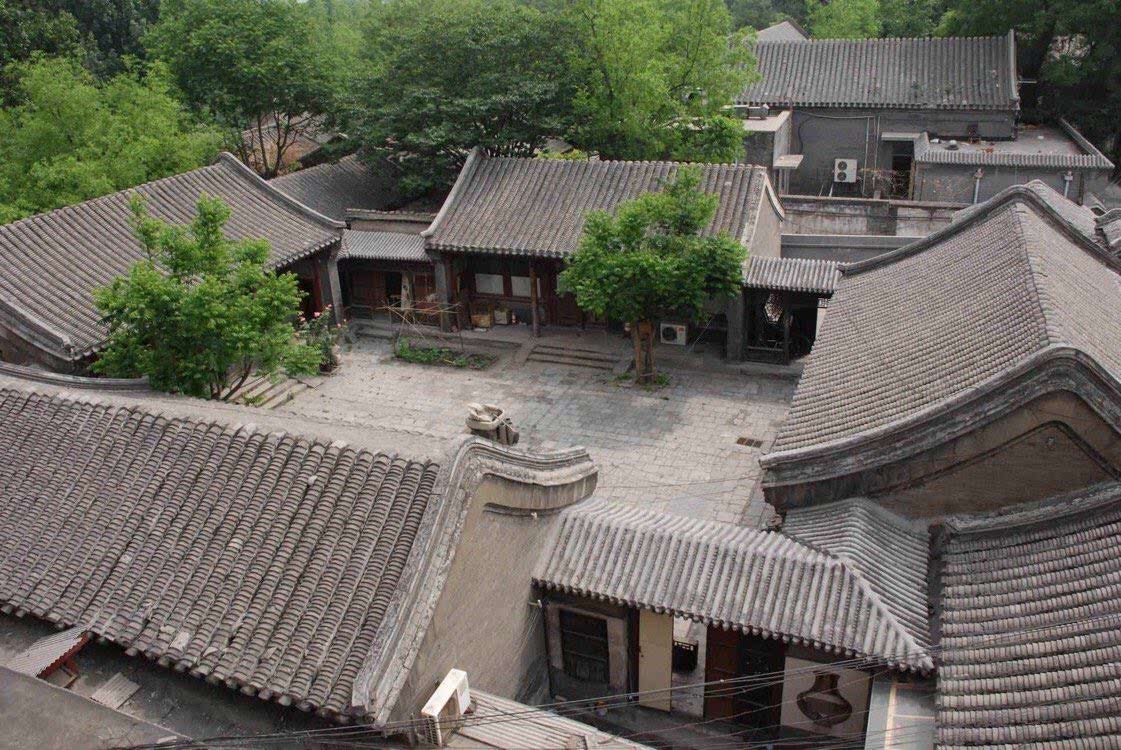
What is the soul of Beijing? The grand Forbidden City or the mighty Great Wall? For locals, the answer lies in the culture of Hutong and Siheyuan (courtyards). While palaces and walls tell stories of emperors and war, the hutongs reveal daily life in old Beijing. With over 3,600 named alleys — and countless more unnamed — they form the city’s true cultural heart. Surrounded by traditional siheyuans (courtyard homes), these narrow lanes reflect how generations of Beijingers lived, making them a must-see for travelers who want to truly understand Beijing’s spirit.
What is a Hutong in Beijing
A Hutong in Beijing is literally defined as an alley or small street between rows of Siheyuan, which are courtyard houses. These narrow lanes, dating back around 700 years to the Yuan Dynasty, connect numerous traditional homes and form the historic veins of Beijing. The term “Hutong” possibly originates from the Mongolian word for “water well,” symbolizing community life. They represent the cultural and historical development of the city, linking up the old quarters and stories of Beijing.
Some interesting facts about Beijing Hutong
- Oldest Hutong: Zhuanta Hutong, named after an 800-year-old pagoda, is one of Beijing’s oldest alleys.
- Longest Hutong: Dongjiaomin Lane is the longest hutong, stretching nearly 3 kilometers in Beijing.
- Shortest Hutong: Yichi Dajie (“One-Foot Street”) is only about 30 meters long.
- Widest Hutong: Lingjing Hutong is the widest, reaching over 30 meters across.
- Narrowest Hutong: Qianshi Hutong is just 0.7 meters wide and was once a financial center.
- Most Curves: Jiuwan Hutong has over 13 turns in 390 meters, like a maze.
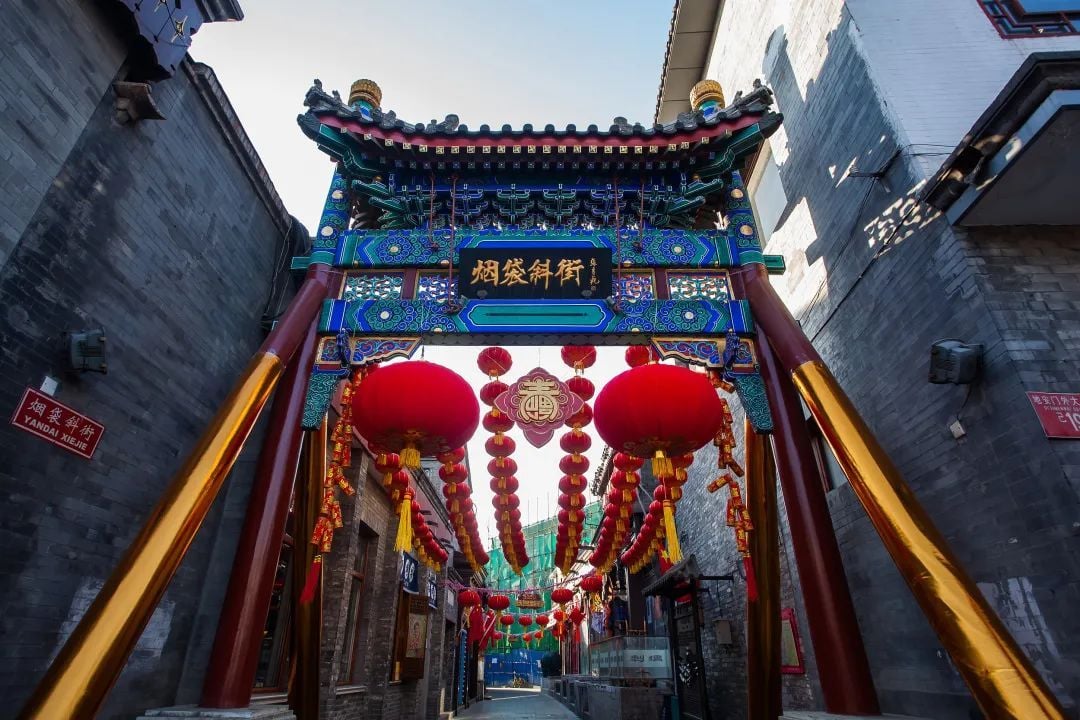
- Yandaixie Street was famous for its tobacco shops and Manchu pipe smokers.
- Yangmeizhuxie Street is where General Cai E met his lover, Xiaofengxian.
History of Hutong China
The origins of Beijing’s hutongs trace back to 1276 during the Yuan Dynasty, when the planning of Dadu established the basic layout of hutongs. The term “hutong,” derived from the Mongolian word for “water well” or “hot,” became a synonym for residential areas, reflecting the nomadic culture’s emphasis on water sources.
There were 410 hutongs within Yuan Dadu. As history progressed, the number of hutongs increased; there were 460 in the Ming Dynasty and by the Qing Dynasty, this number had grown to 970. Statistics show that by 1944, Beijing had 3,216 streets and alleys, with 1,039 being hutongs.
However, over time and due to urban development needs, the number of hutongs has drastically decreased. By 2003, only 1,500 hutongs remained, and today fewer than 1,000 exist, most of which have been transformed into tourist attractions featuring dining, shopping, and bars. Thus, the preservation of hutongs has become an urgent issue for modern society.
How a Hutong Gets Its Name
Beijing’s hutongs often have descriptive names. Here’s how a Beijing Hutong gets its name, presented in list form:
- Landmarks: Named after notable structures or sites, e.g., Guanyinsi Hutong (‘Guanyin Temple Alley’), Gongyuan Hutong (site of imperial exams).
- Markets: Reflects former marketplaces, e.g., Yangshi Hutong (‘Sheep Market Alley’), Luomashi Hutong (‘Mule and Horse Market Alley’).
- Scenery: Based on natural features or views, e.g., Liushu Hutong (‘Willow Alley’), Shijinhuyuan Hutong (‘Assorted Garden Alley’).
- Layout: Describes the shape or layout, e.g., Yandai Xie Jie (‘Tobacco Pouch Inclined Street’), Jiudaowan Hutong (‘Nine Bends Alley’).
- Auspiciousness: Names meant to bring good fortune, e.g., Xiqing Hutong (‘Happy Alley’).
- Notable Residents: Honors historical figures who lived there, e.g., Shaguo Liu Hutong (named after a craftsman), Mengduan Hutong (named after a Ming dynasty mayor).
- Terrain and Landscape: Inspired by geographical features, e.g., Jin Yu Chi (‘Goldfish Pond’), Long Xu Gou (‘Dragon Whisker Ditch’).
- Commercial Origins: Reflects past commercial activities or areas, e.g., Huashi area (flower trade), Dian Shi Kou (historic lamp market).
Each naming method provides a glimpse into the unique history and culture of Beijing.
Top 10 Most Representative Hutongs in Beijing
The Top Ten Hutongs in Beijing refer to the ten most representative hutongs in Beijing. They not only carry rich historical culture, but are also famous for their unique charm and tourism value. The following are the top ten hutongs in Beijing and their brief introduction:

Nanluoguxiang
One of the oldest neighborhoods in Beijing, with a history of 740 years. It retains many courtyards and buildings from the Ming and Qing dynasties.

Yandaixie Street
The oldest slanting street in Beijing. There are still many old brands in Yandaixie Street, such as the traditional snacks Donkey Roll and Aiwowo, which taste authentic; there are also shops selling antiques, calligraphy and paintings.
Mao’er Hutong
In the Qing Dynasty, there was a hat-making workshop, so it was called Maoer Hutong. Many celebrities’ former residences are located here. It has a long history and profound cultural heritage. Maoer Hutong also has many traditional snack stalls, art workshops and cultural and creative shops.
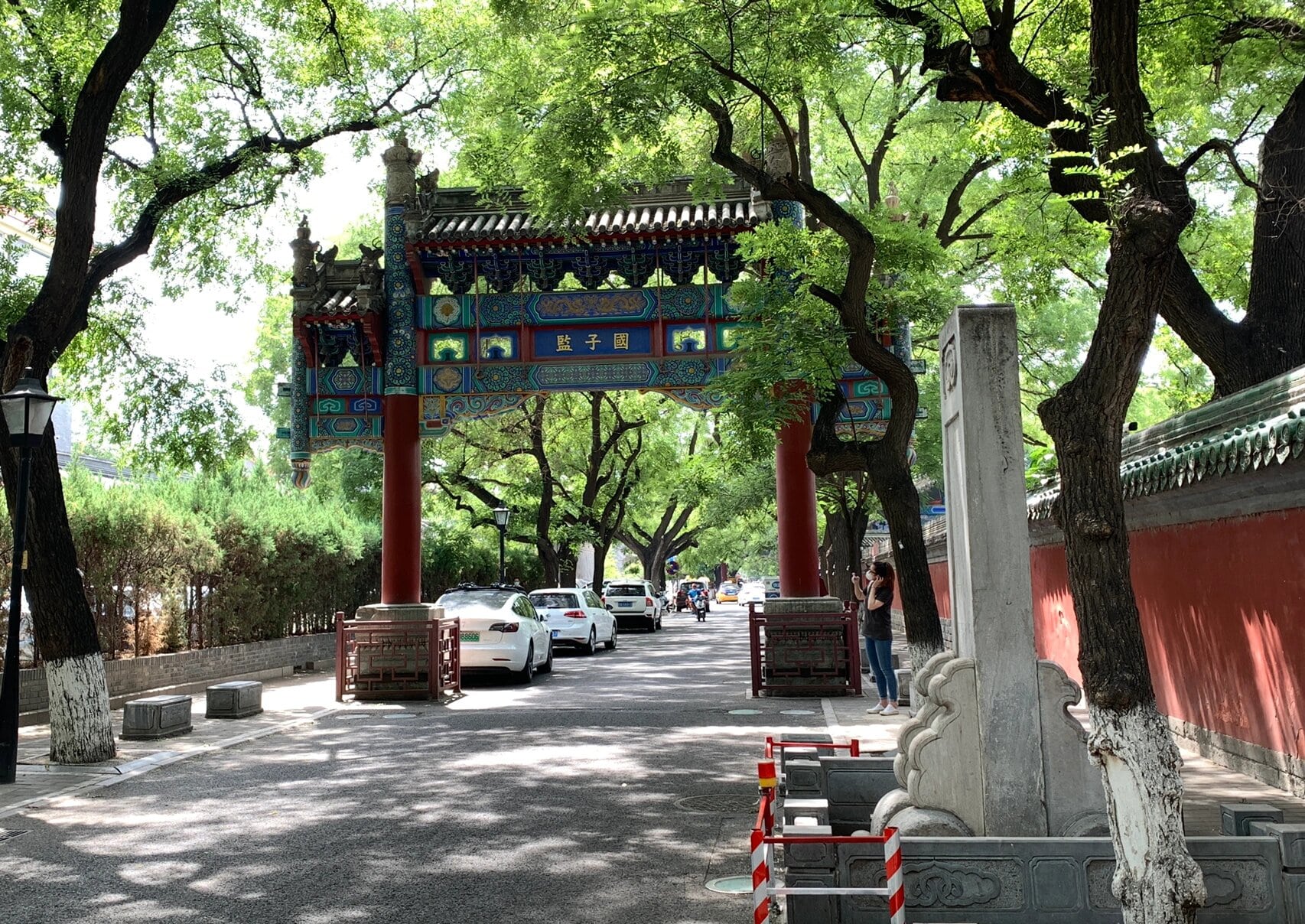
Guozijian Street
Guozijian Street is named after the Confucius Temple and Guozijian. It has a history of more than 700 years. Guozijian, Confucius Temple, archway, Fire God Temple and other special attractions are all located on this street.
Liulichang Cultural Street
During the Qing Dynasty, the Liuli artists near the hutong were famous for making glassware, so this place was called Liulichang. Today, there are still nearly a hundred time-honored shops here, such as Rongbaozhai, which collects precious calligraphy and paintings, Yunguzhai, which collects antique enamel porcelain, and Lehaixuan, which sells traditional musical instruments.
Jinyu Hutong
Jinyu Hutong is 567 meters long and is home to the famous Jixiang Theater, Peninsular Hotel, and Novotel Peace Hotel.
Dongjiaomin Lane
Dongjiaomin Lane is 3 kilometers long and is the longest hutong in Beijing. It is the only remaining Western-style building complex in Beijing from the early 20th century and was once the location of many foreign embassies.

Xijiaomin Lane
Xijiaomin Lane, known as the “Financial Street of Old Beijing”, was home to more than a dozen banks from the late Qing Dynasty to the end of the 20th century. The street also houses cultural relics protection sites such as the Central Bank, Continental Bank, and Commercial Guarantee Bank of Beiyang Government.
Ju’er Hutong
Juer Hutong is a representative of Beijing’s new courtyard houses and the only hutong included in the “List of Chinese 20th Century Architectural Heritage”. Many foreigners live here.
Bada Hutong
The Eight Great Hutongs were the “red-light district” during the Qing Dynasty, and were once synonymous with prostitution. It is also closely related to the development of Peking Opera, and many Peking Opera actors and their families also live here.
In addition to the above hutongs, there is also Wudaoying Hutong, which has many boutique handicraft shops, cafes and bars, and Shijia Hutong – there is a hutong museum worth visiting
Things to Do on a Hutong Tour
Visit a Local Home
Experience authentic Beijing culture by visiting a local family. Join activities like dumpling making, face painting, or paper cutting. It’s a warm and personal way to learn about daily life, traditions, and the values of Beijingers in a friendly home setting.
Take a Rickshaw Ride
A rickshaw tour is one of the best ways to explore Beijing’s hutongs. It allows you to relax while passing through narrow alleys, traditional siheyuan courtyards, and historic sites like Shichahai. Along the ride, you can enjoy old architecture, local life, and learn about history from English-speaking drivers.

Bike Through the Hutongs
Renting a bike is a fun and flexible way to explore. Ride through quiet lanes, pass traditional homes, and observe daily life up close. Biking lets you discover hidden corners and enjoy the peaceful charm that makes hutongs so special.
Walk and Explore
Walking is the most immersive way to experience the hutongs. Stroll past old courtyards, watch locals play mahjong or chat, and try street snacks. You can also visit open siheyuan homes or relax in unique cafés for a full taste of traditional Beijing life.
How to get to Hutong Beijing
Shichahai and Dashilan are indeed areas with many hutongs and are popular with tourists. For transportation to these two places:
- Shichahai: Tourists can take Metro Line 8 to Shichahai Station A1 or A2, which is the most direct way to reach the Shichahai area. You can also choose to take Metro Line 6 to Beihai North Station and walk a few minutes from Exit B to Shichahai.
- Dashilan: Take Metro Line 2 or Line 8 to Qianmen Station and walk about 450 meters to the entrance of Dashilan Hutong.
Then, you can then rent a rickshaw or walk to explore the nearby hutongs.
Recommended Route to Visit Beijing Hutongs for One Day
Begin your day at South Gong & Drum Alley, a lively and historic alley full of shops, snacks, and local culture. Try local treats like soufflé pancakes and snowflake. Walk through the hutongs and enjoy the traditional architecture. Tip: Visit in the morning to avoid crowds.
From Nanluoguxiang, walk or take a short ride to Drum Tower (Gulou) and Bell Tower (Zhonglou). Explore the history of timekeeping in ancient China. Climb Gulou for great views of Beijing’s central axis. Check out the hidden photo spots like the back square of Zhonglou.
Then, visit Yandaixie Street, A historic street near Drum Tower. Great for photos and traditional snacks.
Finish your trip at Shichahai, a scenic area with lakes, old courtyards, and beautiful hutongs. Walk along the lake, or take a boat ride. Don’t miss the sunset at Jinding Bridge or Yinding Bridge.
Tips:
Wear comfortable shoes as you’ll be walking a lot. Use shared bikes for quick travel between sites. Don’t miss out on trying local favorites such as Yaoji Chaogan and Bao Rui Mending Rou Bing. Check the sunset time beforehand to plan your visit to Shichahai accordingly.