The Giant Wild Goose Pagoda (Dayan Pagoda) is a landmark ancient structure in Xi’an, located within the Da Ci’en Temple complex. It was built in 652 AD under the direction of the renowned Tang Dynasty monk Xuanzang to preserve the Buddhist scriptures and statues he brought back from India.
As the oldest and largest surviving Tang Dynasty square pavilion-style brick pagoda, it was inscribed on the UNESCO World Heritage List on June 22, 2014, along with other key sites along the ancient Silk Road. Today, the Giant Wild Goose Pagoda has become one of the must-visit attractions for travelers to Xi’an.
Giant Wild Goose Pagoda Facts
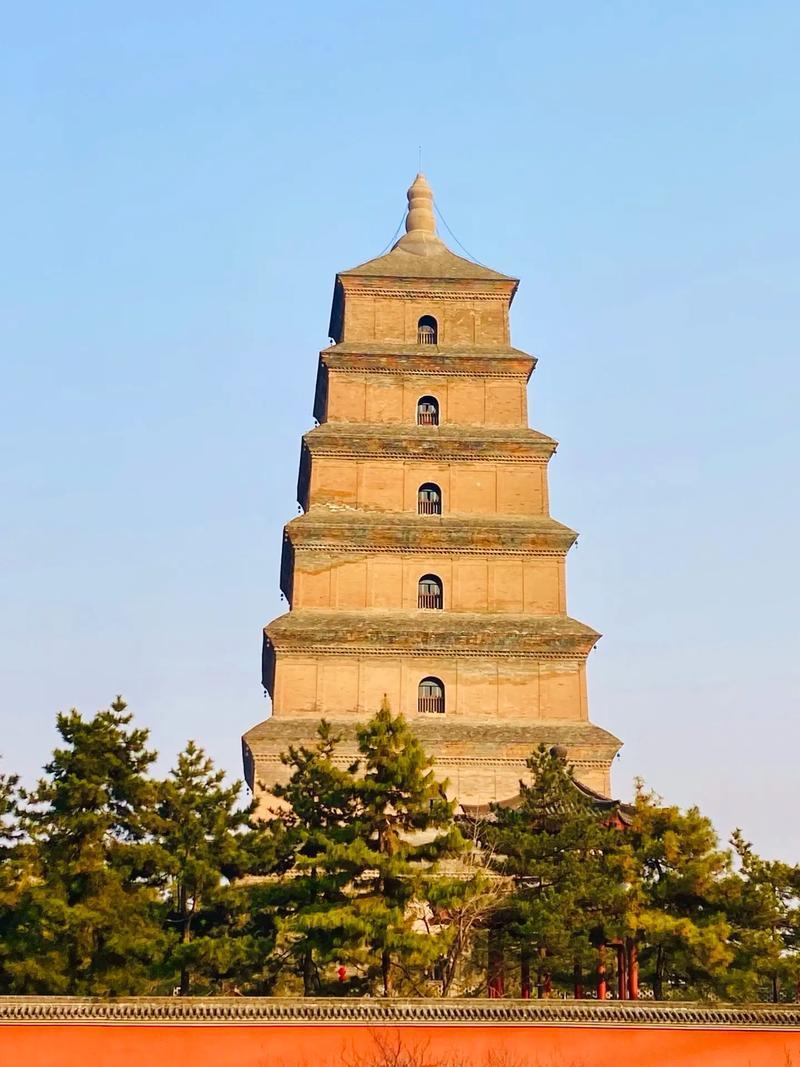
- Name: Dayan Pagoda
- Height: 64.517 meters, seven-story pagoda
- Type: Buddhist Site
- Location: No. 1, Ci’en Road, Yanta District, Xi’an City, Shaanxi Province
- Recommended Visiting Time: 1.5-2 hours
- Opening Hours: 08:30 – 17:00
- Ticket Price: CNY 30. Book the ticket now
The Giant Wild Goose Pagoda is a classic square pavilion-style brick pagoda from the Tang Dynasty. The entire structure forms a square pyramid, standing 64.517 meters tall. Its base is 4.2 meters high, measuring approximately 48.7 meters north-south and 45.7 meters east-west. The tower’s bottom level has sides of 25.5 meters, while the spire reaches 4.87 meters. Built with gray bricks, each floor features arched doorways on all four sides, adorned with exquisite stone carvings above the doors. Inside, the hollow structure contains a wooden staircase spiraling upward.
Top Attractions to Visit Giant Wild Goose Pagoda Scenic Area
The entire scenic area includes the Giant Wild Goose Pagoda, Da Ci’en Temple, and surrounding squares, gardens, and other facilities.
Giant Wild Goose Pagoda
The Giant Wild Goose Pagoda is primarily composed of three parts: the pagoda base, the pagoda body, and the pagoda finial (chattra). It stands as the earliest and largest extant square pavilion-style brick pagoda from the Tang Dynasty. A climb to the top rewards pilgrims and tourists alike with both sacred artifacts and panoramic views of modern Xi’an.
- First Floor: The first floor exhibits inscribed tablets documenting the pagoda’s history, including south gate tablets listing Tang Dynasty examination graduates.
- Second Floor: The second floor features a gilded Sakyamuni Buddha statue, surrounded by Bodhisattva wall paintings and historic calligraphy, showcasing Tang Buddhist artistry.
- Third Floor: The third floor displays precious relics including Buddha remains from Venerable Shi Wuqian, Xuanzang’s birch bark scriptures, and a 1:60 pagoda model.
- Fourth Floor: The fourth floor highlights rare 40x7cm palm-leaf manuscripts with Sanskrit inscriptions – Buddhist texts preserved before paper reached India.
- Fifth Floor: The fifth floor’s Buddha footprint stone carving holds deep spiritual meaning – local tradition equates venerating it to worshipping Buddha himself. Original Tang Dynasty lotus bricks and wind chimes are also displayed.
- Sixth Floor: The sixth floor commemorates a historic 752 AD gathering when poets Du Fu, Cen Shen, Gao Shi, Xue Ju and Chu Guangxi composed legendary verses atop the pagoda, inspired by the sweeping views.
- Seven Floor: The topmost level features an exquisite lotus-ceiling design with a central flower motif surrounded by a fourteen-character inscription. This observation decks provide perfect vantage points to admire both the ancient structure’s surroundings and modern attractions like North Square’s spectacular musical fountain and the glowing Ever-bright Tang Mall.
Ground-penetrating radar (2008) verified a sealed underground chamber beneath the pagoda, matching Tang-era architectural records of relic depositories. While historical texts document Xuanzang’s enshrinement of Indian artifacts (645 CE) – potentially including Buddha relics and palm-leaf manuscripts – these contents remain scientifically unverified pending future archaeological examination.
Please Note: Access to the pagoda’s upper floors requires a ¥25 fee.
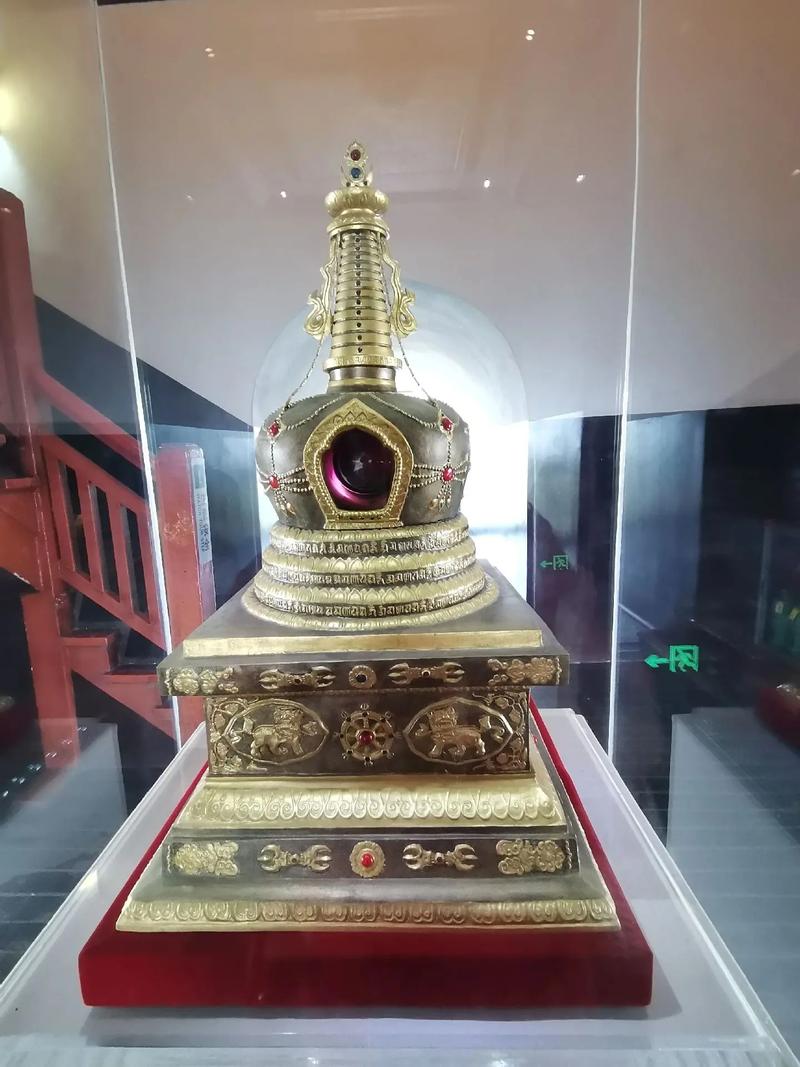
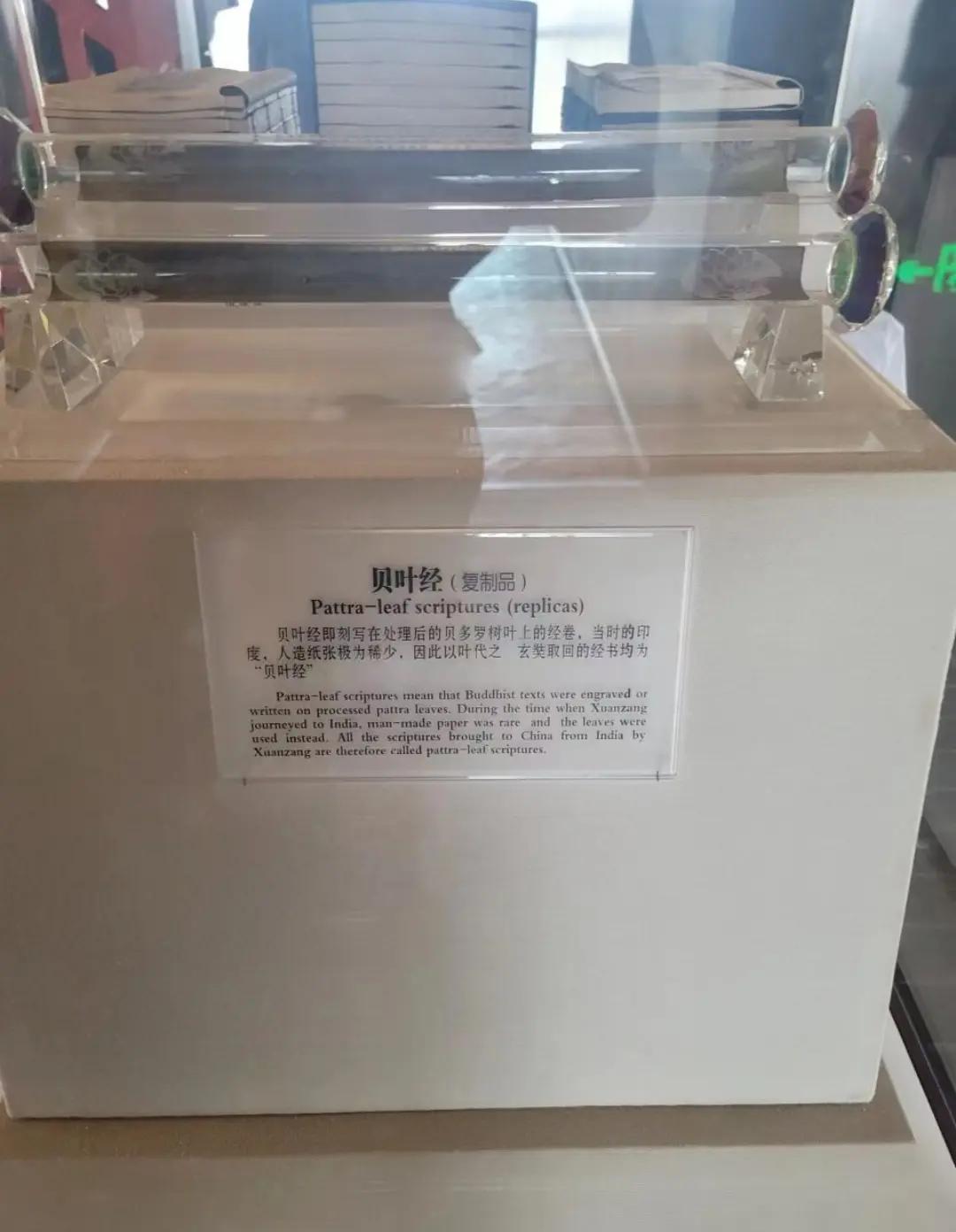
Da Ci’en Temple
Da Ci’en Temple, established in 648 AD as an imperial memorial complex, now covers 50,738 square meters – merely one-seventh of its original Tang Dynasty expanse.
The complex greets visitors with Xuanzang’s statue flanked by protective stone lions at its entrance, leading to a traditional layout featuring facing Bell and Drum Towers. Along the central axis stand the majestic Mahavira Hall with its enshrined Buddha trikaya statues, the serene Sermon Hall, the Big Wild Goose Pagoda, and the Hall of Xuanzang Sanzang.
This carefully preserved Tang Dynasty architectural ensemble continues to emanate its historical spiritual grandeur.
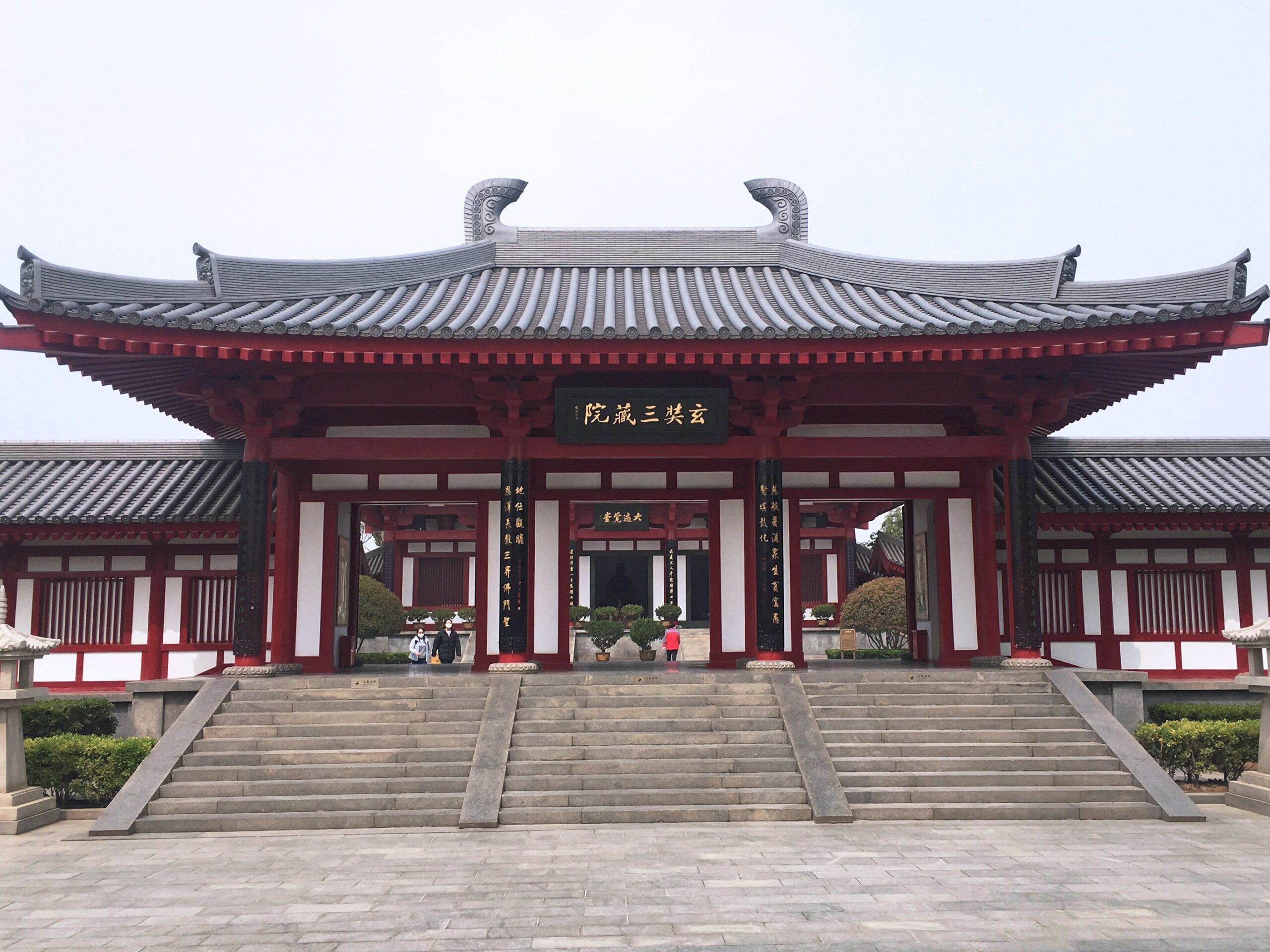
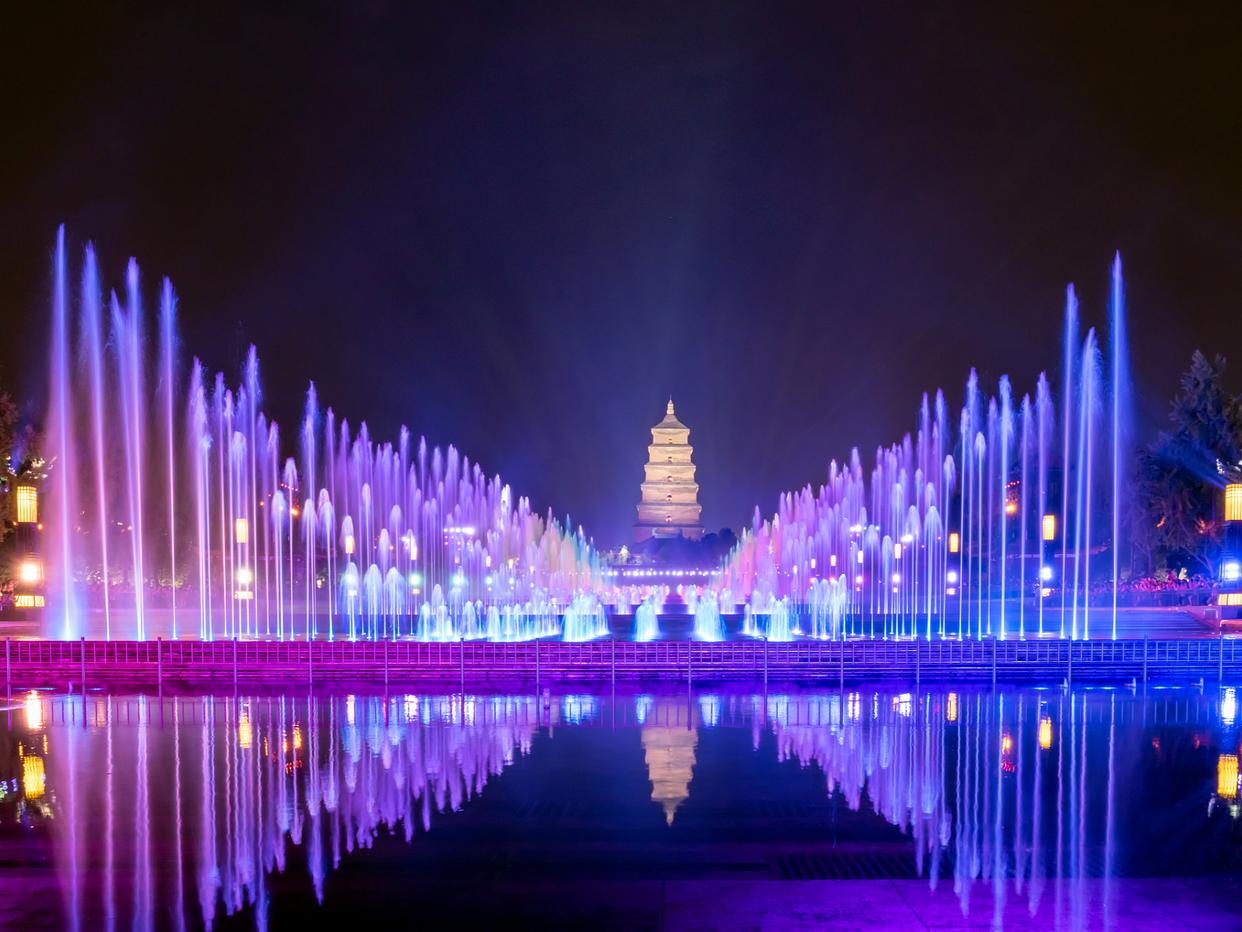
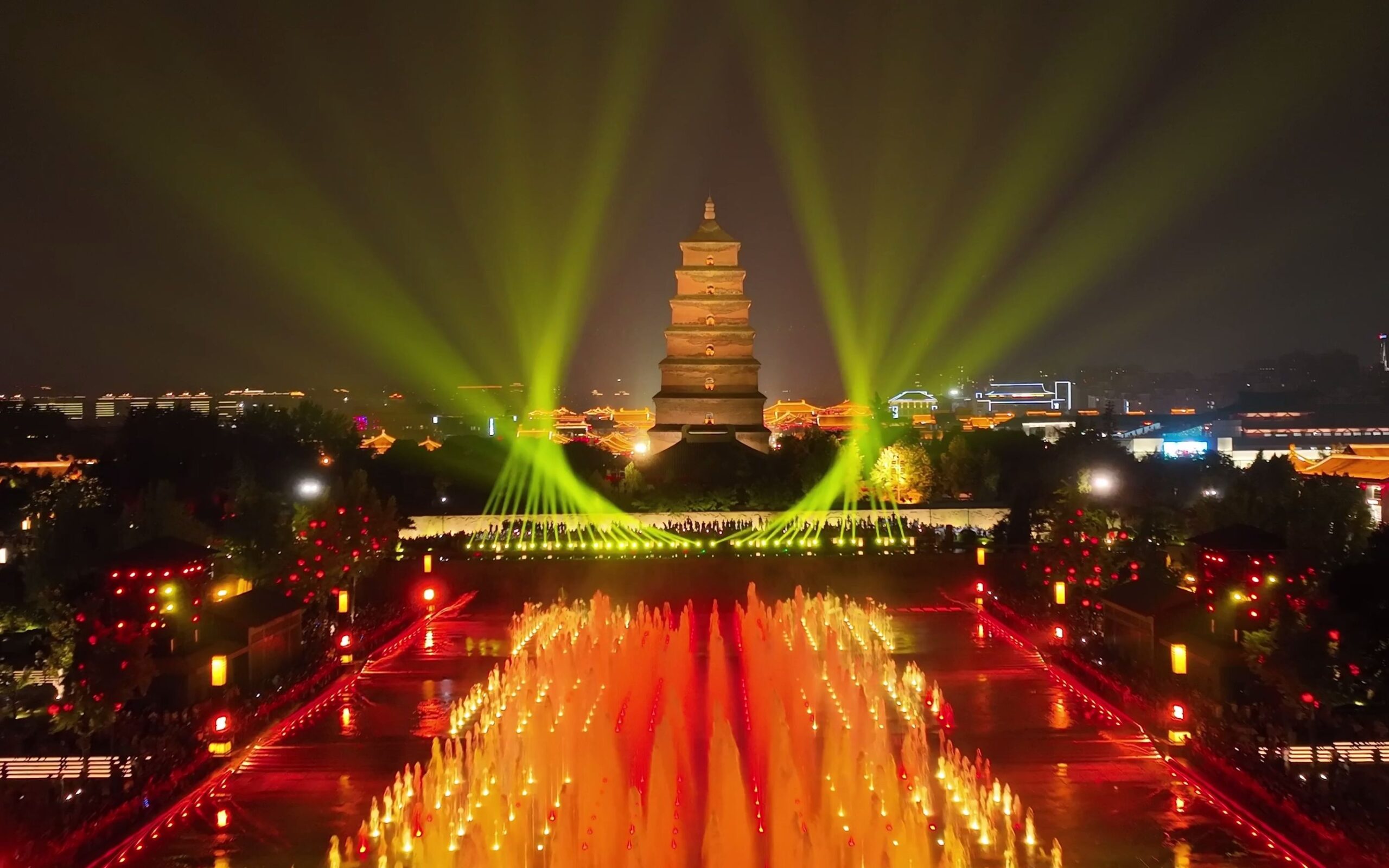
Large Music Fountain on the North Square
The Big Wild Goose Pagoda’s North Square boasts Asia’s largest musical fountain, featuring eight cascading pools each measuring basketball-court dimensions. Daily performances occur at 12:00, 16:00, 19:00 and 21:00 (10 minutes each), except for the noon and 4pm shows on Tuesdays during maintenance. The synchronized water displays combine intricate patterns with music and lighting, creating a spectacular modern complement to the ancient pagoda’s timeless presence.
Freely accessible to the public.
Squares and Gardens around Giant Wild Goose Pagoda
The pagoda’s surroundings offer free public squares and gardens for the locals and tourists. Beyond the renowned musical fountain square, To the east lies the tranquil Tang Ci’en Temple Site Park and vibrant Shaanxi Opera Garden, while the west features the cultural Shaanxi Folk Customs Garden. The south area dazzles with the Great Tang All Day Mall – a spectacular night destination where Tang-style performances unfold amid brilliant illuminations, and the solemn South Square anchored by Monk Xuanzang’s statue. These thoughtfully designed spaces blend historical reverence with contemporary leisure.
Best Times to Visit the Giant Wild Goose Pagoda
The best time to visit the Giant Wild Goose Pagoda is spring (April-May) and late autumn (November). During spring, the temple’s peony garden bursts into vibrant blooms, creating a breathtaking floral spectacle. In autumn, persimmon trees heavy with fruit paint a uniquely picturesque scene around the ancient pagoda.

For the best experience, visit early morning (8:30-9am) or late afternoon (4-4:30pm). Morning visitors might witness monks’ chanting ceremonies, while the golden afternoon light enhances the pagoda’s grandeur with fewer crowds. Both seasons offer pleasant weather to fully enjoy this historic treasure.
Recommended Photography Spots for Giant Wild Goose Pagoda
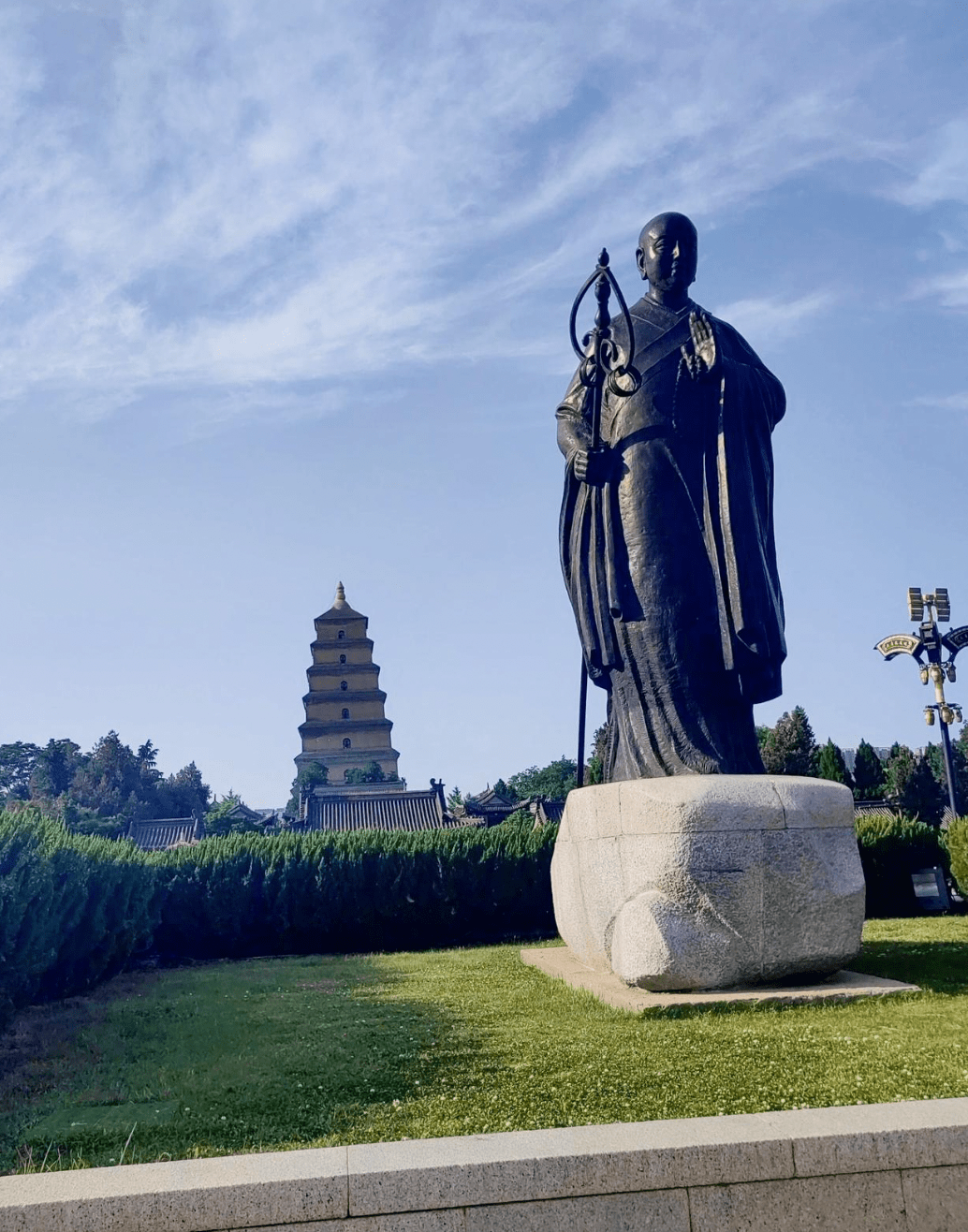
For classic shots, the south gate of the South Square offers two perfect angles: frame the pagoda against the red walls and greenery, or capture Xuanzang’s statue with the tower dramatically in the background. Early mornings provide the best light here.
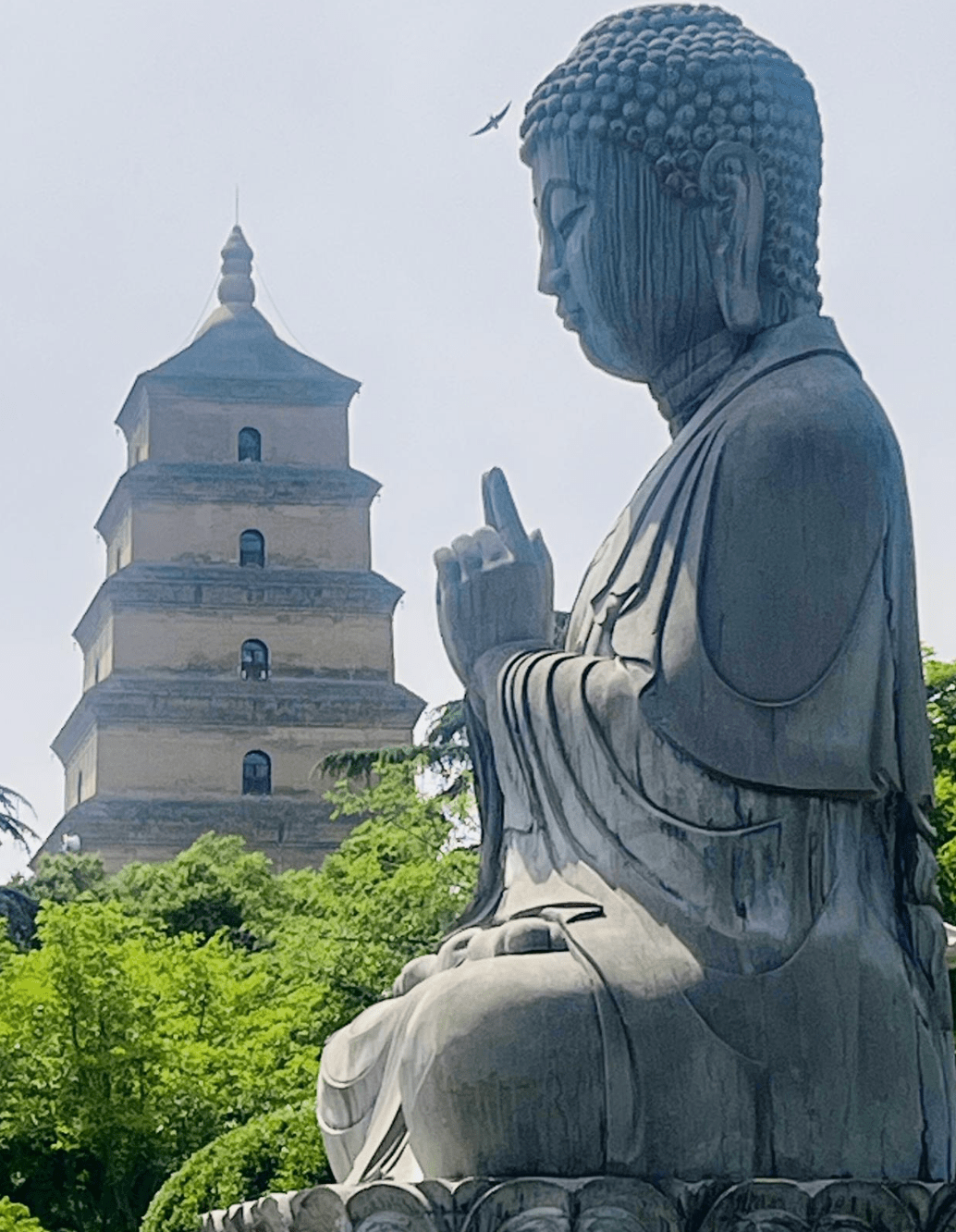
The Peony Garden’s southwest corner delivers an iconic composition, especially when flowers bloom. Nearby, the Da Ci’en Temple Ruins Park features a serene Buddha statue – visit before noon to avoid harsh backlighting.
Grand Tang Mall’s northeast entrance creates impressive night shots with illuminated pagoda views. For creative daytime perspectives, Joy City’s South Square lets you compress multiple elements (stele, statue, and pagoda) using a telephoto lens.
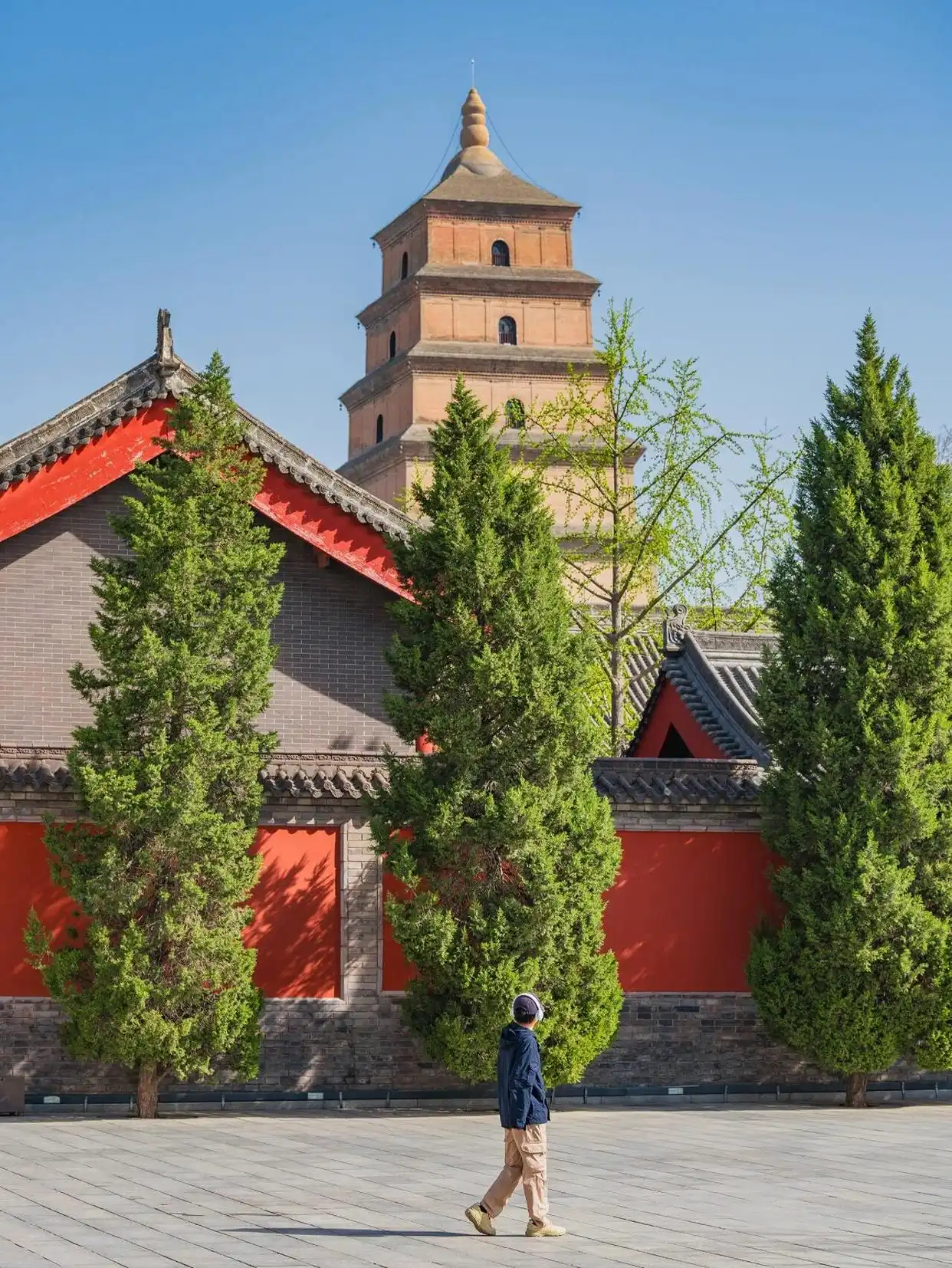
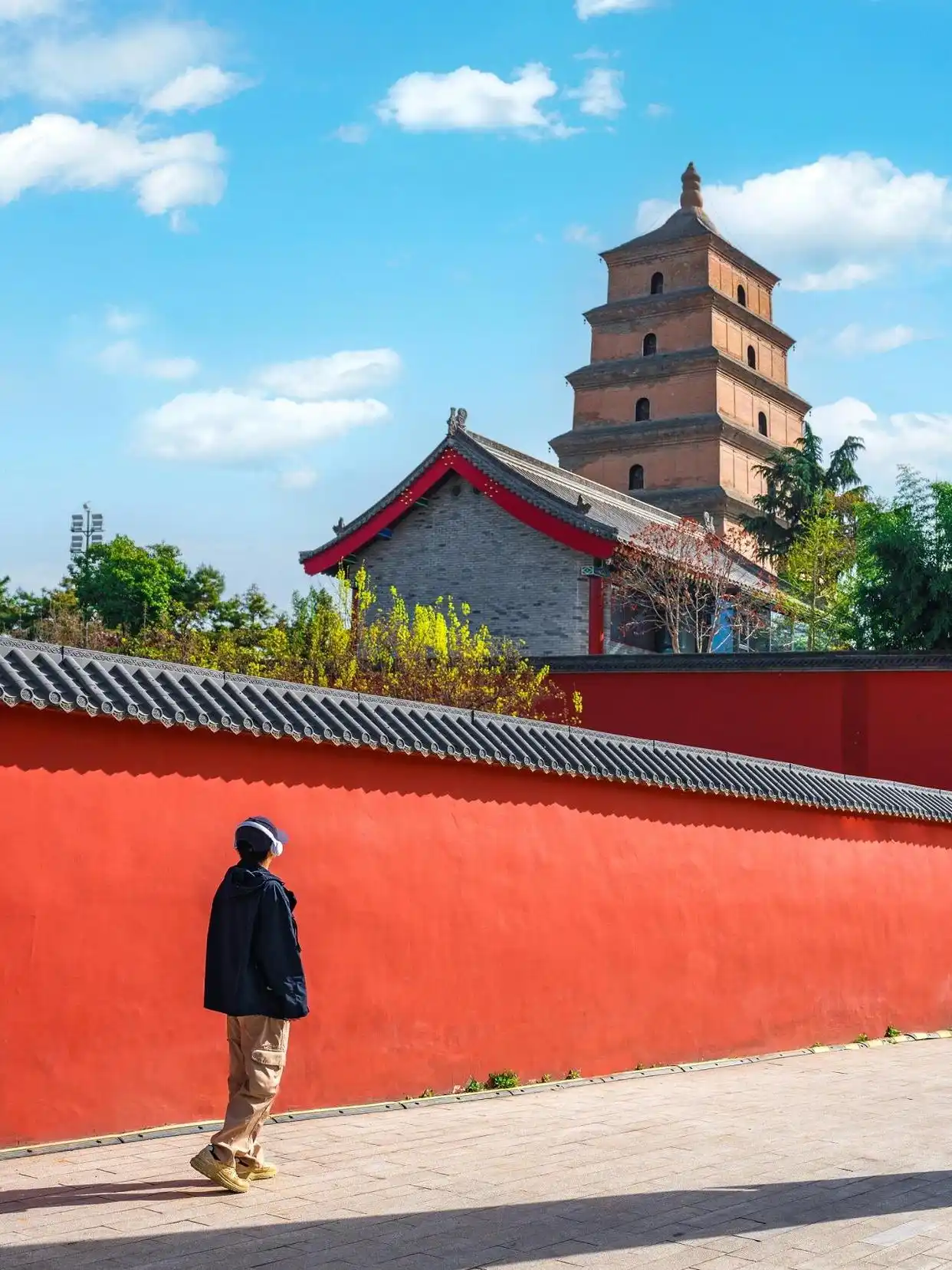
Recommended Route to Visit Giant Wild Goose Pagoda
Morning
Explore the iconic Giant Wild Goose Pagoda and tranquil Da Ci’en Temple (2hrs) – climb the pagoda for panoramic city views or admire its Tang Dynasty architecture from the ground.
Lunch Options
- Joy City (Da Yue Cheng): Modern mall with diverse restaurants (English-friendly menus) and a rooftop pagoda view.
- Yintai Mall’s “Yuan Jia Cun”: Budget-friendly Shaanxi street food court for quick local flavors (point-to-order).
Afternoon
Discover China’s ancient history at the Shaanxi History Museum (2hrs) – its world-class collection requires free online tickets booked in advance.
Evening
Immerse in Tang Dynasty splendor at Great Tang All Day Mall – vibrant night market with cultural performances, dazzling lights and street food (best visited after 7PM).
All these attractions are located within close walking distance of each other (5-15 minutes apart), making it easy to explore the entire area on foot without needing transportation.
History of Giant Wild Goose Pagoda
Xuanzang journeyed from Chang’an along the Silk Road to India (Buddhism’s birthplace), returning after 17 years with 657 scriptures and several Buddha relics. Approved by Emperor Gaozong in 652 AD, the 5-story brick pagoda (60m) was built to house these treasures – more modest than Xuanzang’s proposed 90m stone structure. This first Chinese scripture repository skillfully blended Indian stupa and Tang architectural styles.
Remodeled into 7 stories during Wu Zetian’s reign (701-704 AD), the pagoda maintained this form through Song dynasty. The 1604 Ming renovation added 60cm brick cladding while preserving original Tang proportions, resulting in its current 64.5m height and 25m square base. This careful restoration protected the structure through centuries of earthquakes.
The pagoda stands as testament to Xuanzang’s 17-year Silk Road journey and monumental translation of 1,335 Buddhist texts. Its enduring presence symbolizes the Faxiang school’s legacy and profound cultural exchange between China and India, while continuing as an active Buddhist site today.
Why is it called Giant Wild Goose Pagoda?
The pagoda’s name originates from an ancient Buddhist legend. According to the most widely accepted story, a group of monks were struggling to find meat for their meal when they witnessed a remarkable event. As they looked up at a flock of flying geese, one monk prayed aloud for divine assistance. Immediately, the lead goose broke its wings and fell to the ground before them. The monks interpreted this as a sacred sign from Bodhisattva, commanding them to adopt vegetarianism. In remembrance of this miraculous event, they constructed the pagoda on the very spot where the goose fell and permanently abandoned meat consumption, thus naming it the Wild Goose Pagoda.
Other theories suggest:
- Influence from Indian Buddhist architecture featuring goose-shaped tiers
- Commemoration of a goose that saved Xuanzang in the desert
- Connection to Buddha’s incarnation as a bird (called “wild goose” in Tang times)
How to get to Giant Wild Goose Pagoda
By Metro
Take Metro Line 3 or 4 to Dayanta Station and exit from Exit C. From there, it’s just a short 10-minute walk south to reach the main entrance near Xuanzang’s statue at the South Square, where is just the entrance of Da Ci’en Temple and Big Wild Goose Pagoda.
By Bus
- Take bus no. 5, 19, 21, 22, 23, 24, 27, 30, 34, 41, 189, 224, 400, 521, 701, 44, 242, 271, 408, 500, 521, 526, 601, 606, 701, Qujiang Tourist Shuttle Loop, Mountain Loop Tourist Line 1, Mountain Loop Tourist Line 2, Tourist Bus Line 8/610 to North Square of Giant Wild Goose Pagoda.
- Take bus no. 21, 22, 23, 24, 41, 44, 189, 242, 271, 408, 500, 601, 606, 609, 920, Tourist Line 6, Tourist Bus Line 8/610 to South Square of Giant Wild Goose Pagoda.
Ticket & Opening Hours
Get Your Ticket on Trip.com| Ticket Price | Entrance Fee of Da Ci’en Temple: CNY 30 Ascending the Pagoda: CNY 25 Note: Visitors wishing to ascend the pagoda must also purchase an entrance ticket for Da Ci’en Temple. |
| Opening Hours | 08:30 – 17:00 |
Difference between the Giant Wild Goose Pagoda and Small Wild Goose Pagoda
Both of them are historical landmarks in Xian. The Giant Wild Goose Pagoda stands tall for panoramic views, while the Small Wild Goose Pagoda charms with serene elegance – together they showcase Tang Dynasty’s Buddhist splendor through contrasting grandeur and tranquility.
| Aspect | Giant Wild Goose Pagoda | Small Wild Goose Pagoda |
|---|---|---|
| Built | 652 AD (Commissioned by monk Xuanzang) | 707 AD (Funded by palace maids) |
| Height & Style | 64.5m, 7-story square pavilion-style | 43.4m, 13-story multi-eaved (originally 15) |
| Shape & Color | Straight, conical; brick-red | Slightly curved waist; blue-gray |
| Cultural Role | Stored Xuanzang’s Buddhist scriptures | Stored Yijing’s scriptures; had a timekeeping bell |
| Visitor Experience | Climb for city views; lively night fountain | Peaceful gardens; integrated with Xi’an Museum (no climbing) |
| Crowds & Atmosphere | Bustling, commercial nearby | Quiet, meditative |
| Ticket & Hours | ¥55 (includes climb) | Free (book ahead) |