If you come to Xi’an, you must not miss the Xi’an City Wall. As the largest and best-preserved ancient city wall in China, it is not only a landmark of Xi’an but also an outstanding representative of ancient Chinese urban planning and military defense systems.
Xi’an City Wall Facts
- Location: Around the city center of Xi’an
- Length: 13.74 km (8.54 miles)
- Height: 12 meters
- Width: 12–14 meters (top) / 15–18 meters (base)
- Four Main Gates: East Gate (Changle Gate), West Gate (Anding Gate), South Gate (Yongning Gate), North Gate (Anyuan Gate)
- Recommended Visit Duration: 1-3 hours
- Ticket Price: CNY 54. Book the ticket now
This Ancient City Wall is located in the central district of Xi’an, forming a closed rectangular enclosure. The area within the wall is traditionally called the “Ancient City District,” covering 11.32 square kilometers. The famous Xi’an Bell and Drum Towers are situated at the heart of this ancient district.

Why Was the Xi’an City Wall Built
The Xi’an City Wall originated as the Tang Dynasty (618–907) capital’s fortifications, later abandoned. Its reconstruction was directly tied to Ming Emperor Zhu Yuanzhang’s strategic vision. After conquering Huizhou in 1357, the hermit Zhu Sheng advised him to “build high walls, abundant food supplies, and take time to be an Emperor”—a policy Zhu Yuanzhang implemented nationwide after founding the Ming Dynasty (1368). In 1369, General Xu Da captured Xi’an (then Fengyuan), renamed it Xi’an (“Western Peace”), and in 1374, the Ming launched its massive wall-building campaign there, transforming the ruined Tang-era defenses into today’s 13.7-km fortification. This project aimed to consolidate control, deter Mongol threats, and symbolize imperial authority, resulting in China’s best-preserved ancient city wall.
Xi’an City Wall Architecture
After renovations during the Ming and Qing dynasties, the Xi’an City Wall now measures 13.7 kilometers in circumference. At each of the four corners stands a turrets. The entire wall is surrounded by a protective moat.
The top of the wall features defensive structures on both sides. The outer edge is built with 5,984 crenellations (also called battlements), which have embrasures for shooting arrows and keeping watch. The inner side has a low protective wall called parapets, designed to prevent patrolling soldiers from falling off.
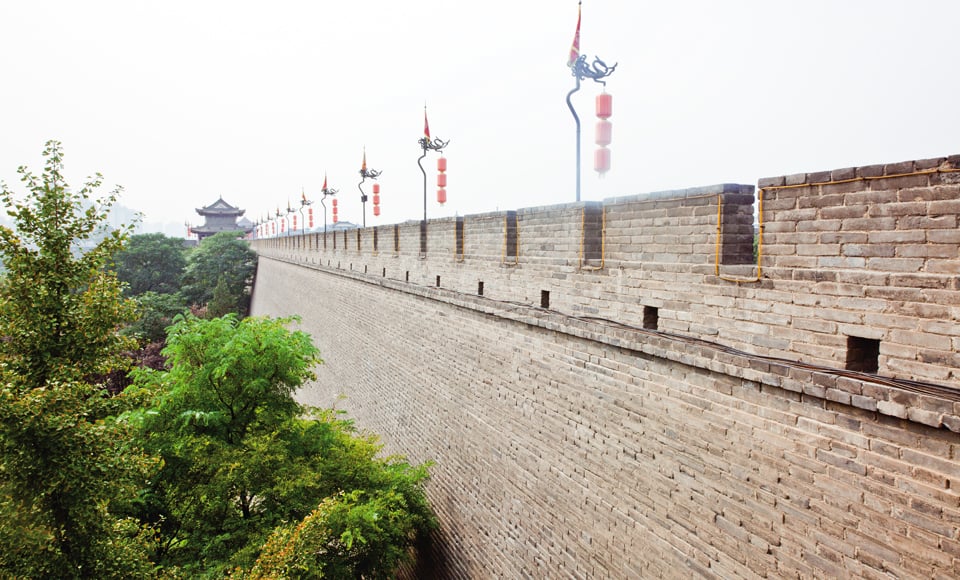
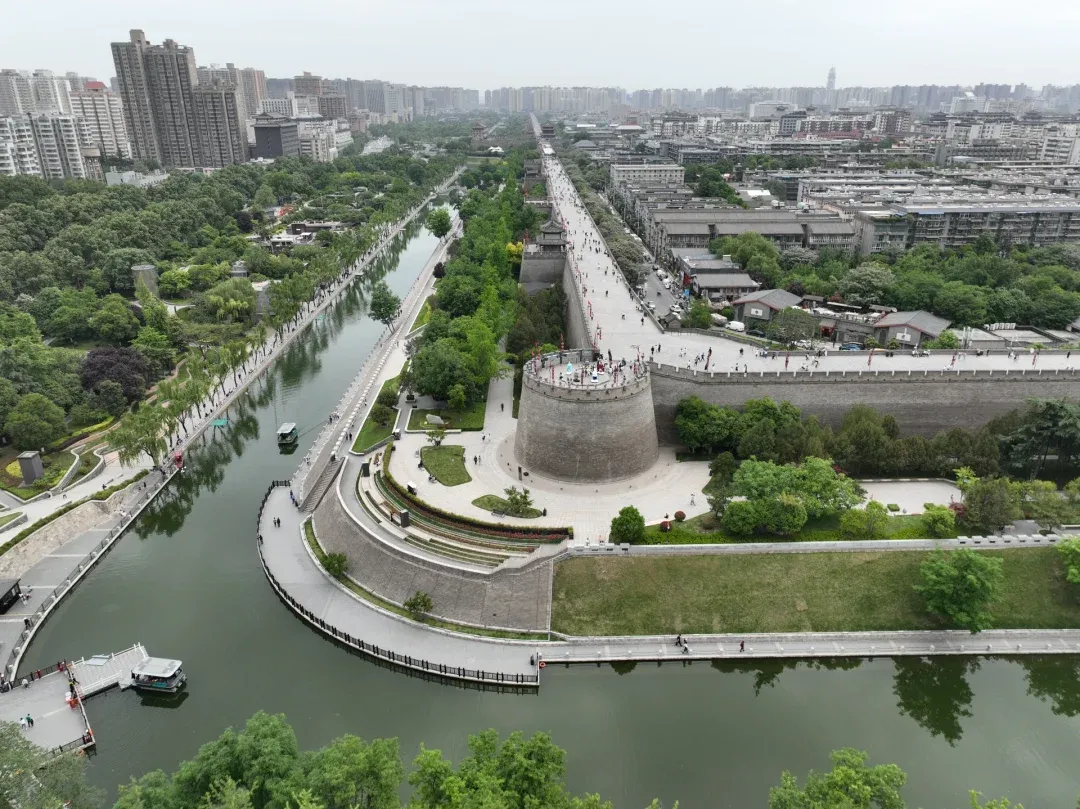
Along the wall’s length, a rampart outward every 120 meters, with its top level with the wall surface. These were specifically built to kill enemies attempting to scale the walls. The distance between rampart equals half an arrow’s effective range, allowing defenders to attack besiegers from the sides. There are 98 such rampart in total, each equipped with a sentry building for stationed troops.
The Gates of the Xian City Wall
With ancient weapons being ineffective against walls, gates became the key defensive focus. The wall has four main gates: Changle Gate (East), Anding Gate (West), Yongning Gate (South), and Anyuan Gate (North).
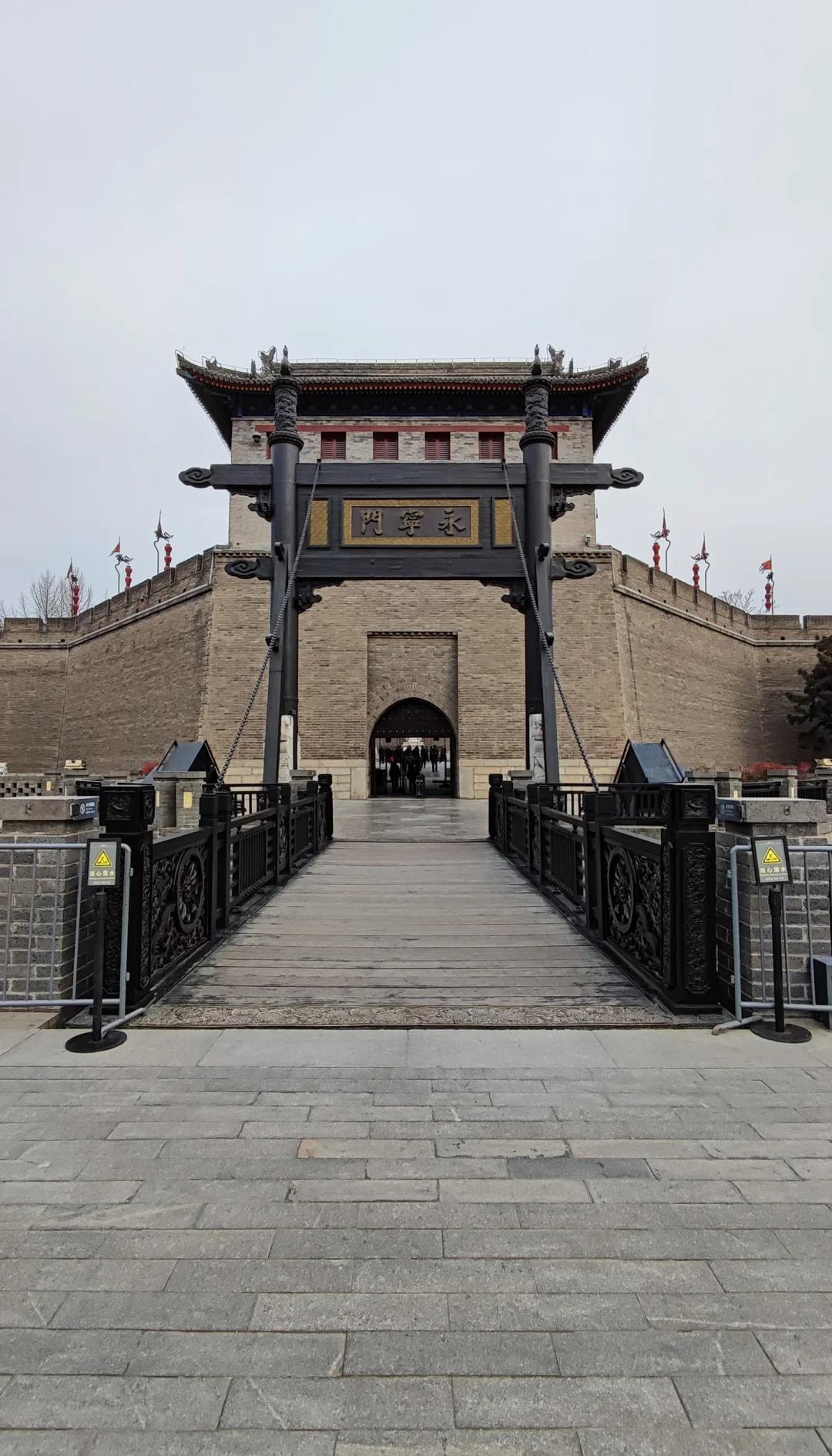
Each gate consists of three towers: Zhenglou, Jianlou and Zhalou.
The Zhalou stands as the outermost structure, primarily functioning to operate the drawbridge. Jianlou with small windows in the front and flanks was used as a defensive outpost. The innermost Zhenglou marking the city’s formal entrance, which stands 32 meters high and measures 40 meters long. The enclosed courtyard between Jianlou and Zhenglou, called “Wengcheng”, served as a troop station and features gently sloping ramps (without steps) for horses to ascend the wall.
Best Way to Experience Xi’an City Wall
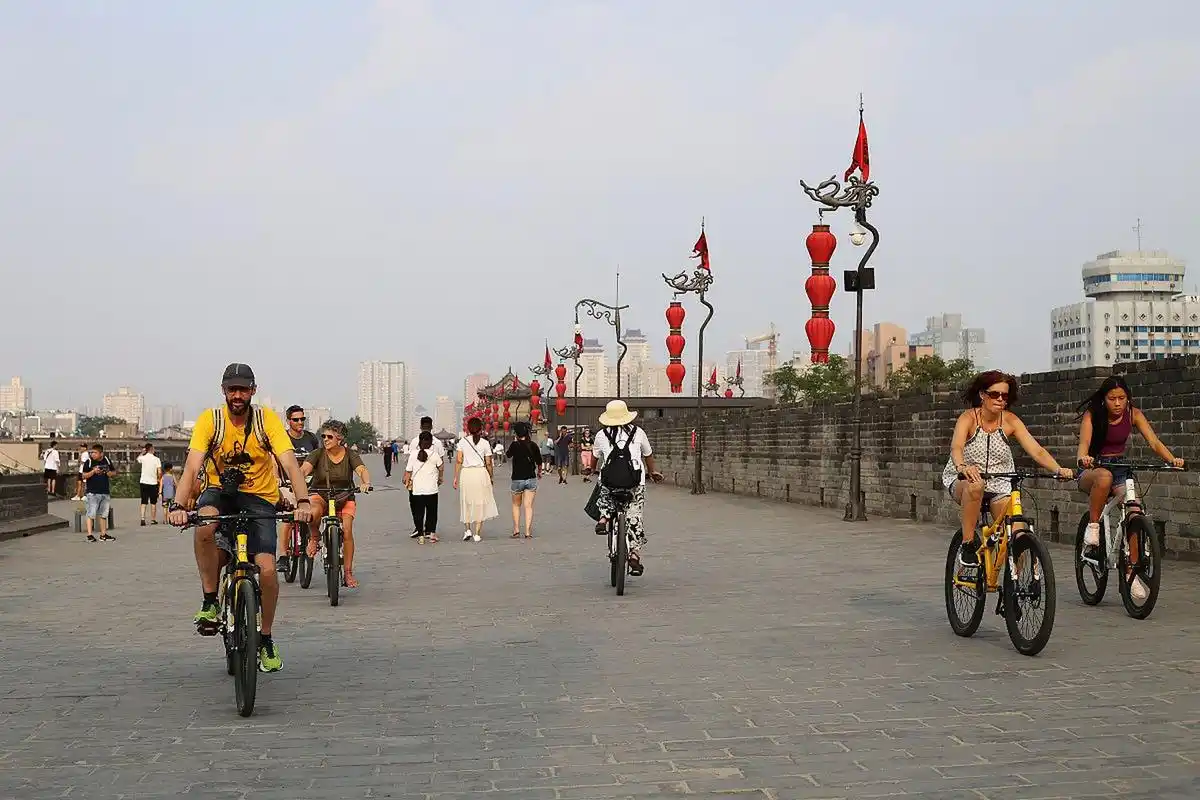
Cycling on the wall
For the best cycling experience on this ancient wall, I recommend starting from the West, North or East Gates where crowds are lighter.
The full 13.7-kilometer circuit typically takes 1.5 to 2 hours at a leisurely pace. You’ll find bicycle rental stations at all four main gates, with the South Gate (Yongningmen) offering extended hours until 10:00 PM.
The best time to ride is from 16:30 to 20:00. You can enjoy the historical charm of the ancient city during the day, ride in the afterglow of the sunset at dusk, and finally see the night view of Xi’an.
| Type | Price (3 hours) | Overtime Fee (per 10 min) | Deposit |
|---|---|---|---|
| Single Bike | ¥45 | +¥5 | ¥100. please prepare cash. |
| Tandem Bike | ¥90 | +¥10 | ¥100. please prepare cash. |
Please note: The road surface of the city wall is quite rugged, so it is recommended to wear gloves to avoid discomfort on your palms.
Watching Wonderful Performances
At the South Gate (Yongningmen) of Xi’an City Wall, visitors can enjoy spectacular cultural performances that bring ancient Chinese traditions to life.
| Performance | Time | Days | Price | Highlights |
|---|---|---|---|---|
| Guard Changing Ceremony | 10:00, 15:00 | Daily | Free with ticket | Ming-style military drill in full armor |
| Warrior Patrol Show | 11:00, 14:00, 17:00 | Daily | Free with ticket | Costumed guards marching on the walls |
| Chang’an Impression | 20:30–21:30 | Thu–Sun | From ¥280 | Epic Tang Dynasty dance & light show |
If you visit Xi’an during the Spring Festival, don’t miss the spectacular Spring Festival Lantern Show on the City Wall. This annual event transforms the ancient fortifications into a glowing wonderland, with thousands of colorful traditional lanterns illuminating the battlements.

Taking Hanfu Photos
The West Gate (Andingmen) is ideal for Hanfu photos, especially from 4-6 PM when sunlight softens. Its well-preserved Ming-era walls and quieter atmosphere provide authentic backdrops. Pose by ancient bricks or walkways for elegant shots.

Walking Along the Wall
Route 1: Yongning Gate (South Gate) → Hanguang Gate → Museum
This gentle walk (about 40 mins) takes you to the Hanguang Gate Museum, where you can see Tang Dynasty wall ruins – the oldest preserved section. Perfect for history lovers!
Route 2: Yongning Gate → East Gate → Zhongshan Gate
A slightly longer stroll with iconic views of the Bell Tower, Giant Wild Goose Pagoda, and Beilin Museum. End at Zhongshan Gate and head straight to Yongxing Fang food street for local snacks!
Best Time to Visit Xi’an City Wall
The best seasons to visit Xi’an City Wall are spring and autumn. During these periods, the weather conditions are most favorable (with maximum temperatures around 25°C), providing visitors with a comfortable touring experience.
Of course, the City Wall displays different charms in different seasons. If visiting in summer, it’s recommended to go in the early morning (08:00-09:00) or after sunset (16:00-17:00). In winter, midday visits are preferable to enjoy the warm sunshine.
How to Get to the Xi’an City Wall
While Xi’an City Wall has 18 gates in total, most visitors access the wall through four main entrance gates:
- To the South Gate: Take metro line 2 to Yongningmen Station and walk northward; Or take bus no. 11, 12, 16, 23, 26, 29, 204, 311, 184, 402, 405 ect and get off at Nanmenwai (Outside South Gate).
- To the East Gate: Take metro line 6 to Changlemen station, take Exit A1 and walk westward; Or take bus no. 8, 22, 27, 29, 218, 235, 22, 33, 139, 263, 45, 188, 527, 602, 604 etc and get off at Dongmenwai (Outside East Gate) Station.
- To the North Gate: Take metro line 2 to Anyuanmen Station; Or take bus no. 6, 9, 26, 33, 36, 104, 206, 138, 228, 266, 229, 608, 703, 705, 714 etc and get off at Beimenwai (Outside North Gate) Station.
- To the West Gate: Take metro line 6 to Andingmen Station and walk eastward; Or take bus no. 10, 15, 18, 21, 43, 107, 205, 206, 224, 701, 900 to Ximenwai (Outside West Gate); take bus no. 4, 15, 23, 31, 43, 45, 201, 221, 222, 252, 300, 407, 611, 612, 622 to Ximenli (Inside West Gate).
Xi’an City Wall Ticket Price & Opening Hours
Get Your Tickets at Trip.com| Entrance Fee | CNY 54 for adults. free for children under 1.2 meters. |
| Opening Hours | 08:00 – 22:00 |
| Ticket Price of Performances | Chang’an Impression – Tang Dynasty Grand Welcoming Ceremony: CNY280; CNY380; CNY 880 Free for children under 1.2 meters (3.9 feet) if not taking a seat |
Xi’an City Wall Restoration
As the largest and best-preserved ancient city wall in China, Xi’an City Wall has undergone systematic restoration and protection efforts spanning multiple dynasties and modern eras. The most extensive conservation project began in 1983 and continued for over two decades, during which traditional techniques were employed to repair collapsed sections and restore military defense structures like battlements and watchtowers to their original grandeur.
In recent years, preservation work has increasingly blended technology with tradition. A digital monitoring system now tracks the wall’s structural integrity in real time, while the surrounding moat has been ecologically restored to improve water quality. Strict height limits on nearby buildings protect the historical skyline. Through innovative approaches like light shows and cultural festivals, this ancient fortification has been revitalized as a living cultural landmark. The latest 2023 preservation initiative utilizes ground-penetrating radar for precise structural analysis, representing a new era of scientific conservation for this Ming Dynasty masterpiece.