Located in central Beijing near the Forbidden City and Jingshan Park, Beihai Park is one of China’s oldest and most well-preserved imperial gardens. With a history longer than the Summer Palace and the Old Summer Palace, it offers stunning views and rich culture. A must-visit for anyone exploring Beijing’s royal heritage!
Beihai Park Facts
- Type: Imperial Gardens
- Location: No. 1 Wenjin Street, Xicheng District, Beijing
- Area: 680000 Square meter
- Top Attractions: Nine-Dragon Screen, White Dagoba, the Five-Dragon Pavilion
- Ticket: CNY10. Trip.com discount
- Opening Hours: Apr. to Oct.: 06:00 to 21:00; Nov. to Mar.: 06:30 to 20:00
- Recommended Visiting Time: 2-4 Hours
History of Beihai Park
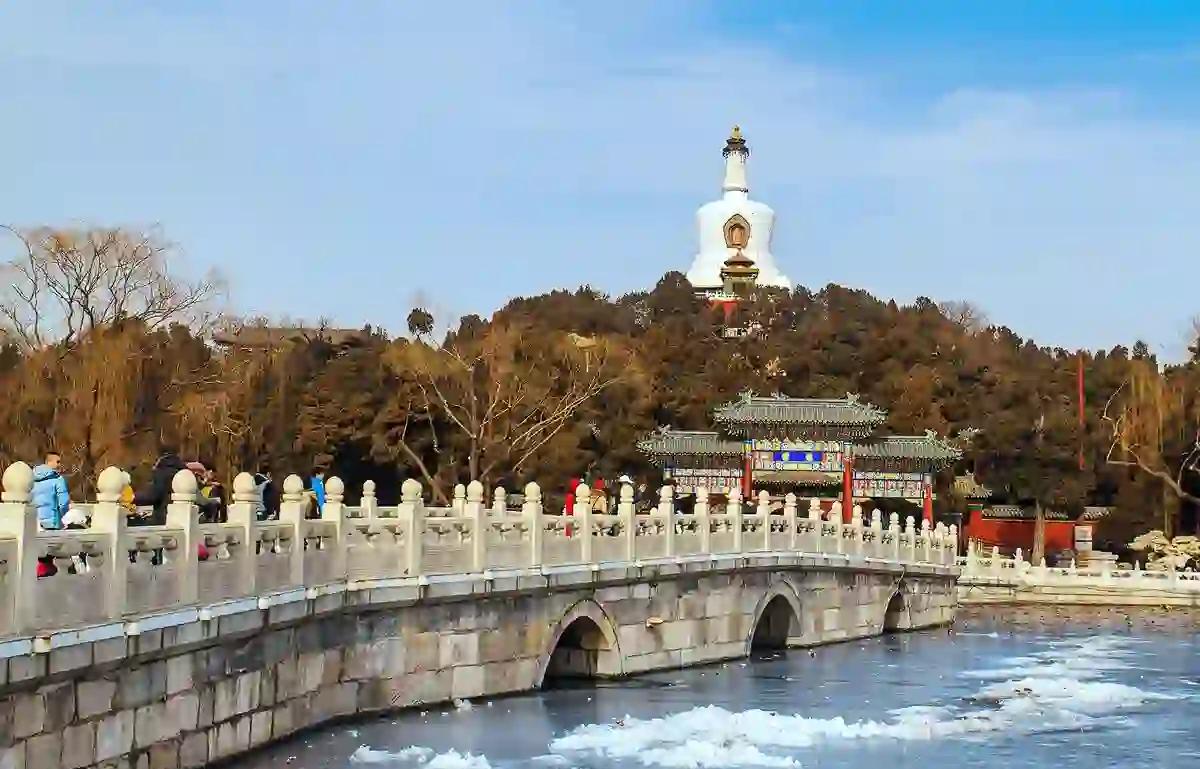
Beihai Park’s history dates back over 1,000 years. First built as an imperial retreat during the Liao Dynasty (916–1125), it was expanded by later dynasties like the Jin, Yuan, Ming, and Qing. The park’s design was inspired by an ancient Chinese myth about three magical islands (Penglai, Yingzhou, and Fangzhang), believed to grant immortality.
Emperors recreated this myth in their gardens. For centuries, rulers like Qin Shi Huang and Emperor Wudi built “one lake, three hills” landscapes to symbolize the legend. Beihai Park follows this tradition: its lake represents the mythical “Taiye Pool,” while islands stand for the three sacred mountains.
The park took its modern shape in the Qing Dynasty. Emperor Qianlong’s renovations (1736–1795) gave Beihai its current layout. It opened to the public in 1925 and remains one of Beijing’s most historic sites, blending nature, myth, and imperial grandeur.
Main Attractions in Beihai Park
Beihai Park features four main scenic zones centered around Jade Flowery Island with its iconic White Tower. The southern slope has temples connected by bridges to the Circular City, while the northern and eastern shores offer picturesque lakeside views.
White Dagoba
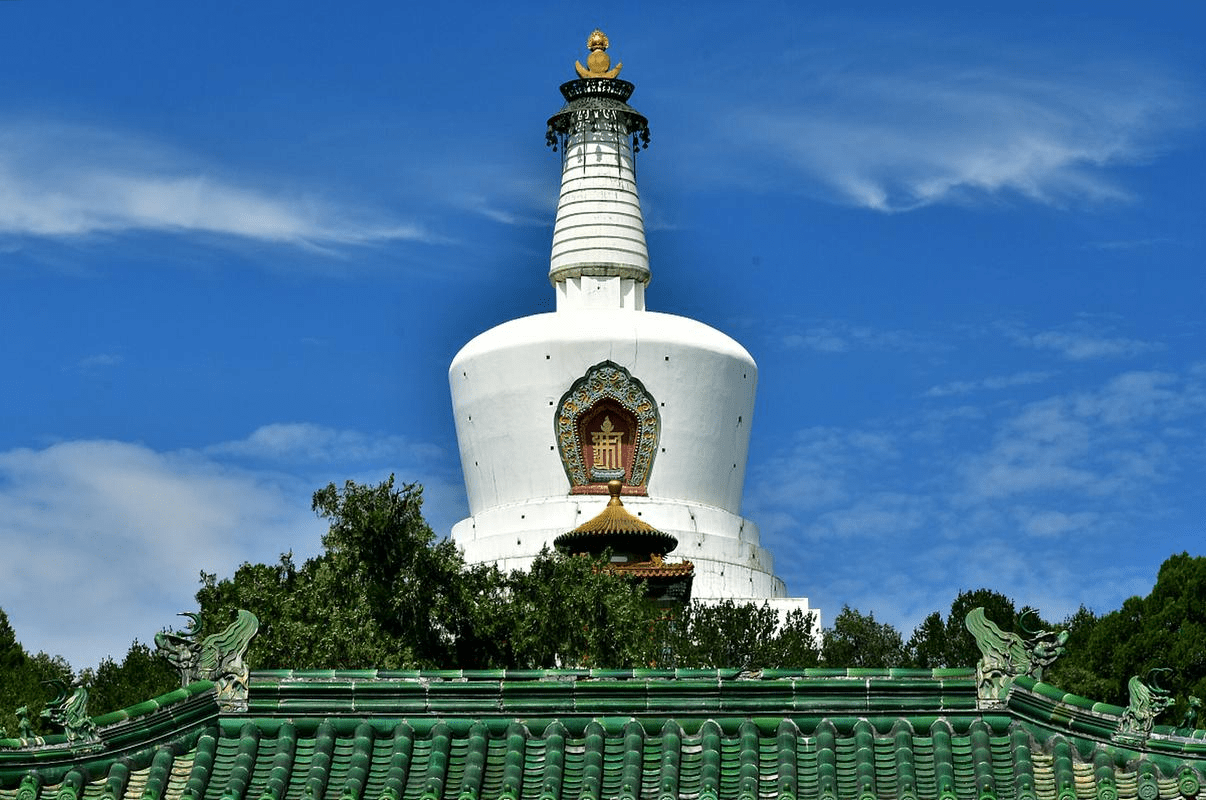
The White Tower, a majestic Tibetan-style stupa atop Jade Flowery Island, stands as a symbol of Tibetan Buddhism’s influence in China’s imperial capital. Built in 1651 under Emperor Shunzhi’s order following a Tibetan lama’s suggestion, this 35.9-meter-tall structure represents Qing Dynasty’s Buddhist devotion and ethnic unity. Damaged by earthquakes and rebuilt twice, it now features a stone base, whitewashed body, and bronze canopies with hanging bells. Housing sacred Buddhist scriptures, relics, and artifacts, it offers panoramic views of Beihai Park as the highest point.
Nine-Dragon Screen
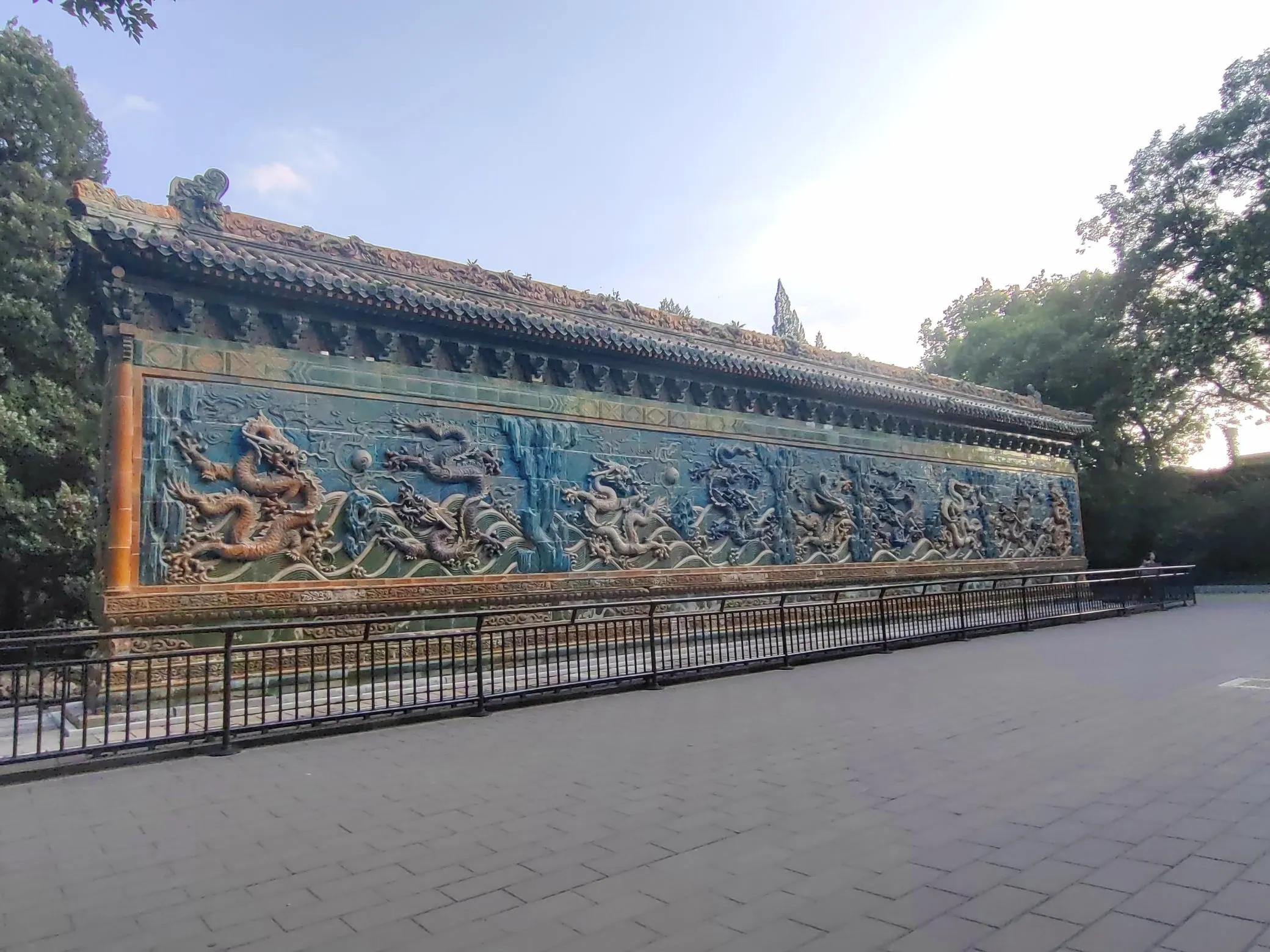
The Nine-Dragon Screen, built in 1756, is one of China’s three most famous dragon walls and the only one featuring nine huge dragons on both sides. This 27-meter-long, 6.65-meter-high glazed-tile masterpiece displays a total of 635 dragons in various sizes and postures. Large coiled dragons dominate the center, while smaller ones decorate the edges. Despite having stood for over 200 years, its vibrant seven-colored tiles remain remarkably well preserved, showcasing exquisite ancient Chinese craftsmanship. The dynamic dragons, playing with pearls amid waves, create a stunning imperial display that attracts countless visitors who come to admire and photograph this magnificent artwork.
Quiet Heart Studio
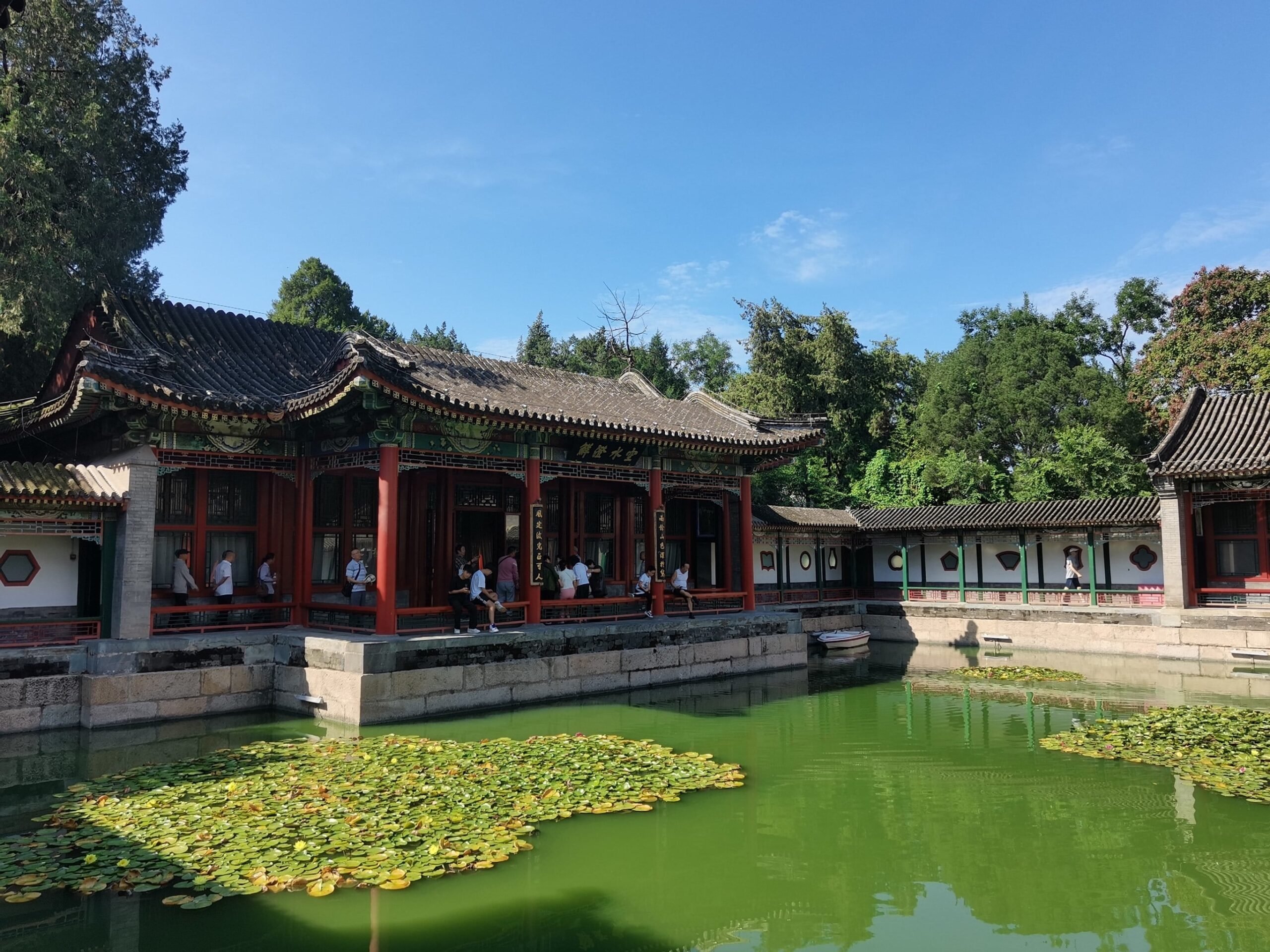
The exquisite Quiet Heart Studio (Jingxinzhai) is Beihai Park’s most refined garden-within-a-garden, originally built during the Ming Dynasty and expanded by Emperor Qianlong in the 1700s. This “Qianlong’s Small Garden” features elegant halls like Mirror-Clear Studio and Book-Loving Pavilion, connected by winding corridors, stone bridges and artificial hills. Combining northern China’s grandeur with southern China’s delicate beauty, its perfectly arranged pavilions, ponds and rockeries create a breathtaking imperial retreat where Qing royalty once studied and relaxed.
Yong’an Bridge
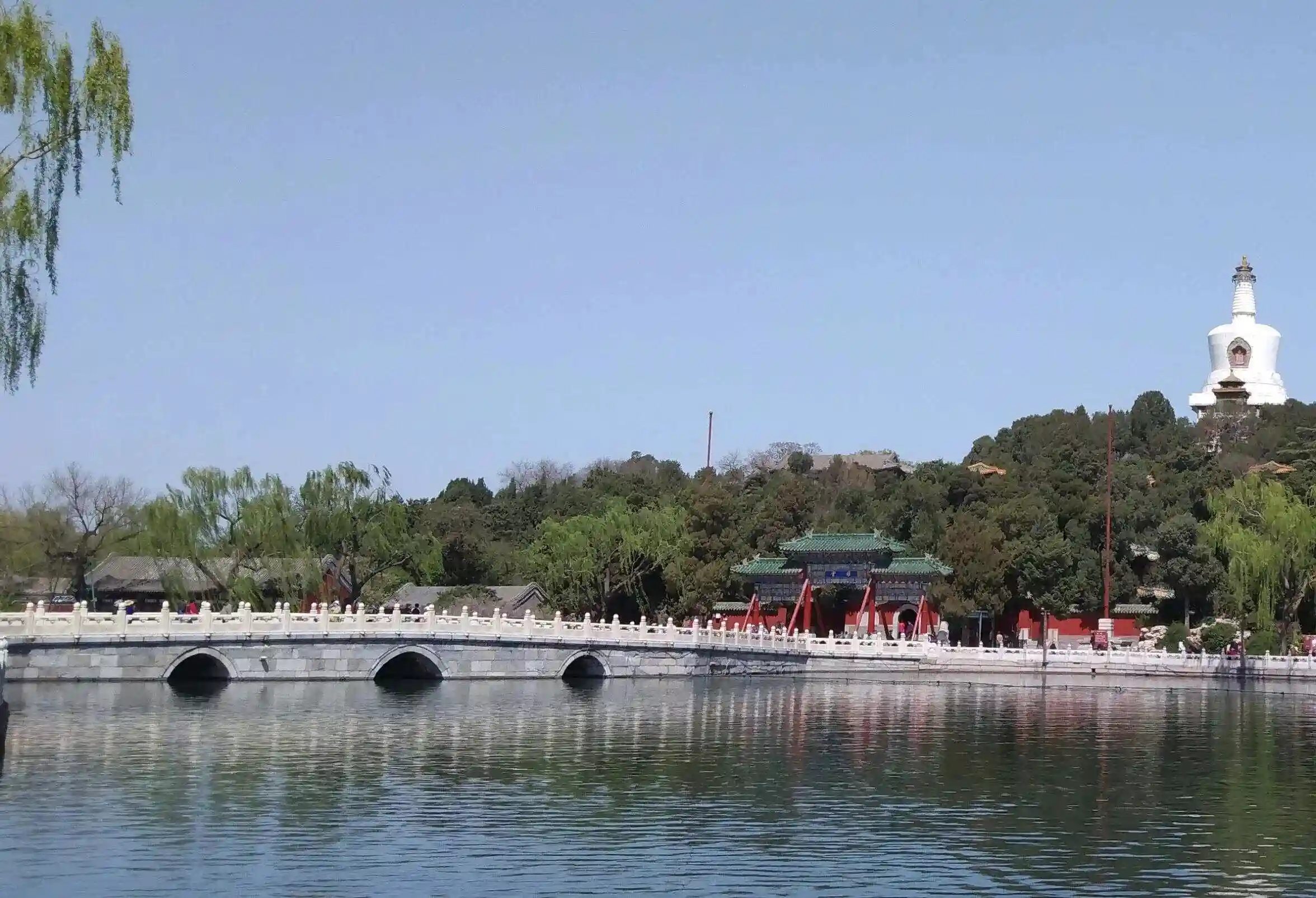
Yong’an Bridge, one of Beihai Park’s landmarks, was originally a wooden bridge from the Yuan Dynasty. Rebuilt in 1743 under Emperor Qianlong, this graceful three-arched stone bridge features 48 carved balusters and traditional stone lions at both ends. Connecting the White Dagoba island to the shore, its elegant triple-curve design and historic stone gateways make it the park’s most impressive bridge.
Five-Dragon Pavilion
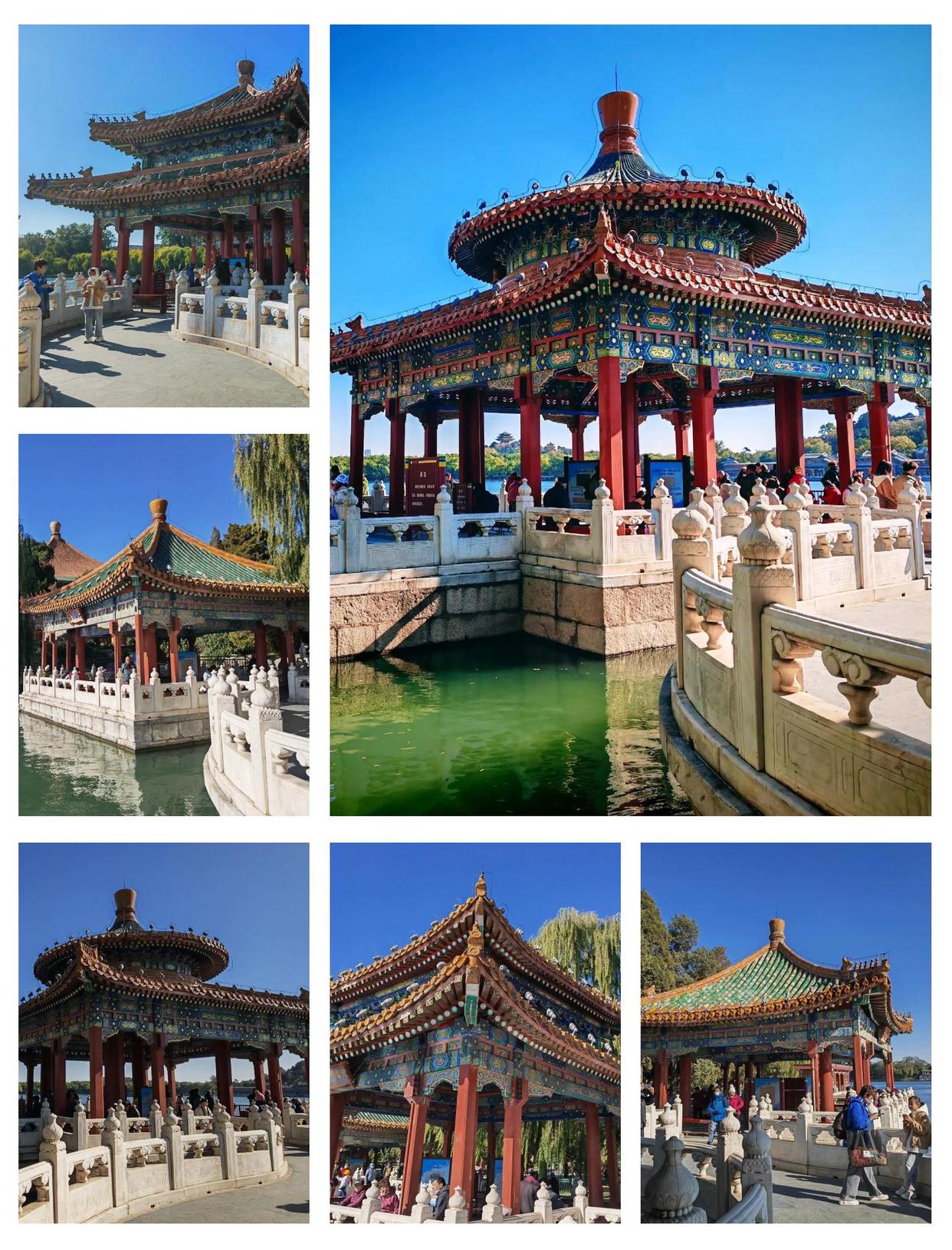
The Five-Dragon Pavilions, built between 1522-1566, stand gracefully along Beihai Lake’s northwest shore. These five interconnected pavilions form a distinctive S-shape resembling a dancing dragon. The central pavilion boasts an exquisitely decorated ceiling, while all offer perfect spots to admire the White Dagoba and lakeside views. This Ming Dynasty architectural gem is a favorite resting place for visitors.
Little Western Heaven
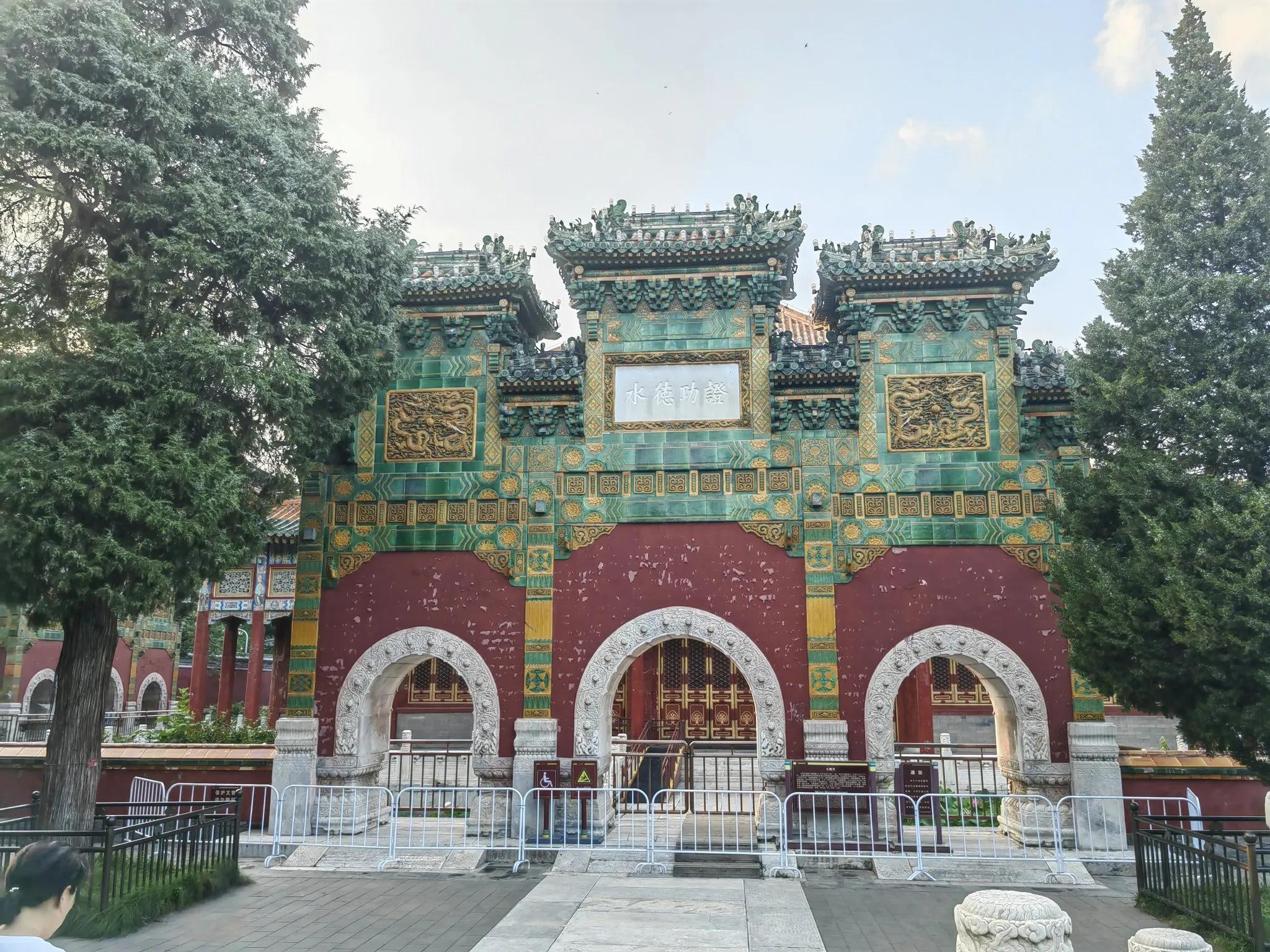
The Little Western Heaven (Xiaoxitian) was built for Emperor Qianlong’s mother’s birthday, featuring the magnificent Hall of Pure Pleasure – a masterpiece of Qing Dynasty architecture. Surrounded by water with bridges and glazed archways, this grand complex includes four corner pavilions and a moon-shaped canal. Its centerpiece was once a stunning Putuo Mountain clay sculpture with 226 arhat statues, creating a breathtaking Buddhist paradise scene.
Discover Activities Within Beihai Park
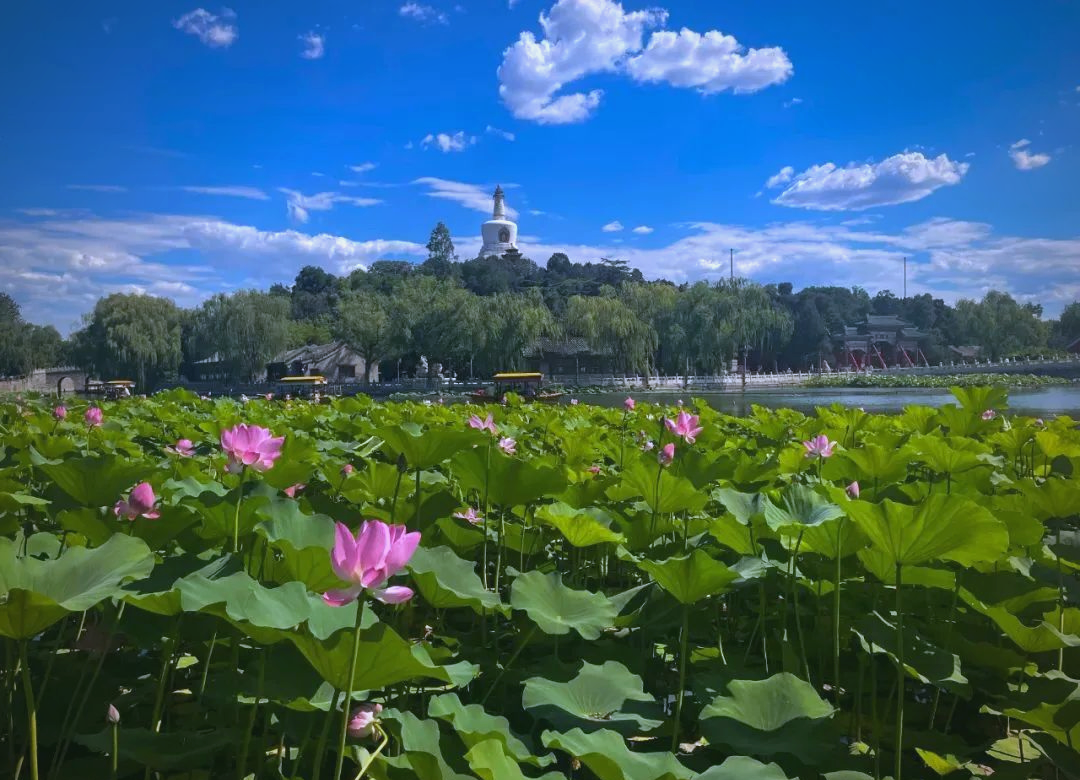
Beihai Park offers exciting seasonal activities throughout the year. The annual Lotus Festival is a major highlight, featuring stunning blooms and cultural events like lotus photography exhibitions and traditional painting displays. Visitors enjoy both natural beauty and Chinese artistic traditions during this vibrant summer event.
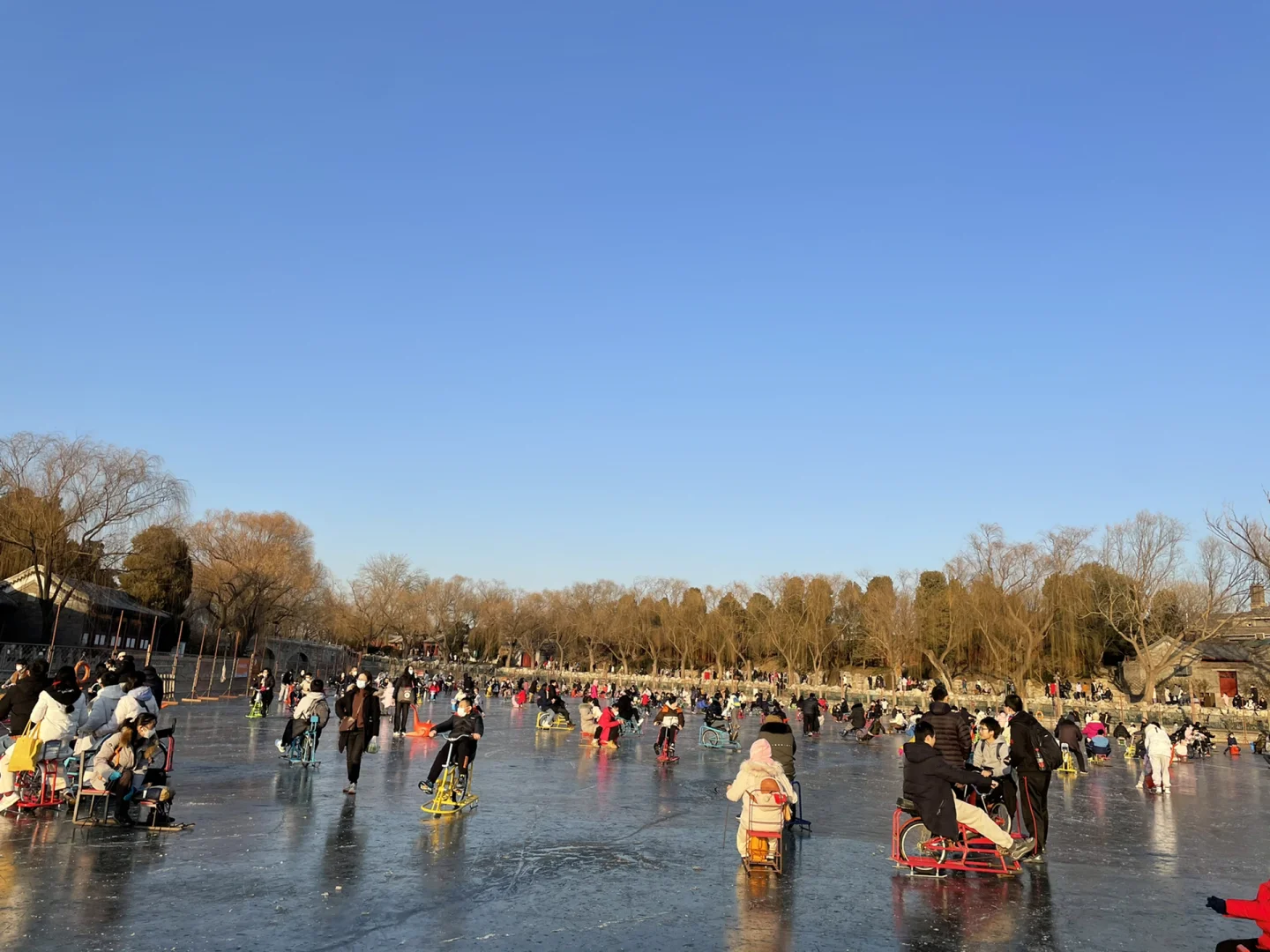
Winter transforms the park into a frozen playground. The south gate’s skating area becomes a beloved ice rink for locals and visitors alike. Surrounded by historic architecture, it offers a unique way to experience Beijing’s winter charm.
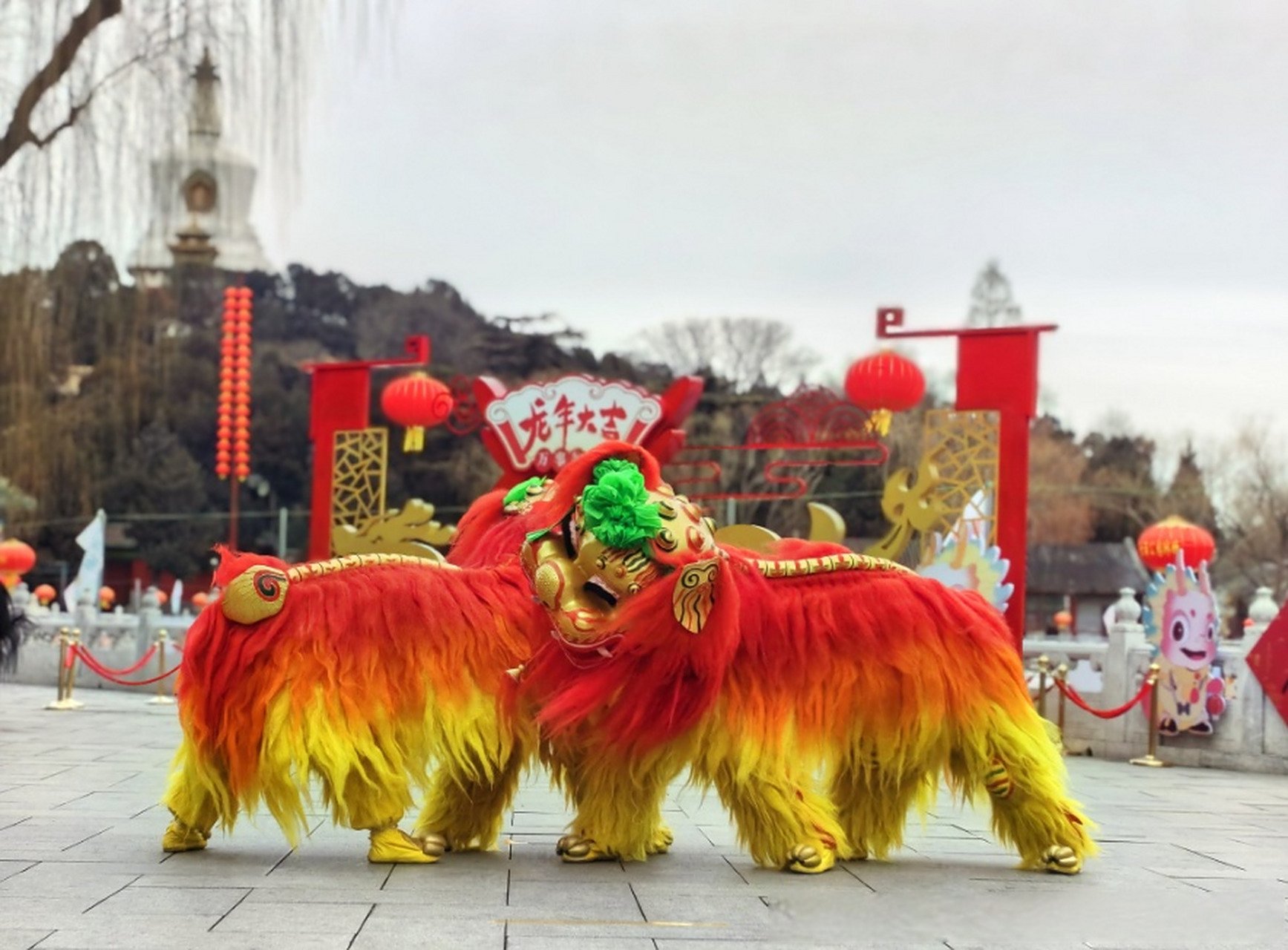
Traditional celebrations light up Lunar New Year. Lion dances, calligraphy blessings, and festive flower shows create joyful Spring Festival atmosphere. These cultural activities let visitors experience authentic Chinese New Year traditions.
Boat tours provide perfect lake views. With 11 docks and 400 vessels – from small 4-seaters to dragon boats – visitors can explore the park’s waterways in style. The boats offer refreshing perspectives of Beihai’s famous landmarks.
Beihai Park has different characteristics and beautiful scenery throughout the year. You can choose the best time to visit according to your preferences and schedule.
Beihai Park Tour Route Planning
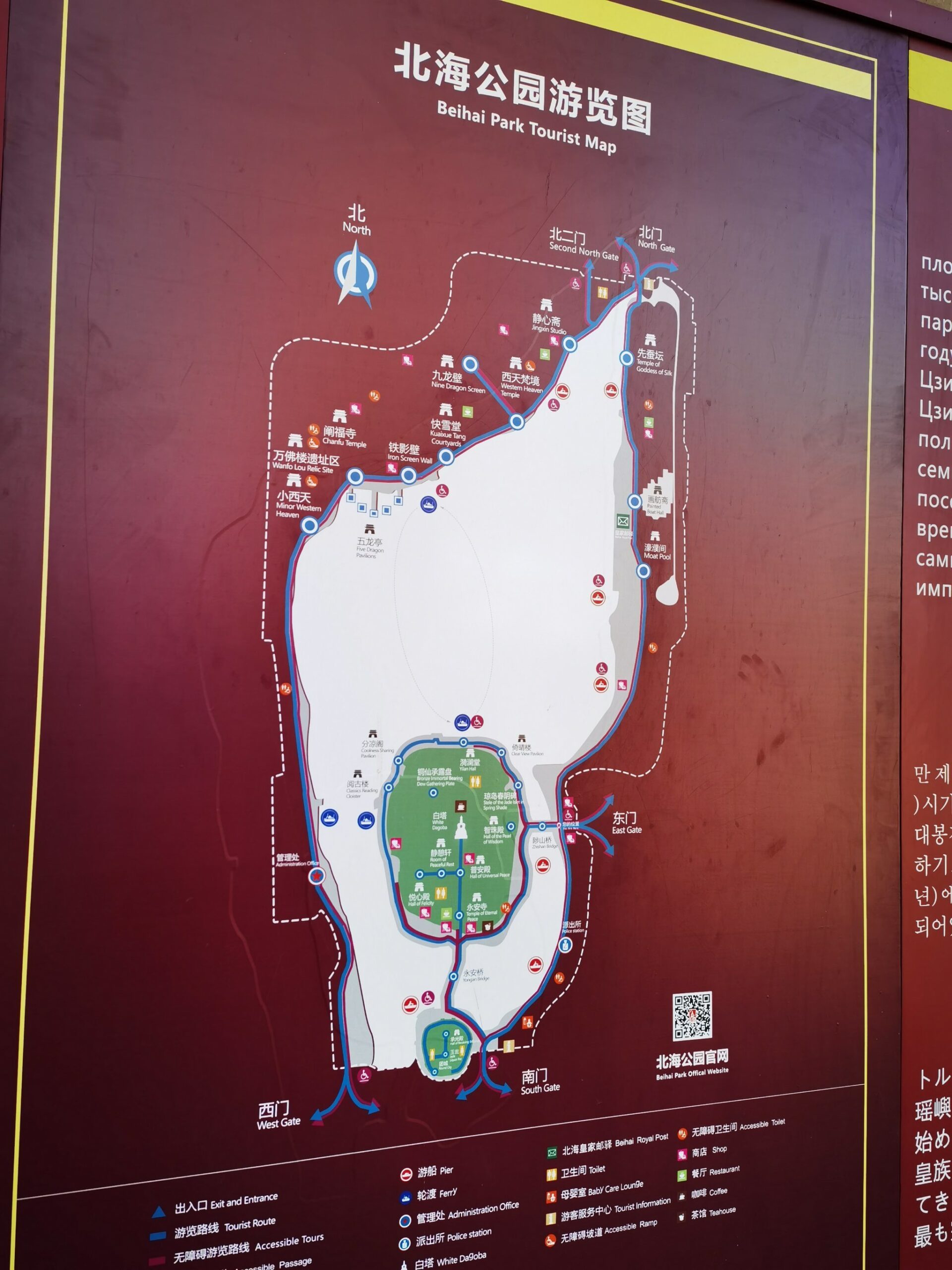
Beihai Park has multiple entrances, depending on your location and your day’s itinerary. If you take the subway, it is recommended to enter from the North Gate, which is the closest gate to the subway station and the most essential area of Beihai Park with the most concentrated attractions.
North Gate → Jingxin Studio → Western Heaven Temple → Nine Dragon Screen → Iron Screen Wall → Chanfu Temple → Five Dragon Pavilion (Take a boat to Jade Flower Islet) → Stele of Spring Shade on Qiong Islet → Yilan Hall → Classics Reading Cloister → White Dagoba → Temple of Eternal Peace → Circular City → South Gate
This route takes about 3-4 hours. The North Gate of Beihai Park is adjacent to Shichahai and Nanluoguxiang Alley. From the East Gate, you can walk to Jingshan Park, while the South Gate is close to the Forbidden City, making it convenient to combine visits with other attractions when planning your itinerary.
Best Time to Visit Beihai Park in a Day
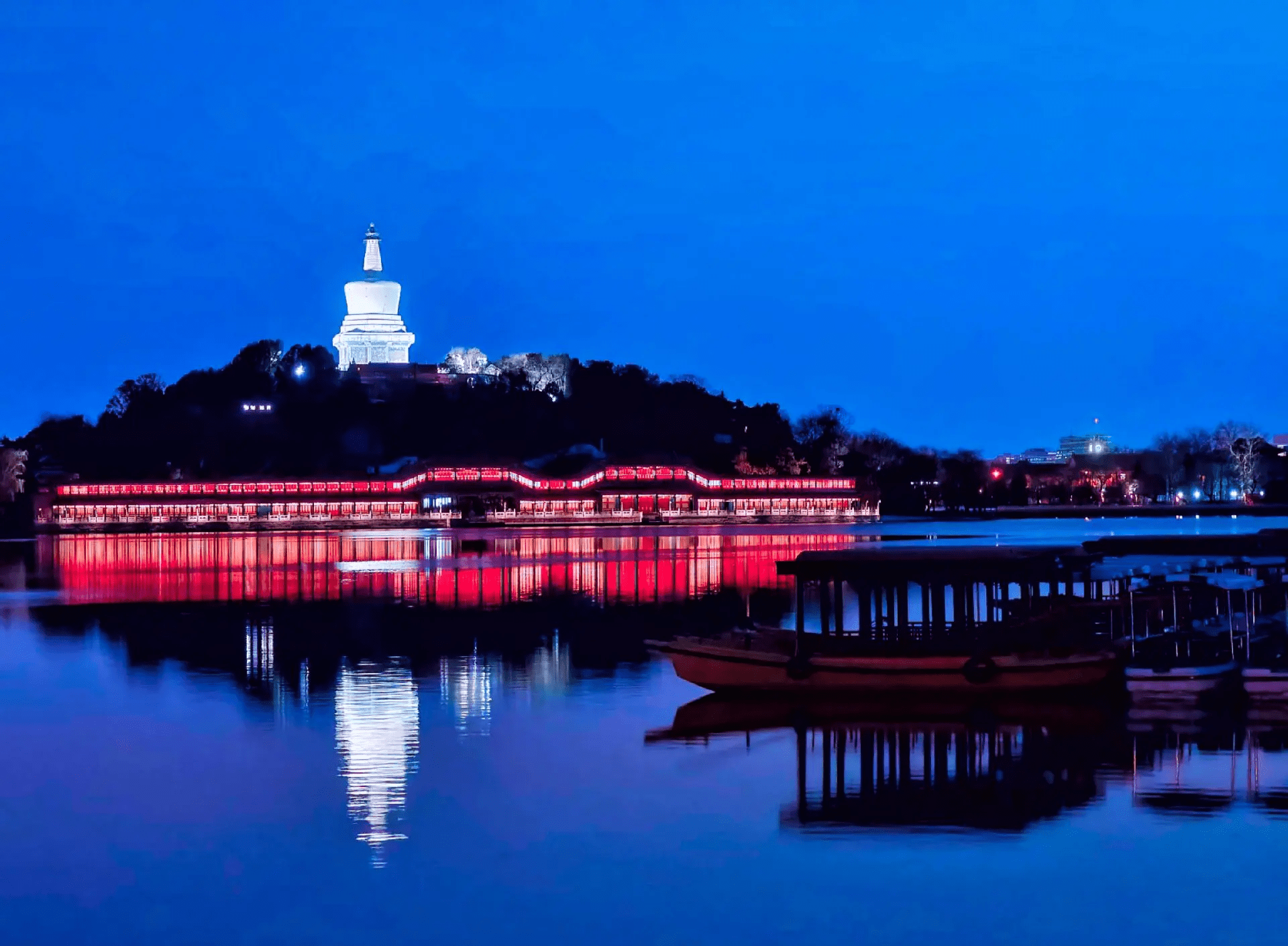
The best times to visit Beihai Park are early morning and evening. Arriving right at 6:30am opening lets you avoid crowds while enjoying peaceful morning air and local seniors’ tai chi practice – perfect for experiencing old Beijing’s charm. Evenings are ideal for boating as sunset paints the lake scenery. After 8pm, magical illuminations gradually light up the White Dagoba, Yong’an Bridge, Yilan Hall and Five-Dragon Pavilions, creating an enchanting nightscape that visitors find utterly captivating.
Restaurants near Beihai Park
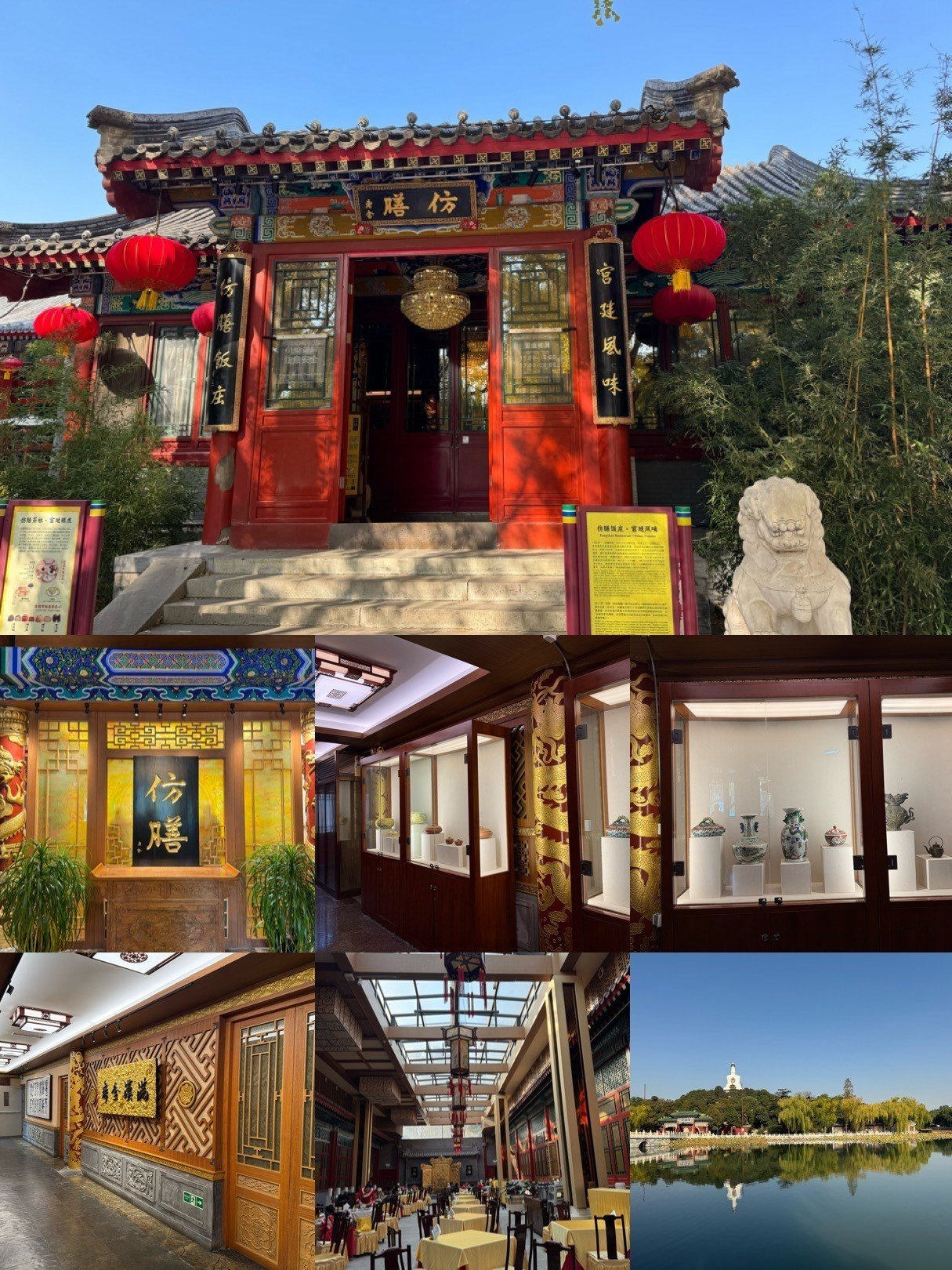
Fangshan Restaurant, near Beihai Park’s north gate, is a century-old establishment famous for imperial cuisine. Originally serving royal snacks, it now offers authentic court-style dishes in a classical setting with staff in traditional cheongsam. Popular but crowded, advance booking is recommended.
Qingfeng Baozi, west of Yongan Temple, offers quick, tasty steamed buns – a perfect snack while exploring Beihai Park. This popular spot serves Beijing’s classic buns with various fillings.
How to Get to the Beihai Park
By Metro
Take Line 6 and get off at Beihai Bei Station, and Go out from Exit B and walk 5 minutes east to the north gate of the park.
By Bus
- Take bus 103, 101, 109, 124, 128 or 685 and get off at Beihai station, then the gate is on the south.
- Take bus 3, 4, 13, 42, 107, 111, 118, 612 or 701 and get off at Beihai Beimen Station (North Gate of Beihai Park). The north gate is on the east.
- For the East Gate entrance: Take Bus No. 5 and get off at Banqiao Station, just steps away from the park eastern entrance.
Beihai Park Ticket Price & Opening Hour
Book Beihai Park Ticket Now| Entrance Fee | Apr. to Oct.: CNY 10; Nov. to Mar.: CNY 5. |
| Combo Ticket | Apr. to Oct.: CNY 20; Nov. to Mar.: CNY 15. including the main entrance ticket and the Qiongdao Scenic Area Cultural Relics Exhibition and Circle city in the park. |
| Opening Hours | Apr. to Oct.: 06:00 to 21:00 (ticket office closed at 20:30) Nov. to Mar.: 06:30 to 20:00 (ticket office closed at 19:30) |
Beihai Park vs. Jingshan Park
Beihai Park is a historic imperial garden centered around a large lake, famous for its White Dagoba and boating activities. Jingshan Park features a man-made hill offering panoramic views of the Forbidden City, with simpler landscaping.
While Beihai showcases water-based scenery and Buddhist architecture, Jingshan focuses on elevated city vistas.
Beihai has more cultural attractions like the Nine-Dragon Screen, whereas Jingshan is better for quick visits and photography.
Both parks are nearby but serve different experiences – Beihai for leisurely exploration, Jingshan for breathtaking overlooks.