The Old Summer Palace, known in China as Yuanmingyuan, is not just another tourist attraction in Beijing. It is an essential, soul-stirring journey into China’s imperial zenith and its tragic colonial past. Unlike the impeccably preserved Forbidden City or the serene Summer Palace, Yuanmingyuan offers a more profound experience: walking among the evocative ruins of what was once the world’s most magnificent garden estate.
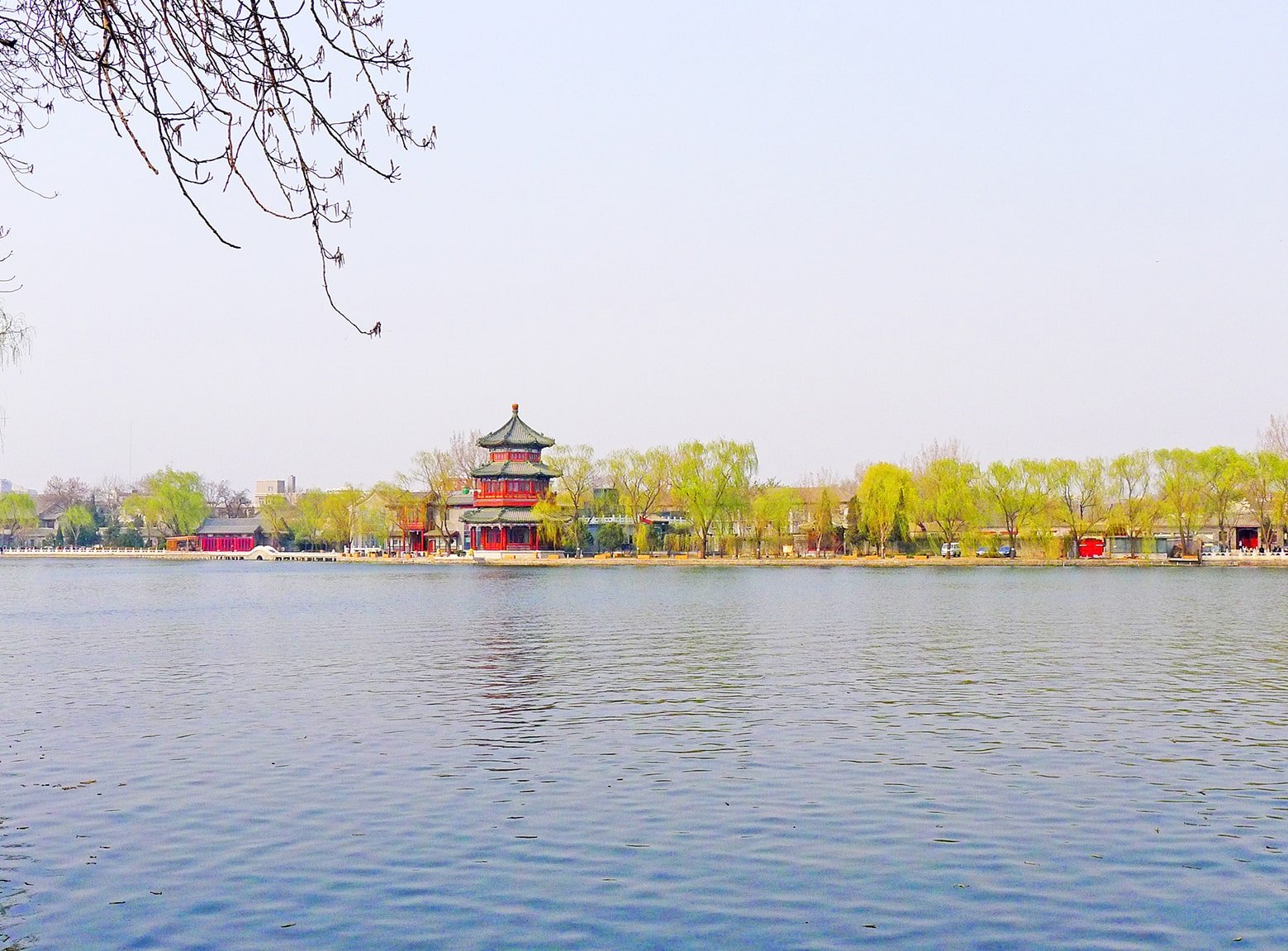
Old Summer Palace Facts
- Chinese Name: 圆明园 (Yuanmingyuan)
- Type: Historic Sites, Royal Garden, Heritage Parks
- Location: No. 28 Tsinghua West Road, Haidian District, Beijing
- Area: Over 864 acres (350 hectares)
- Recommended Visiting Time: 2 ~ 3 hours
- Opening Hours: Apr to Oct: 06:00 ~ 21:00; Nov to Mar: 06:30 ~ 19:30
- Tickets: CNY 10. Trip.com discount
- Best Seasons: spring (April to May) and autumn (September to October)
The Old Summer Palace was an extensive imperial garden constructed during the Qing Dynasty. It embodied the essence of classical Chinese landscape design, featuring lakes, hills, pavilions, and temples. Additionally, it incorporated a remarkable section of European-style Baroque palaces and fountains (Xiyang Lou), which were designed by Jesuit missionaries. It was considered a masterpiece of Chinese garden art and was renowned as the “Garden of Gardens” and the “Oriental Versailles.”
The palace also housed an unparalleled collection of cultural treasures, including precious artifacts, ancient books, historical documents, and works of art, making it a veritable treasure house of Chinese culture.
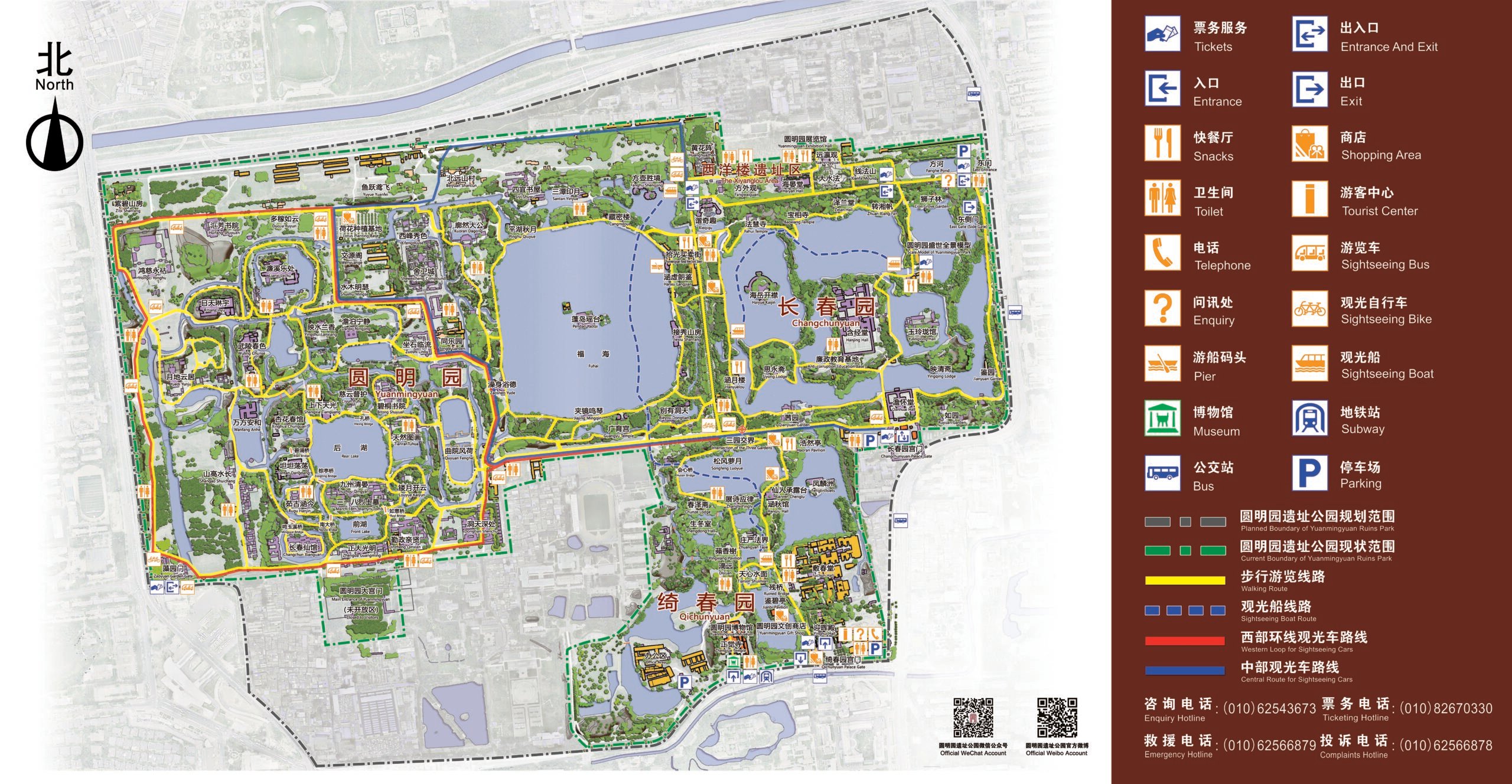
Old Summer Palace Map
Old Summer Palace History
Construction of Yuanmingyuan began in 1709 during the reign of Emperor Kangxi of the Qing Dynasty. The garden was gradually expanded under the reigns of Emperors Yongzheng and Qianlong, reaching its completed form around 1770. Further additions were made during the Jiaqing, Daoguang, and Xianfeng eras, resulting in over 150 years of continuous development. By the time of its completion, it had become a vast imperial garden complex comprising more than 140 palace structures and over 100 scenic landscapes.
In October 1860, during the Second Opium War, British and French troops systematically looted the unimaginable treasures within Yuanmingyuan and set fire to the entire complex. The burning lasted three days and three nights, reducing the “Garden of Gardens” to ashes. The site suffered further damage in 1900 during the Boxer Rebellion.
After the founding of the People’s Republic of China, the government initiated preservation and restoration efforts. In January 1988, Yuanmingyuan was listed as a National Key Cultural Relic Protection Unit. It was officially opened to the public as Yuanmingyuan Ruins Park on June 29 of the same year.
What to See in the Old Summer Palace
The Old Summer Palace was composed of three main gardens: Yuanming Yuan, Changchun Garden (‘Forever Spring Garden’), and Qichun Garden (‘Gorgeous Spring Garden’). Yuanming Yuan was the largest of the three, so the entire complex was collectively known as Yuanmingyuan.
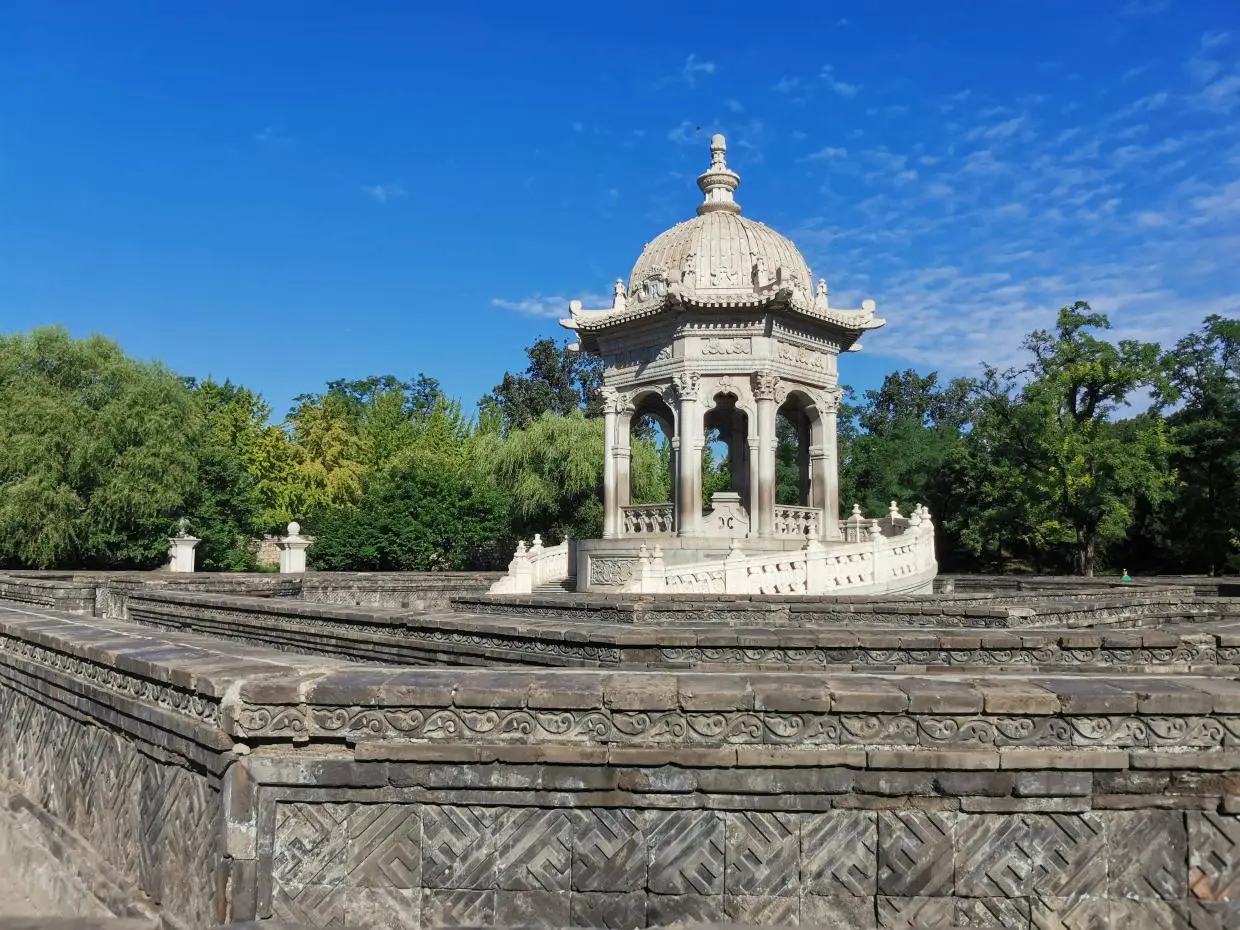
Changchunyuan (the Garden of Eternal Spring)
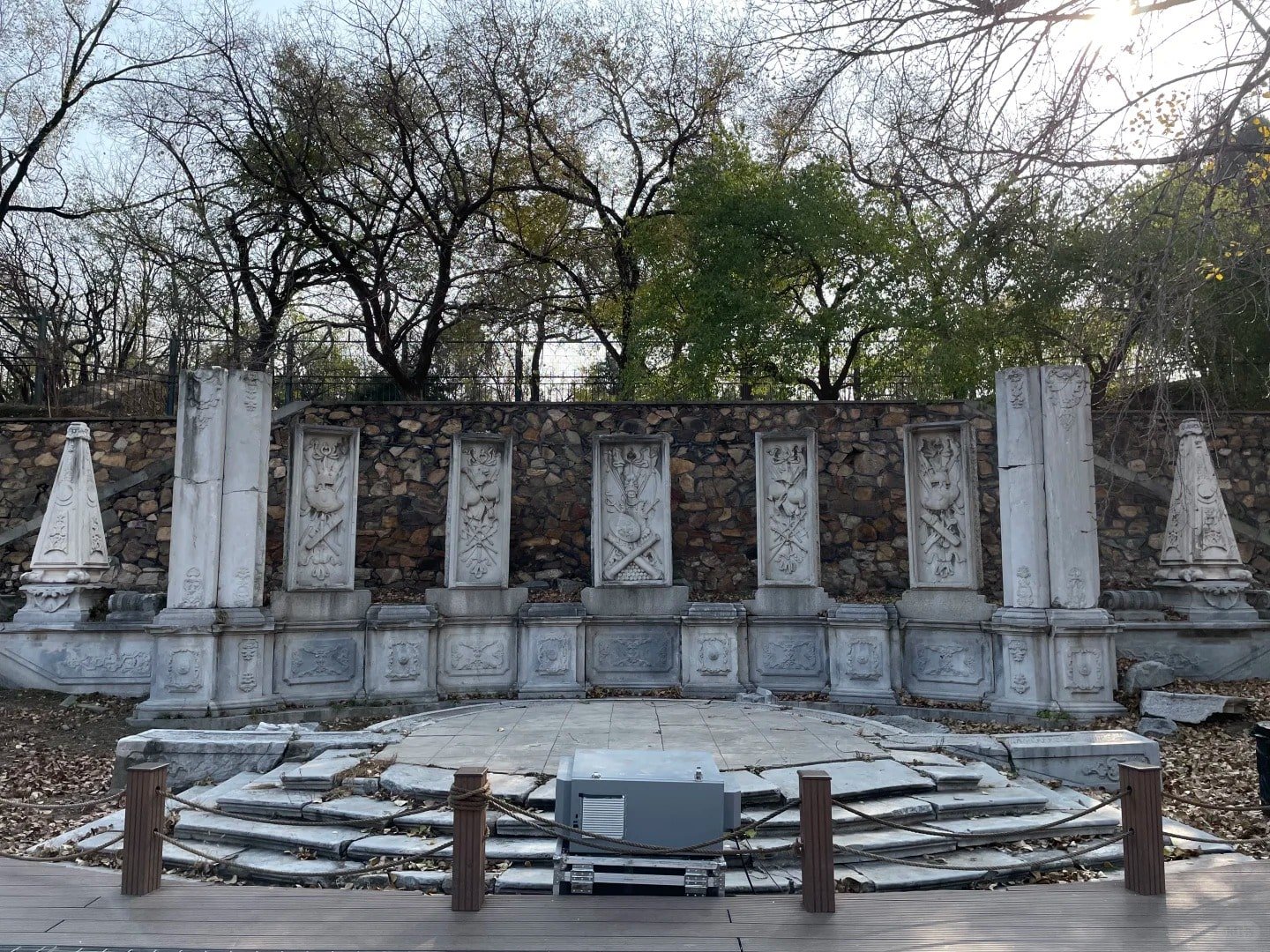
This section contains some of the most iconic and best-preserved ruins in the entire complex. Its most famous feature is the European Palaces Ruins (Xiyang Lou). Built from more resilient stone and marble, these structures left behind the most recognizable remnants. Key sites here include:
- The Great Fountain Ruins (Dashuifa): The grand base of a complex Western-style hydraulic fountain system.
- The Guanshuifa (Throne for Viewing the Fountains): The platform where Emperor Qianlong would sit to admire the elaborate water displays.
- The Haiyantang Hydrological Clock: The base of the fountain that featured the famous 12 Bronze Animal Heads, which symbolized the 12 hours of the day. (Replicas are now on display; several original heads have been repatriated to China).
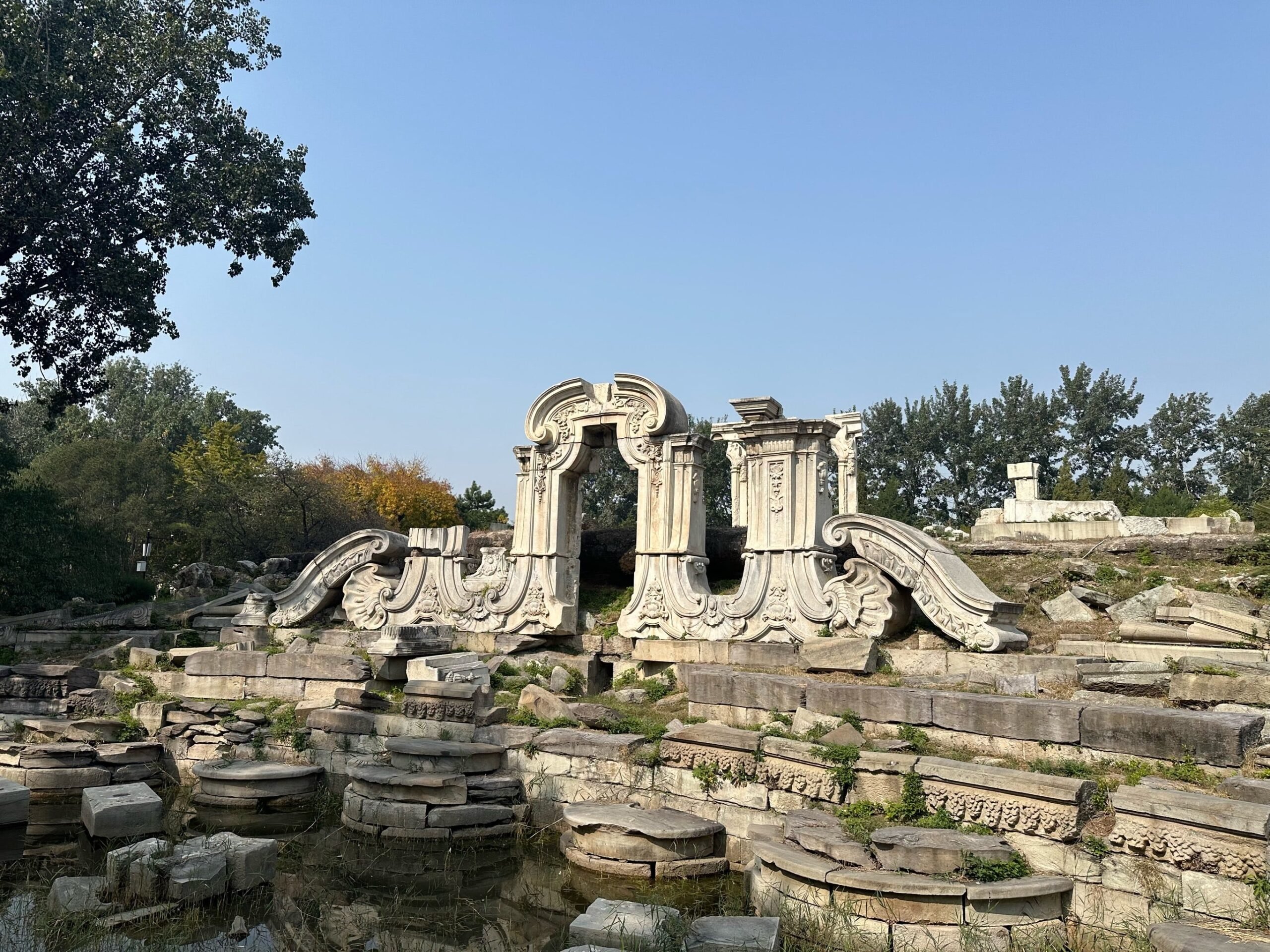
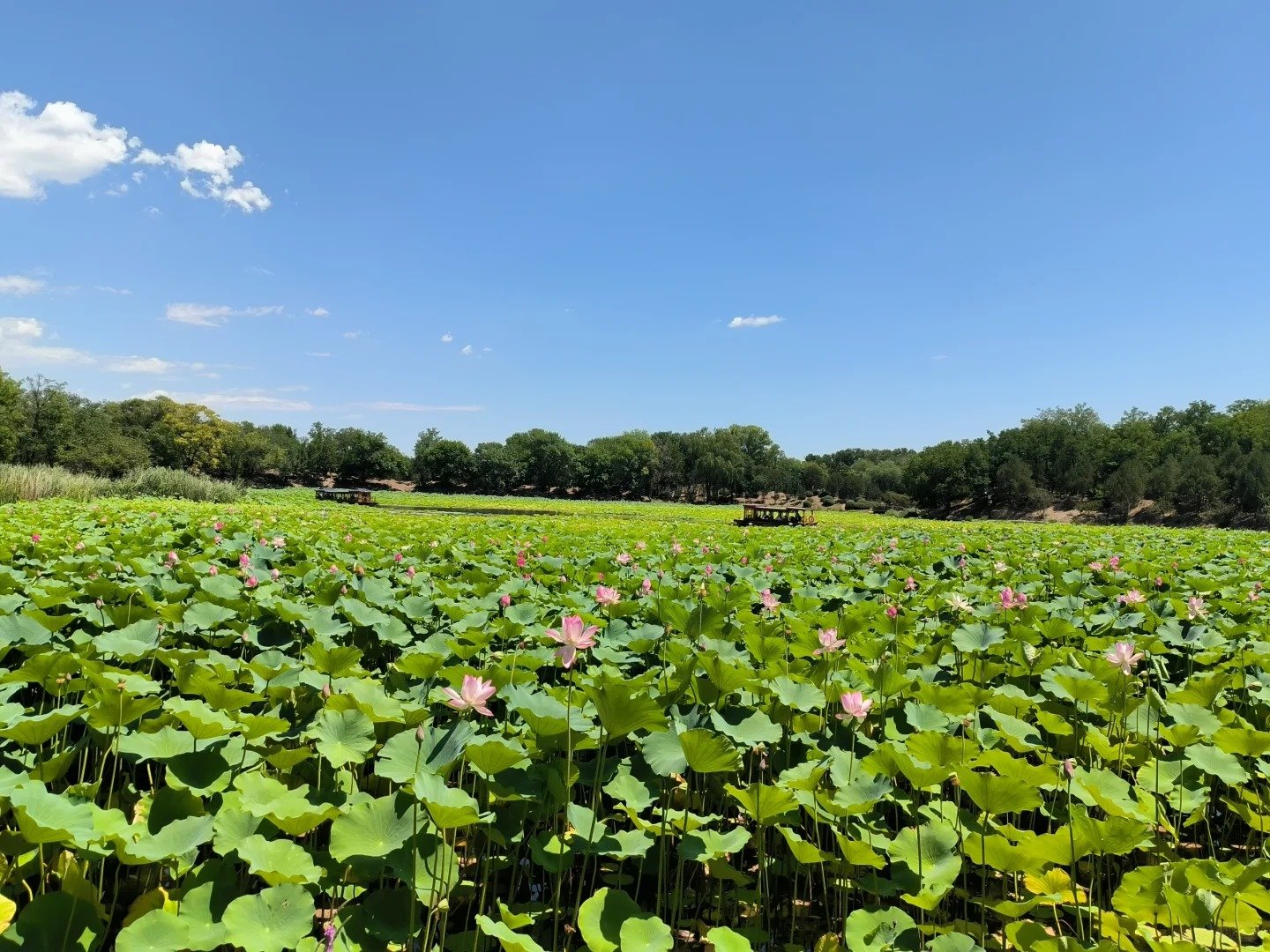
Beyond the European ruins, Changchun Garden is also renowned for its vast and beautiful lotus fields, which bloom spectacularly in the summer.
Yuanmingyuan
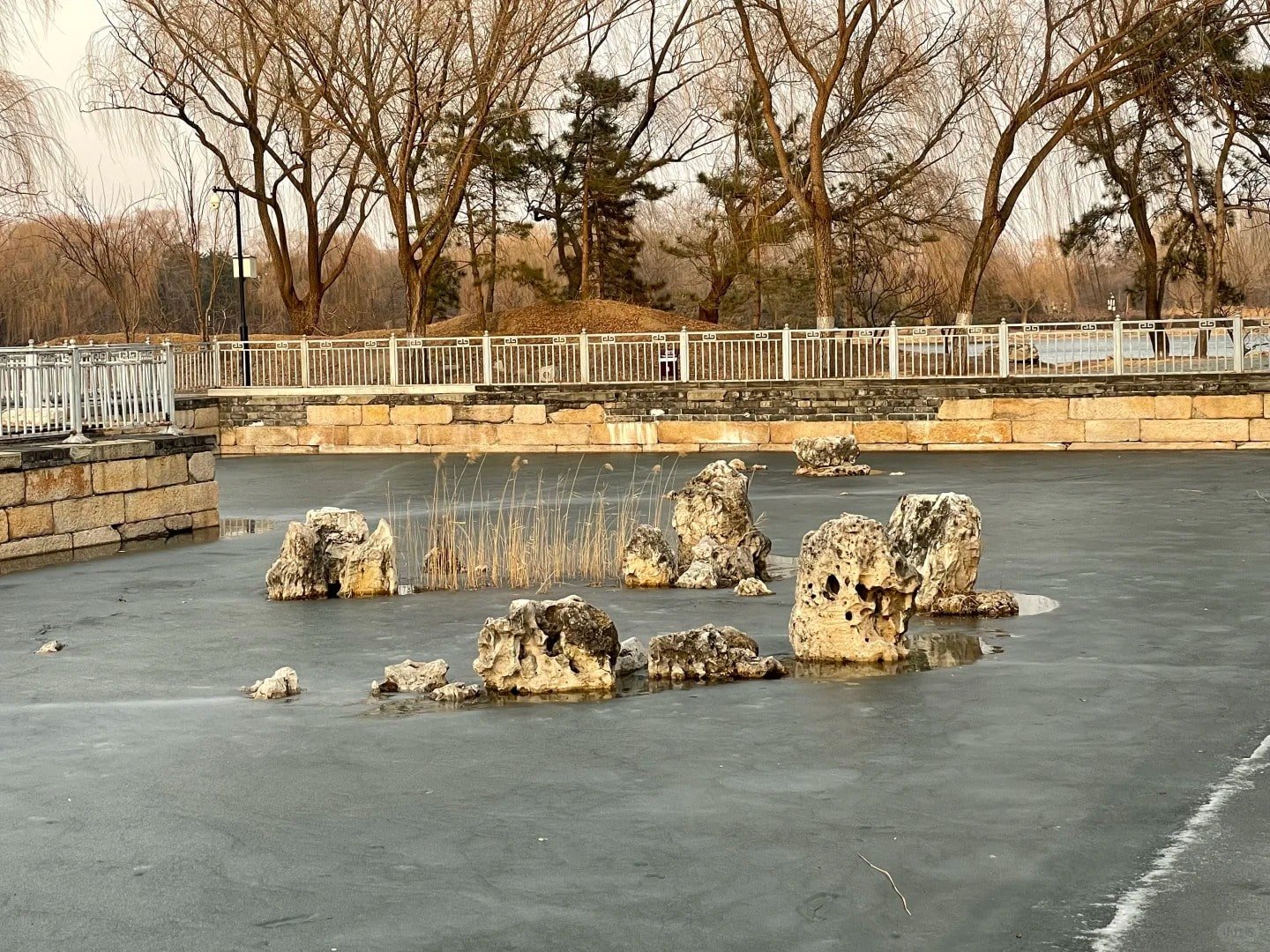
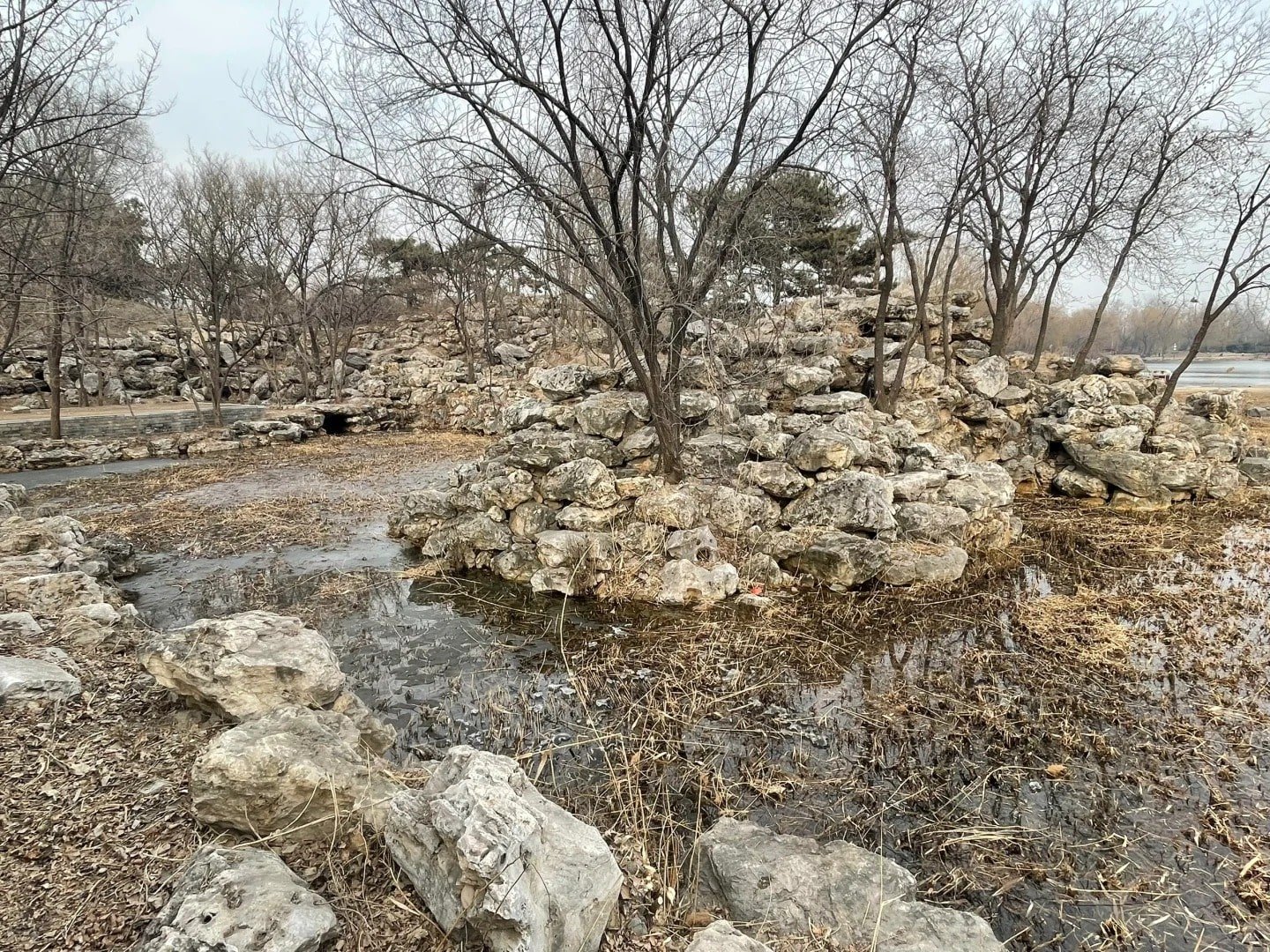
The largest of the three gardens, this area consists mostly of rolling hills, meadows, and interconnected lake systems. While its wooden structures were completely destroyed, the foundations of many Chinese-style halls, pavilions, and bridges are hidden beneath the grass and water, leaving much to the imagination and offering a serene landscape.
Wanchunyuan (the Garden of Blossoming Spring)
The smallest of the three gardens, Qichun Yuan (also known as Wanchun Yuan), was once home to imperial residences. Today, it features reconstructed bridges, islands, and willow-lined waterways, serving as the main entrance for many visitors and providing a picturesque park-like atmosphere.
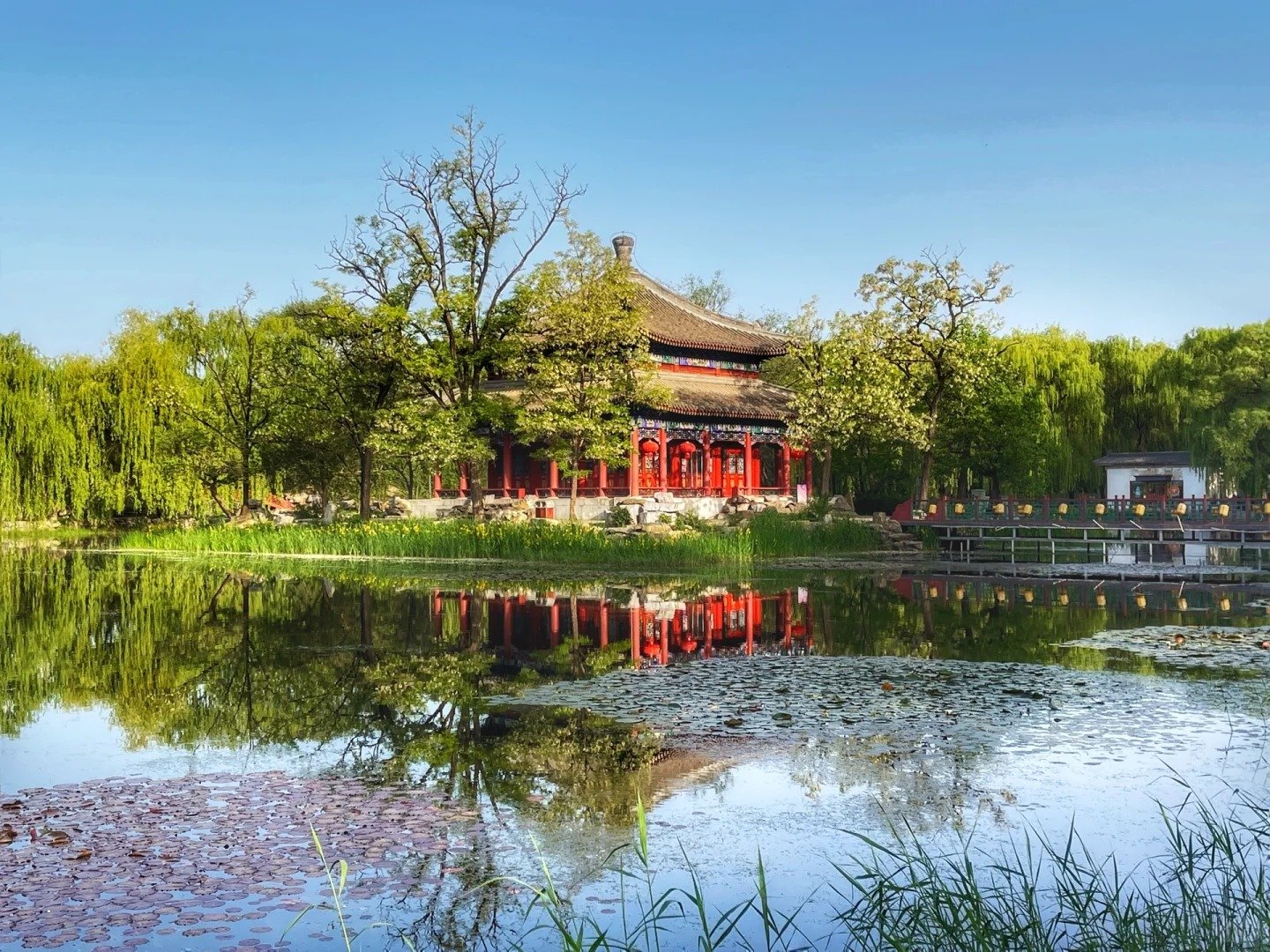
Fuhai Lake
A vast lake located in the central part of the complex, perfect for boating in the summer. It offers a peaceful and scenic respite, contrasting with the dramatic stories of the surrounding ruins.
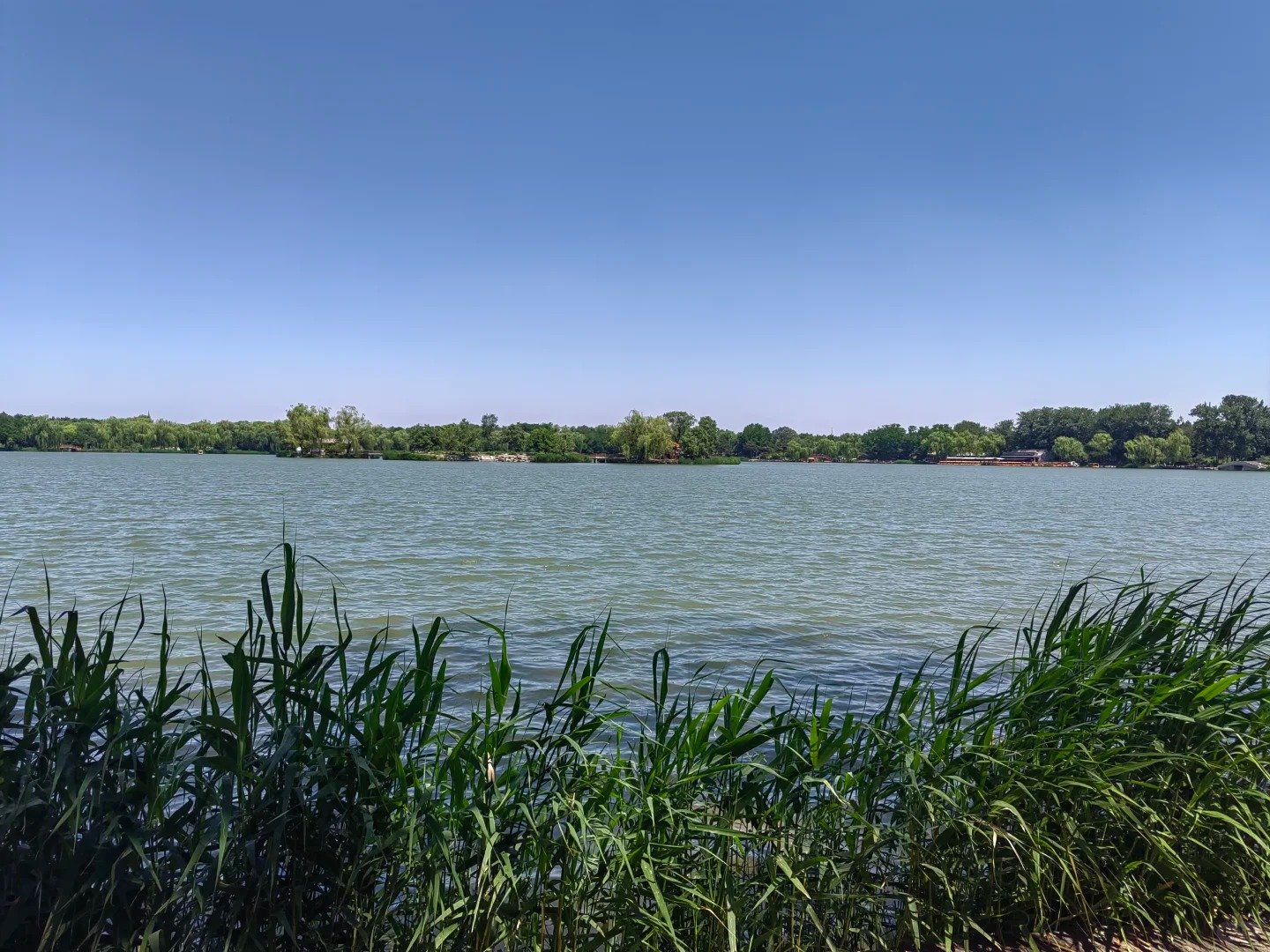
Zhengjue Temple
Located just west of Qichun Garden, Zhengjue Temple is an affiliated temple of the Old Summer Palace. Originally built during the Tang Dynasty, it is the best-preserved architectural complex within the entire Yuanmingyuan area.
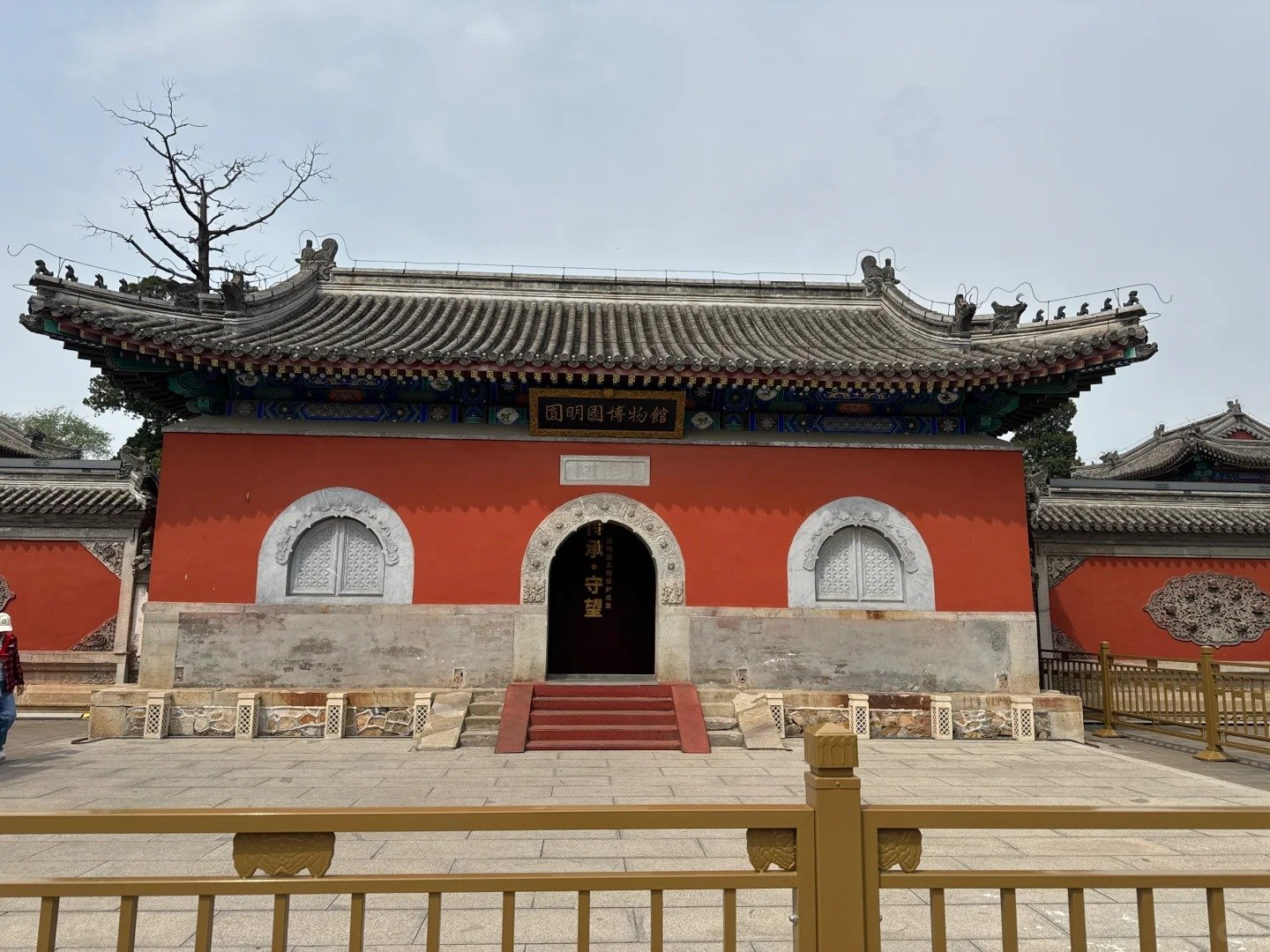
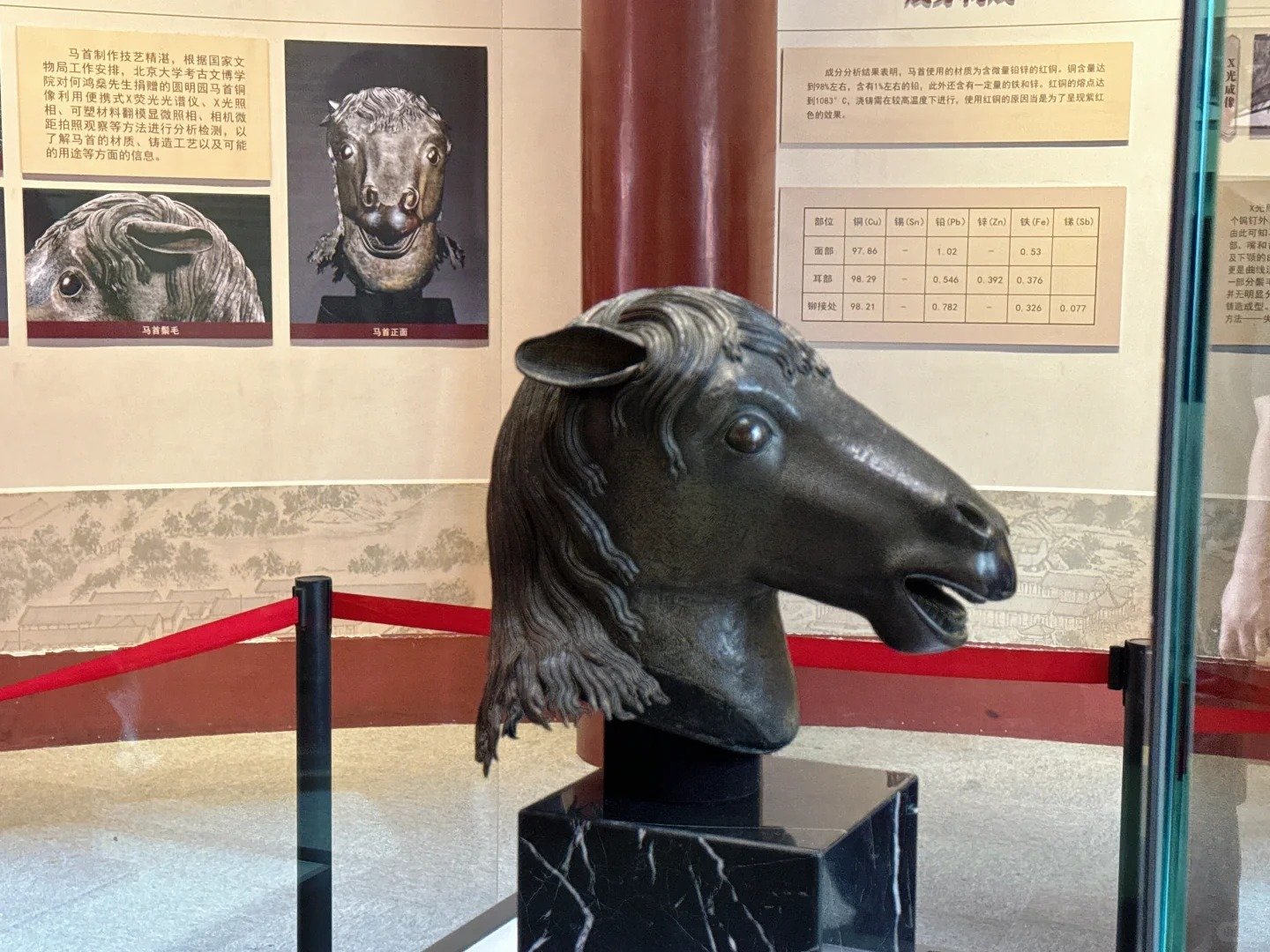
Today, the temple houses the Yuanmingyuan Museum, with exhibits displayed throughout its historic structures, including the Mountain Gate, Bell Tower, and Drum Tower. The centerpiece of the collection is the Horse Head (Ma Shou), one of the renowned twelve bronze animal heads from the original Haiyantang fountain, which is considered the treasure of the museum.
Old Summer Palace Visiting Route
Route 1: One Hour
East Entrance – The Xiyanglou Area (Dashuifa, Haiyan Hall, Yuanyingguan etc) – Lion Grove Garden – East Gate
This route is designed for a time-efficient visit, focusing primarily on the iconic Western-style architecture and landscapes of the Xiyanglou Scenic Area.
Route 2: 3 Hours
Zhengjue Temple (Entrance) → Hanqiu Hall → Intersection of the Three Gardens → Ginkgo Avenue → The Xiyanglou Area → Lion Grove Garden → Scale Model of Yuanmingyuan Park → Exit at East Gate
This route is designed for those who love to explore on foot, offering a perfect blend of historical sites and natural scenery at a leisurely pace.
In-Depth Route: 4 – 5 Hours
Zhengjue Temple → Pinxiang Pavilion → Intersection of the Three Gardens → Yuanmingyue Royal Merchant Street → The Xiyanglou Area → Lion Grove Garden → Black Swan Viewing Area → Scale Model of Yuanmingyuan Park → Hanjing Hall → Qianyuan Garden → Hanqiu Hall → Ruined Bridge → Jianbi Pavilion → Exit at South Gate
This carefully curated route blends Yuanmingyuan’s most iconic ruins, serene gardens, and cultural exhibits, offering a thorough experience of its historical grandeur and natural beauty. Perfect for visitors who wish to explore both well-known landmarks and hidden gems.
Best Time to Visit the Old Summer Palace

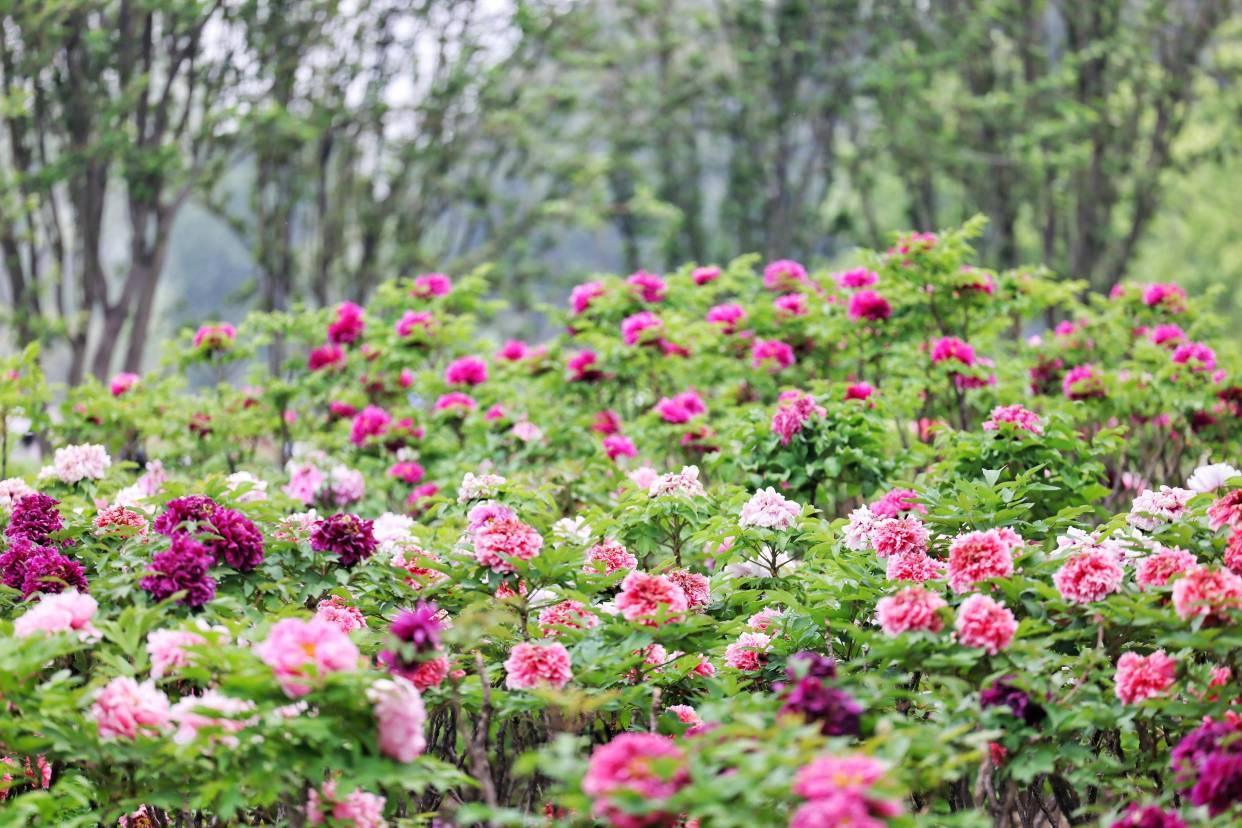
The ideal seasons to visit the Old Summer Palace are spring (April to May) and autumn (September to October), when temperatures are mild and crowds are thinner. Spring offers a vibrant display of peonies and Chinese herbaceous peonies in full bloom. In autumn, the renowned Ginkgo Avenue is particularly spectacular, as the tree-lined path turns into a golden canopy.
For the best lighting and atmosphere, early morning (around 8-10 AM) provides soft light and fewer visitors. Late afternoon (3-5 PM) is also highly recommended, when the setting sun illuminates the historic ruins—especially around the Grand Fountain—with a warm, dramatic glow.
How to get to the Old Summer Palace
By Subway
Take Subway Line 4 directly to Yuanmingyuan Station. Exit from Exit B, and you’ll be within walking distance of the Qichunyuan Palace Gate.
By Bus
- South Gate (Qichun Garden Palace Gate): Take bus 331, 432, 438, 498, 601 or 664 and get off at Yuanmingyuan South Gate Bus Station.
- East Gate: Take bus 305, 320, 365, 375, 424, 432, 614, 681 or 982 and get off at Yuanmingyuan Park East Gate Bus Station.
- Zaoyuan Gate: Take bus 303, 331, 346, 394, 437, 476, 534, 563 or 608 and get off at North Xiyuan Station. Then walk north for about 300 meters to the Zaoyuan Gate.
Old Summer Palace Tickets & Opening Hours
Book your ticket now| Ticket Type | Price |
| Adult Combo Ticket | CNY 25 |
| Adult Ticket for Yuanmingyuan Park Panoramic Model Exhibition | CNY 10 |
| Adult Ticket for Xiyanglou Ruins Area | CNY 15 |
| Adult Ticket | CNY 10 |
Note: free for minors (aged 0-18) and the old over 60
Yuanmingyuan Park Opening Hours:
| Period | Area | Open | Last Entry / Ticket Sale Stops | Close |
|---|---|---|---|---|
| Apr 1 – Oct 31 | Park Main Gate | 6:00 (Open) | 19:00 (Last Entry & Ticket Sale) | 21:00 |
| Western Mansions Ruins Scenic Area | 7:00 | 19:00 (Last Entry) | 21:00 | |
| Yuanmingyuan Park Panoramic Model Exhibition | 7:00 | — | 19:00 | |
| Nov 1 – Mar 31 | Park Main Gate | 6:30 (Open) | 17:30 (Last Entry & Ticket Sale) | 19:30 |
| Western Mansions Ruins Scenic Area | 7:00 | 17:30 (Last Entry) | 19:30 | |
| Yuanmingyuan Park Panoramic Model Exhibition | 7:00 | — | 17:30 |
Old Summer Palace vs. Summer Palace
Many visitors to Beijing are familiar with the splendid Summer Palace (Yiheyuan). It is crucial to recognize that the Old Summer Palace (Yuanmingyuan), despite the similar name, is a distinct entity—both in its physical location and its historical narrative.
Only 5 kilometers apart, these two royal gardens reveal contrasting chapters of China’s past. The Summer Palace showcases restored grandeur: its elegant landscapes around Kunming Lake reflect a rebuilt ideal of imperial leisure from the late 19th century.
The Old Summer Palace, by contrast, preserves a landscape of loss. Here, visitors find arresting marble fragments and silent columns—remnants of the garden’s deliberate destruction in 1860. This is not a leisure garden, but a place of reflection.
One site reveals the height of Qing-dynasty landscape art; the other reveals its violent loss. Together, they form a deeper narrative of China’s heritage.
Frequently Asked Questions
Yes, there are several dining options available within the park. Visitors can find a variety of food stalls and refreshment kiosks selling snacks and light meals. For a more substantial meal, there are also designated food courts located near major scenic areas such as Qichun Garden and the Grand Fountain Ruins. These offer both casual seating and quick bites, making it convenient for visitors to enjoy a meal while exploring.
If you have a full day and good physical condition, walking is recommended. However, for those short on time, traveling with elderly or children, the boat and sightseeing car are better options to cover more areas comfortably.
A one-way ticket for the sightseeing car costs ¥20 per adult. Each ticket allows one mid-route stop. Boat fares vary: one type costs ¥35 per person, another is ¥25, while pedal boats and electric boats are priced separately.
The zinnia blooms are on display until mid-October. They are located near the Zaoyuan Gate: enter and walk about 200 meters north, where you’ll find a vast field of zinnias along the path.
The Ginkgo Avenue is a straight northbound road located at the intersection of the three gardens.
Yes, self-service rental bikes are available. The deposit is ¥450. The minimum rental period is one hour, with billing in 30-minute increments thereafter. A two-person bike costs ¥60 per hour, and a four-person bike is ¥80 per hour.
Bikes can be picked up and returned at the following locations: the Intersection of the Three Gardens, Zaoyuan Gate, and the Western Mansions Ruins area.