The Ming Tombs, known as the Thirteen Tombs of the Ming Dynasty for the thirteen emperors buried here, are situated at the southern foot of Tianshou Mountain in Beijing’s Changping District. As the world’s most extensive and best-preserved imperial mausoleum complex, the site represents exceptional preservation of Ming architectural traditions and burial customs. It offers visitors a unique glimpse into China’s imperial history and cultural heritage.
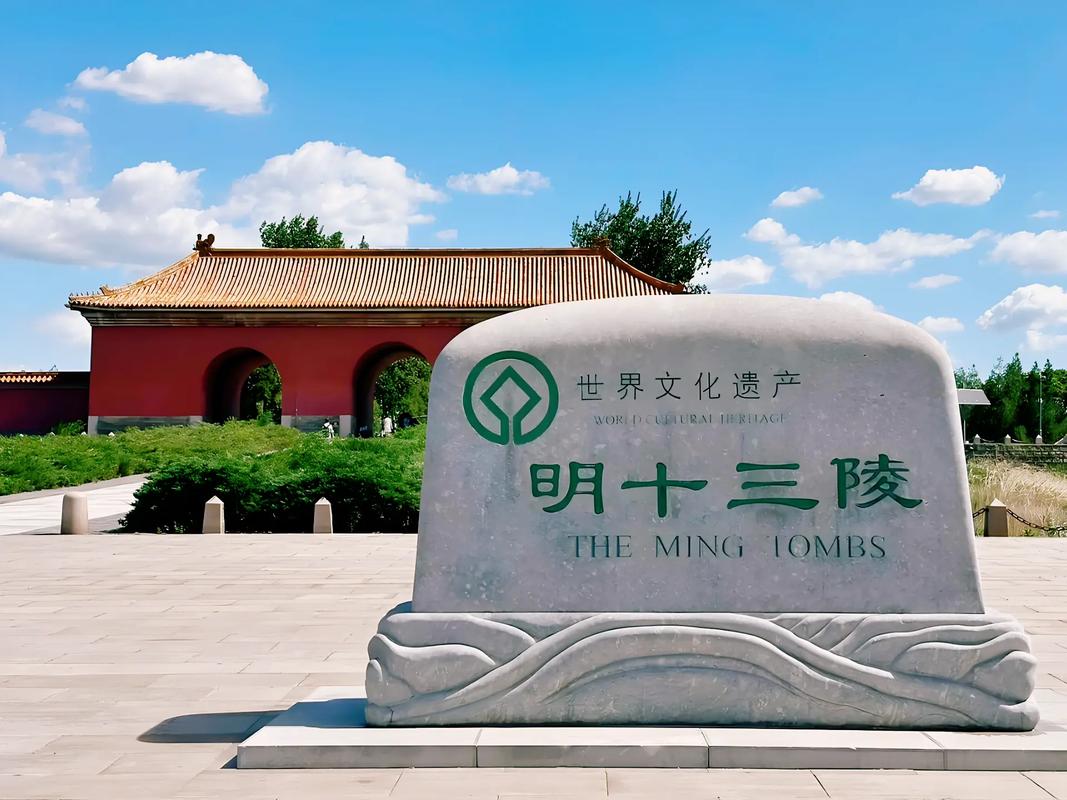
Ming Tombs Facts
- Chinese name: 明十三陵
- Name: Ming Tombs / Ming Shisan Ling / Ming Dynasty Tombs
- Type: World Heritage Sites, Historic Sites, Sight & Landmarks, Monument & Statues
- Location: Changping District, Beijing (approximately 50 km north of city center)
- Area: 120 square kilometers
- Recommended Visiting Time: Half a day
- Opening Hours: 08:00 ~ 17:30 (April to October) ; 08:30 ~ 17:00 (November to March)
- Tickets: Starts from CNY 20. Trip.com discount
History of Ming Tombs
The construction of the Ming Tombs began in 1409 under the reign of the Yongle Emperor, Zhu Di, who moved the capital from Nanjing to Beijing. This monumental project continued for over 230 years, spanning the Ming Dynasty and extending into the early Qing Dynasty (around the mid-17th century). During this period, 13 elaborate imperial mausoleums were built, each serving as the final resting place of a Ming emperor.
In 1961, the Ming Tombs were designated as one of China’s first National Key Cultural Heritage Protection Units, recognizing their historical and architectural significance. In 2003, UNESCO inscribed the site onto the World Heritage List.
Why Were the Ming Tombs Built at Tianshou Mountain?
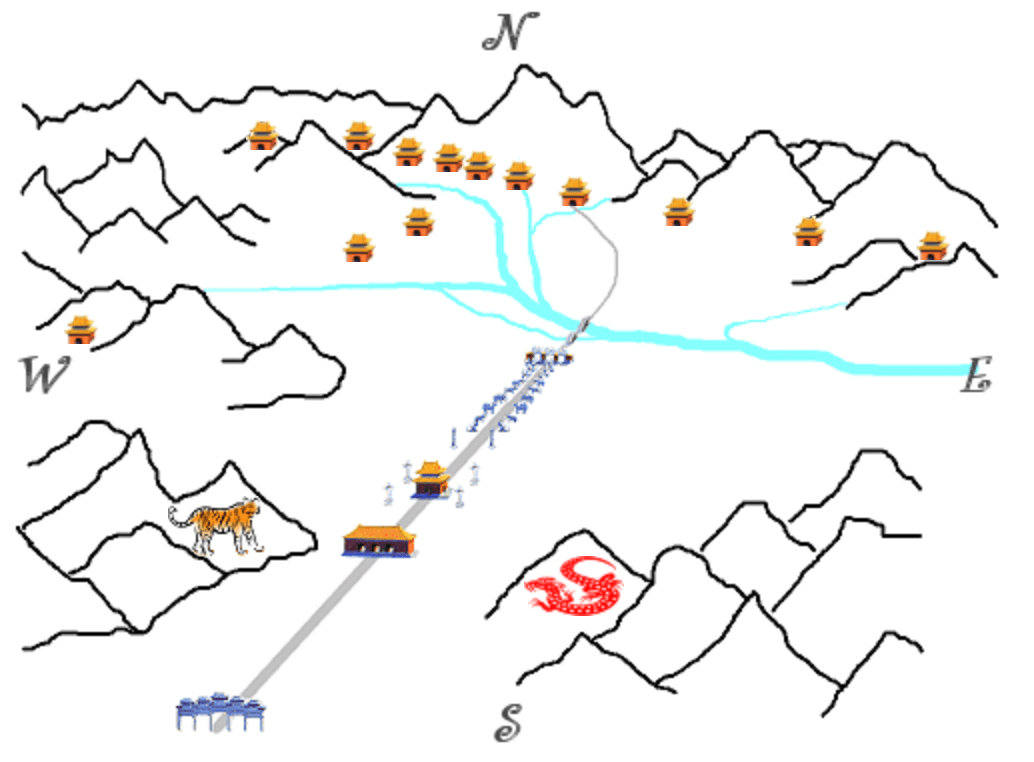
Emperor Yongle (Zhu Di) sent Feng Shui experts to select an auspicious burial site. They chose a branch of the Yan Mountains, which the emperor named Tianshou Mountain, establishing the location for the Ming Tombs.
Feng Shui is an ancient Chinese practice that seeks to attract good fortune and prevent misfortune by harmonizing human spaces with the natural world. It combines principles from Taoism, Confucianism, and Buddhism, guiding the design of buildings, homes, and urban areas to achieve balance and positive energy flow.
From a Feng Shui perspective, the tomb complex sits within a protective basin, embraced by mountains on three sides—a configuration symbolizing stability and security. Tianshou Mountain to the north forms a solid “backrest”, while Dragon Mountain to the east and Tiger Mountain to the west represent the Azure Dragon and White Tiger—celestial guardians in Feng Shui tradition. The Wenyu River meanders through the southern plain, completing the perfect balance of shan (mountain) and shui (water).
Layout of the Ming Tombs
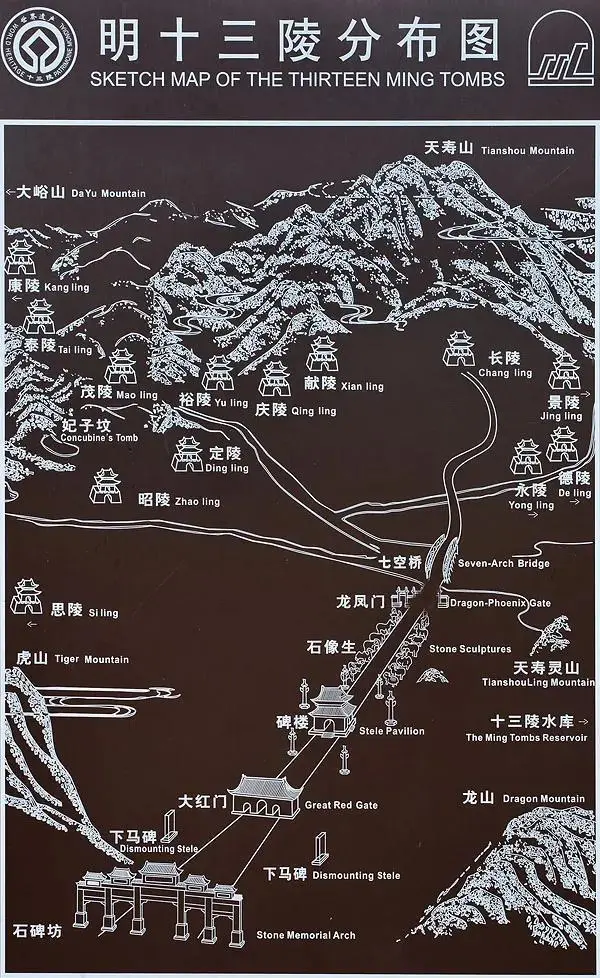
Within the Ming Tombs scenic area, each mausoleum forms an independent architectural complex. The distance between individual tombs ranges from half a kilometer to eight kilometers. While the overall layout of each tomb is generally similar, they typically feature a standard sequence of structures including a stone stele, enclosing wall, Ling’en Gate, Ling’en Hall, Lingxing Gate, Stone Altar with Five Offerings, and Soul Tower.
Attractions in Ming Tombs
Currently, the Ming Tombs Scenic Area is open to the public at four main sites: the Changling Tomb, the Dingling Tomb, the Zhaoling Tomb, and the Sacred Way. Although the Kangling Tomb was previously accessible, it has been temporarily closed for maintenance and is expected to reopen around 2026.
Sacred Way

The Sacred Way, the main ceremonial path of the Ming Tombs, stretches 7.3 kilometers and originally served as the approach to the Changling Tomb, with branches leading to other mausoleums. The path features a striking collection of stone structures, including a grand stone memorial archway, Tablet Pavilion, Stone Sculptures and Dragon-Phoenix Gate.
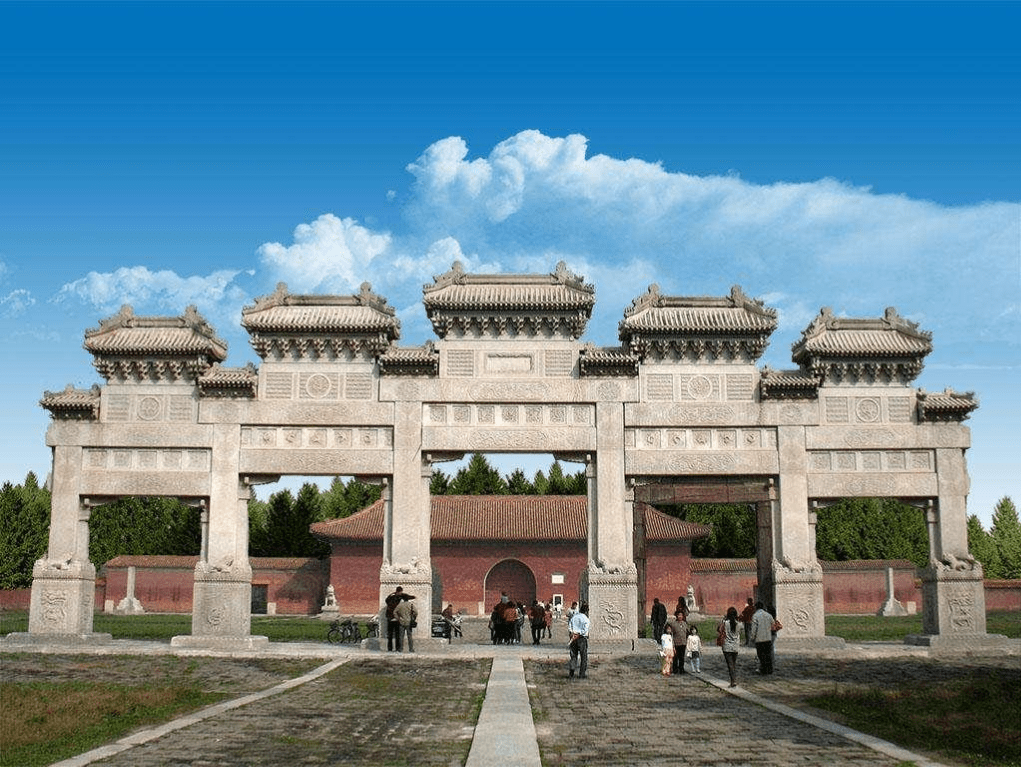
The most impressive of these are the stone statues of animals and human figures, known as shixiangsheng (Stone Sculptures), which are renowned for their vivid sculptural forms, exquisite craftsmanship, and outstanding historical and artistic value.
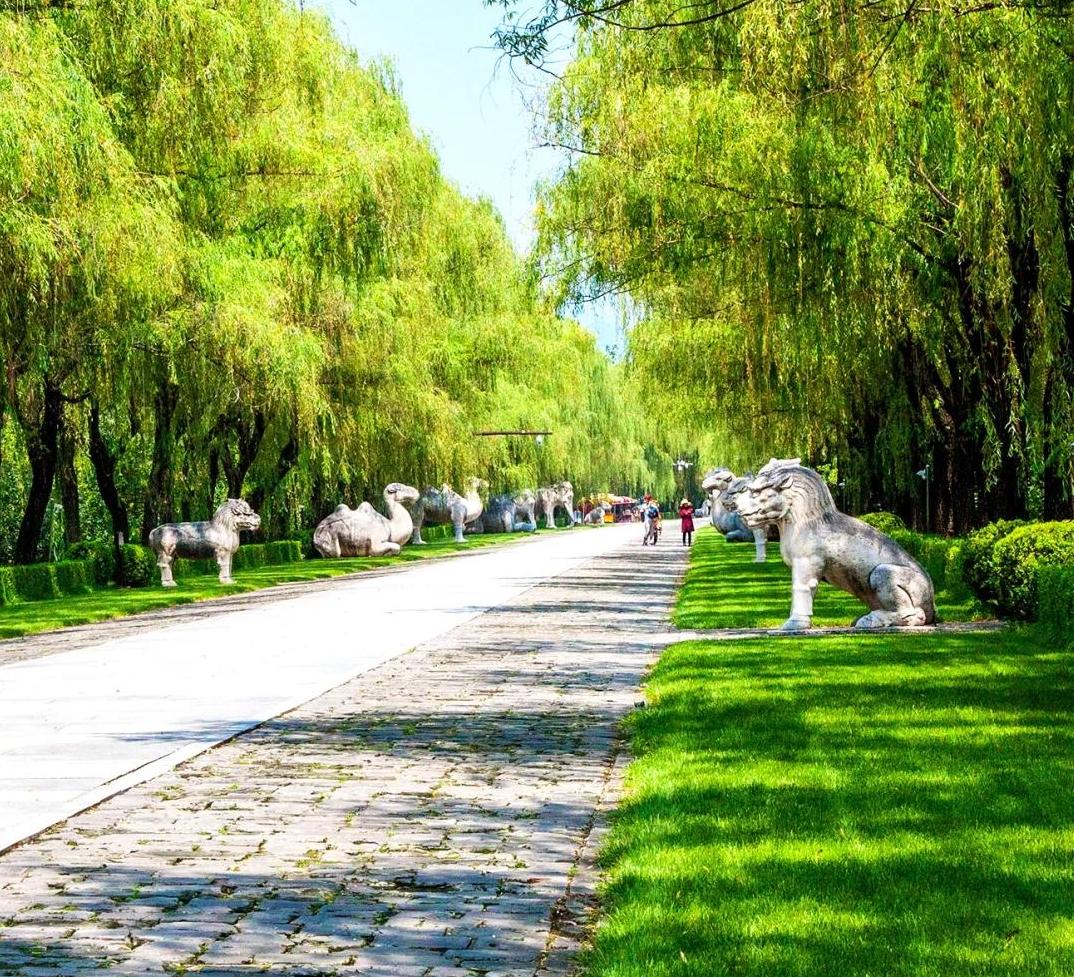
Changling Tomb
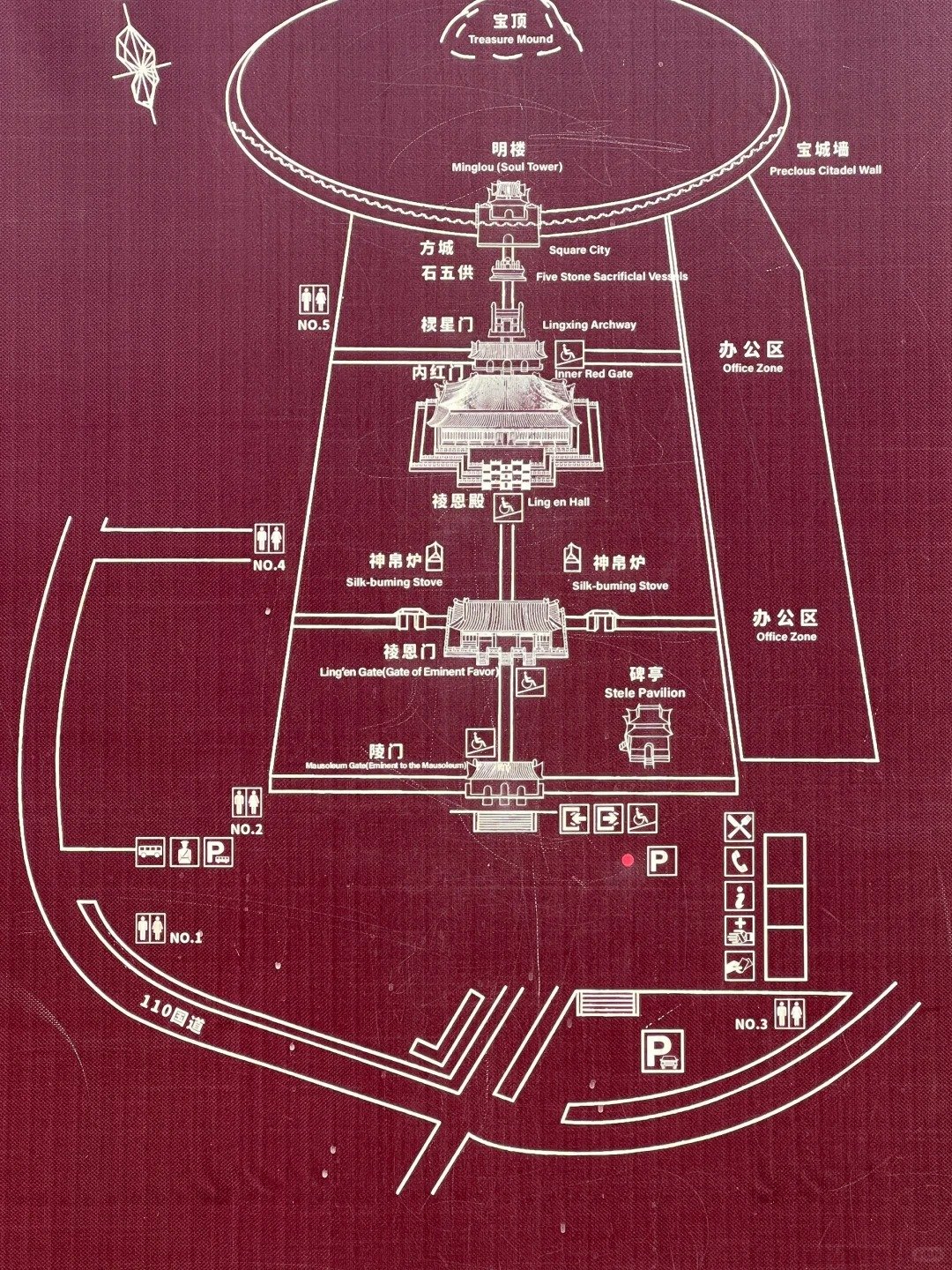
The Ming Changling Tomb is the joint burial site of the third Ming emperor, Chengzu (Emperor Zhu Di), and his Empress Xu. As the largest and earliest constructed tomb in the Ming Tombs complex, it remains the best-preserved above-ground imperial mausoleum. Regarded as the ancestral tomb of the Thirteen Tombs, it is also one of the most visited tourist attractions in the area.
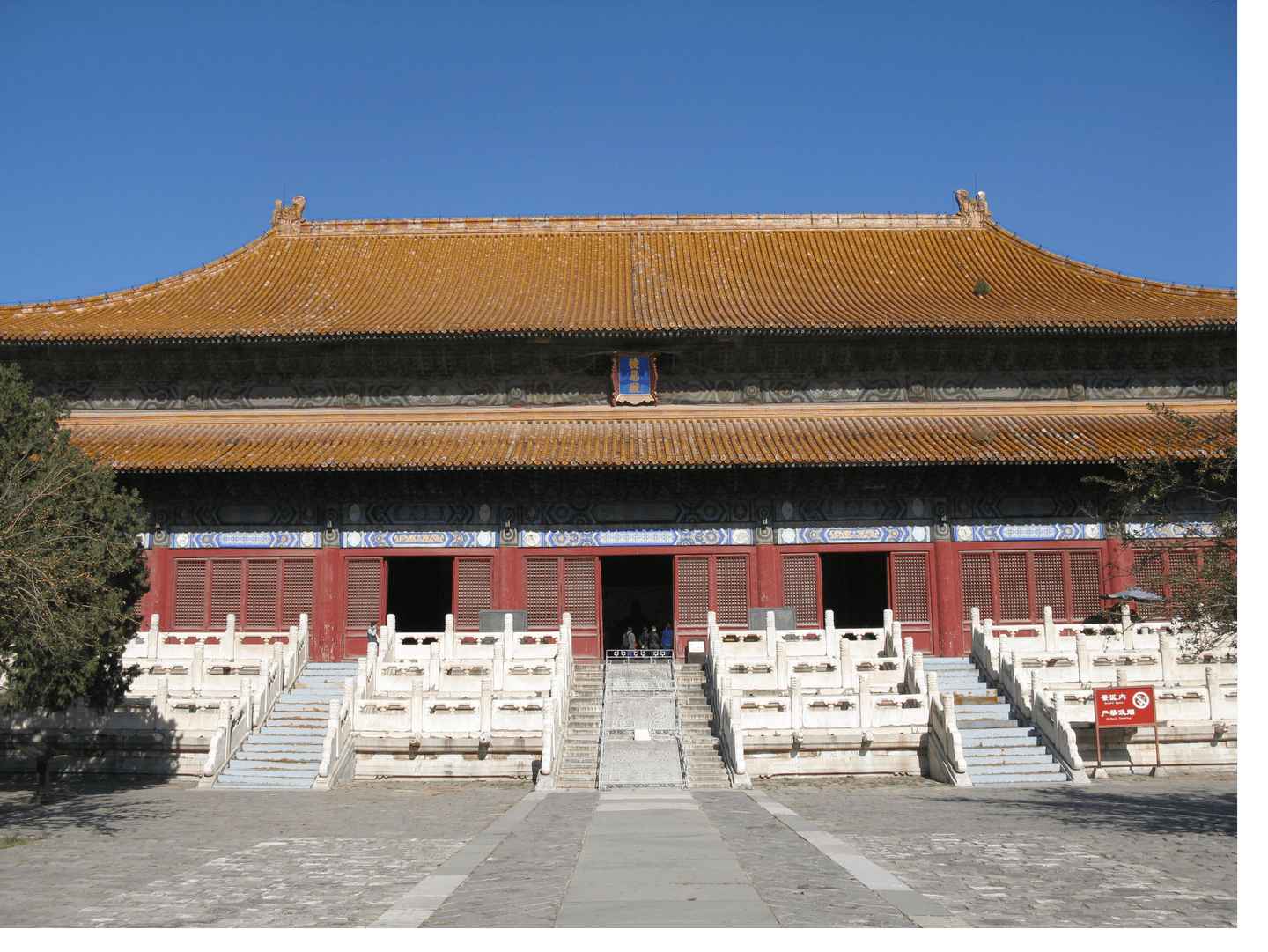
The Ling’en Hall within Changling is an exceptionally beautiful structure built from precious nanmu wood. It is highly valued for its architectural elegance and is considered one of Beijing’s three great ancient timber buildings—alongside the Hall of Supreme Harmony in the Forbidden City and the main hall of the Imperial Ancestral Temple (Taimiao). The Ling’en Hall was modeled after the Hall of Supreme Harmony and remains unique within the entire Ming Tombs complex.

Dingling Tomb
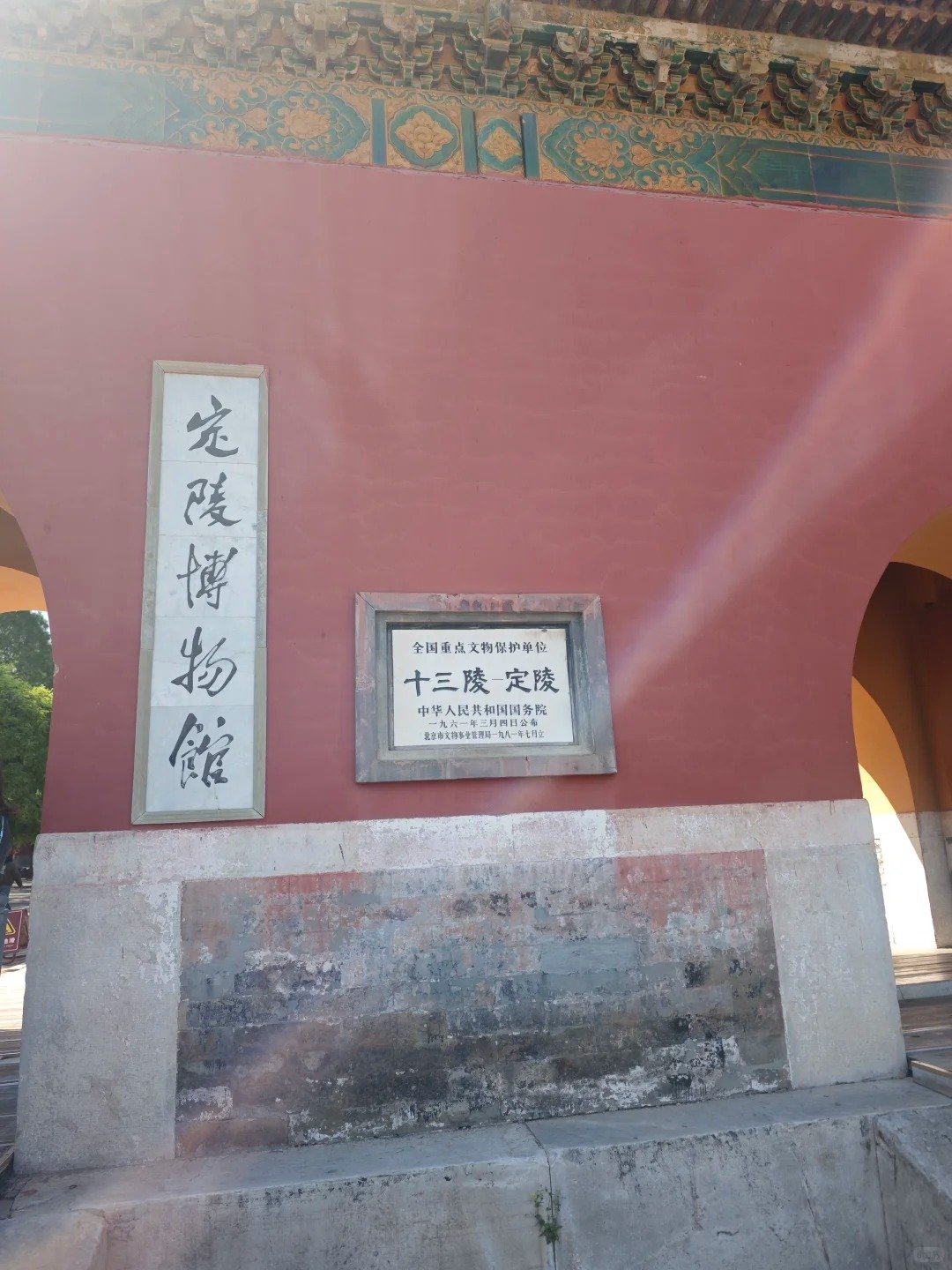
The Dingling Tomb is the joint burial site of the thirteenth Ming emperor, Shenzong (Zhu Yijun, reign title: Wanli), along with his empresses Xiaoduan and Xiaojing. It holds the distinction of being the only imperial tomb that has been excavated among the Ming Tombs.
Constructed over six years starting in the twelfth year of the Wanli era (1584), the tomb complex follows the traditional Chinese architectural layout of a square front section and a circular rear burial mound.
Visitors first enter the Dingling Museum, which houses two main exhibition halls. The first hall displays exquisite jade belts, gold coins, silk fabrics, helmets, swords, and other jade artifacts. The second hall contains personal items belonging to the emperor and his empresses, including phoenix crowns, silverware, gold ingots, jade pendants, and cosmetic articles—each showcasing the exceptional craftsmanship of the Ming dynasty.
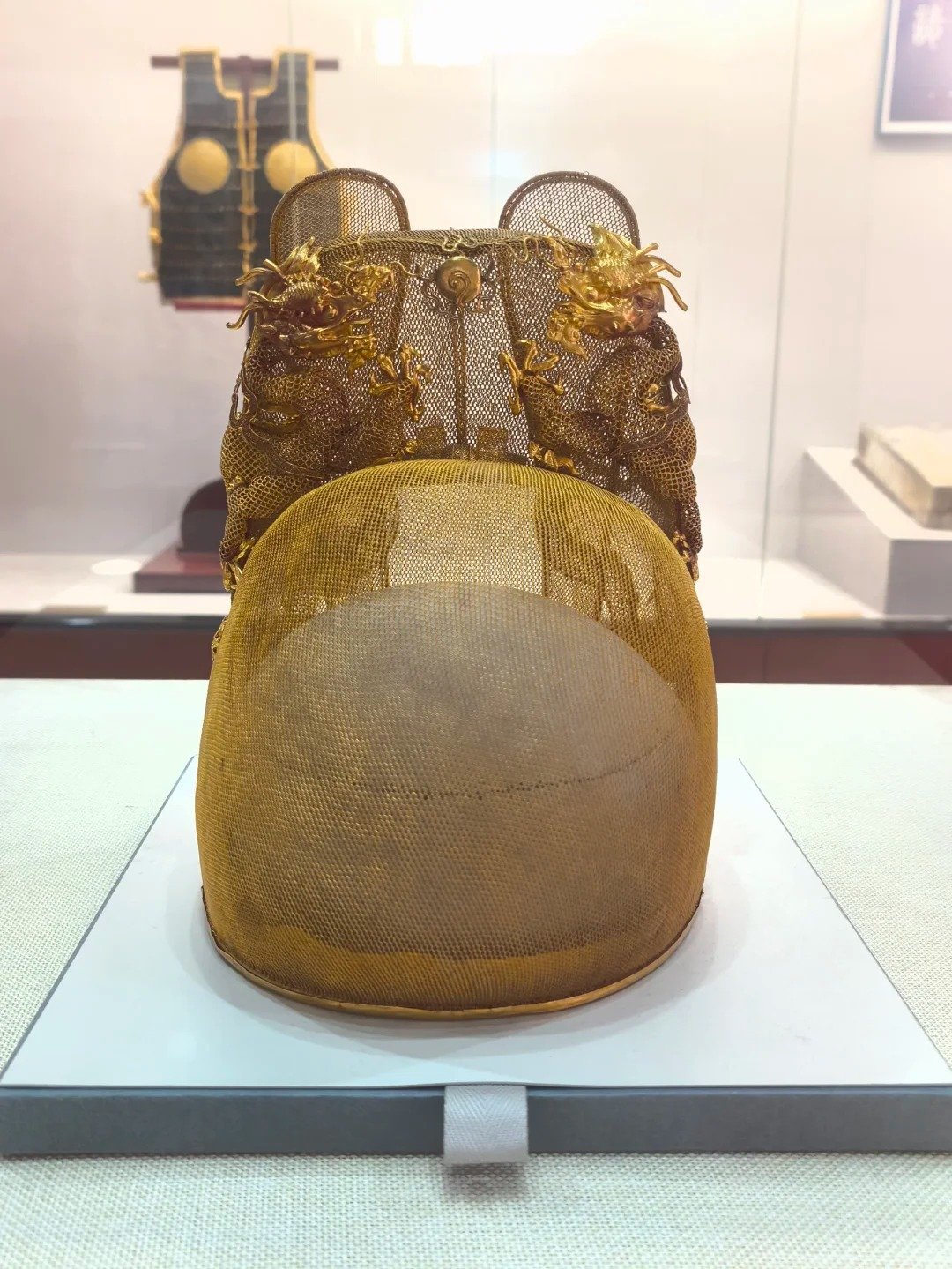
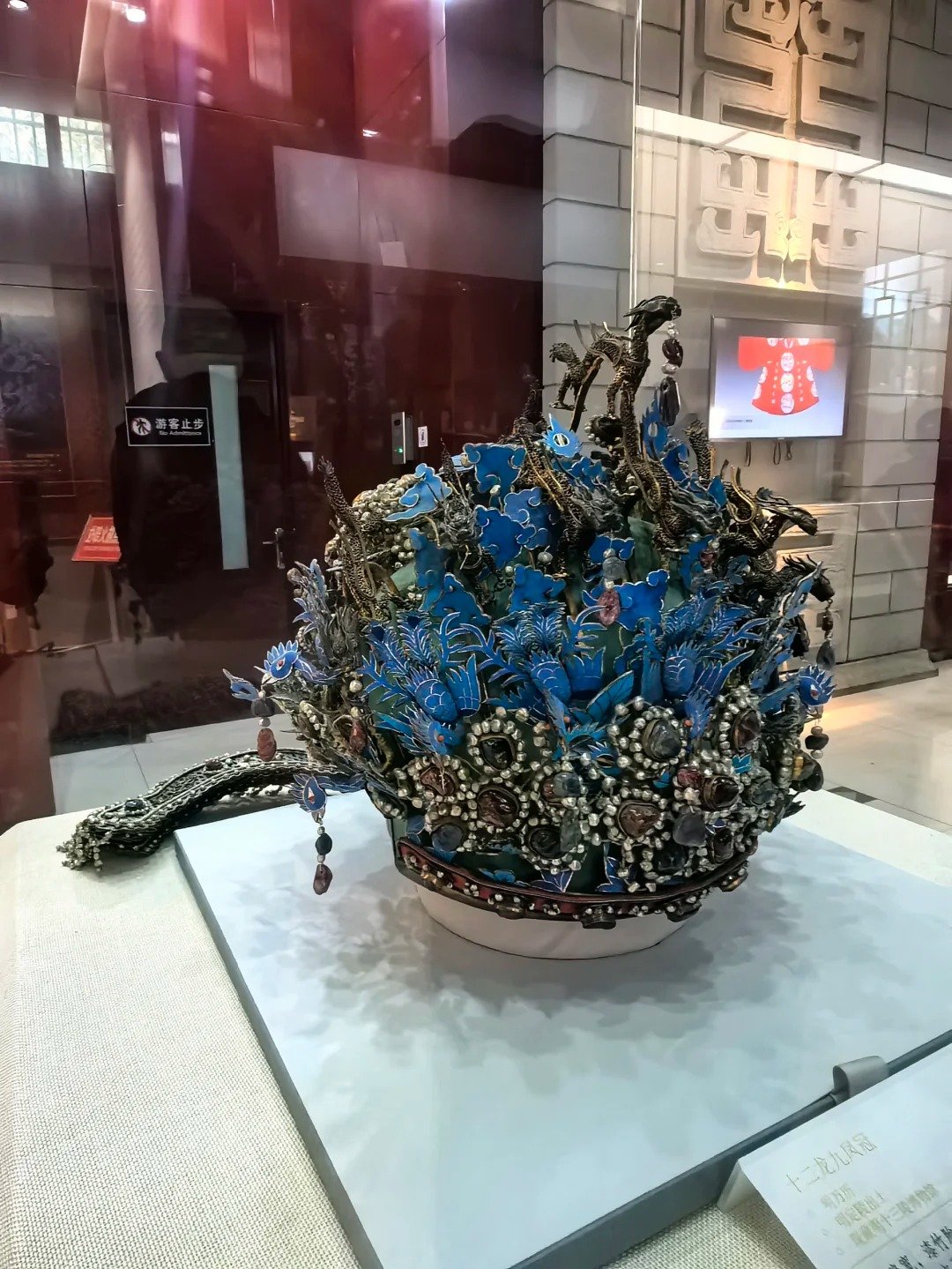
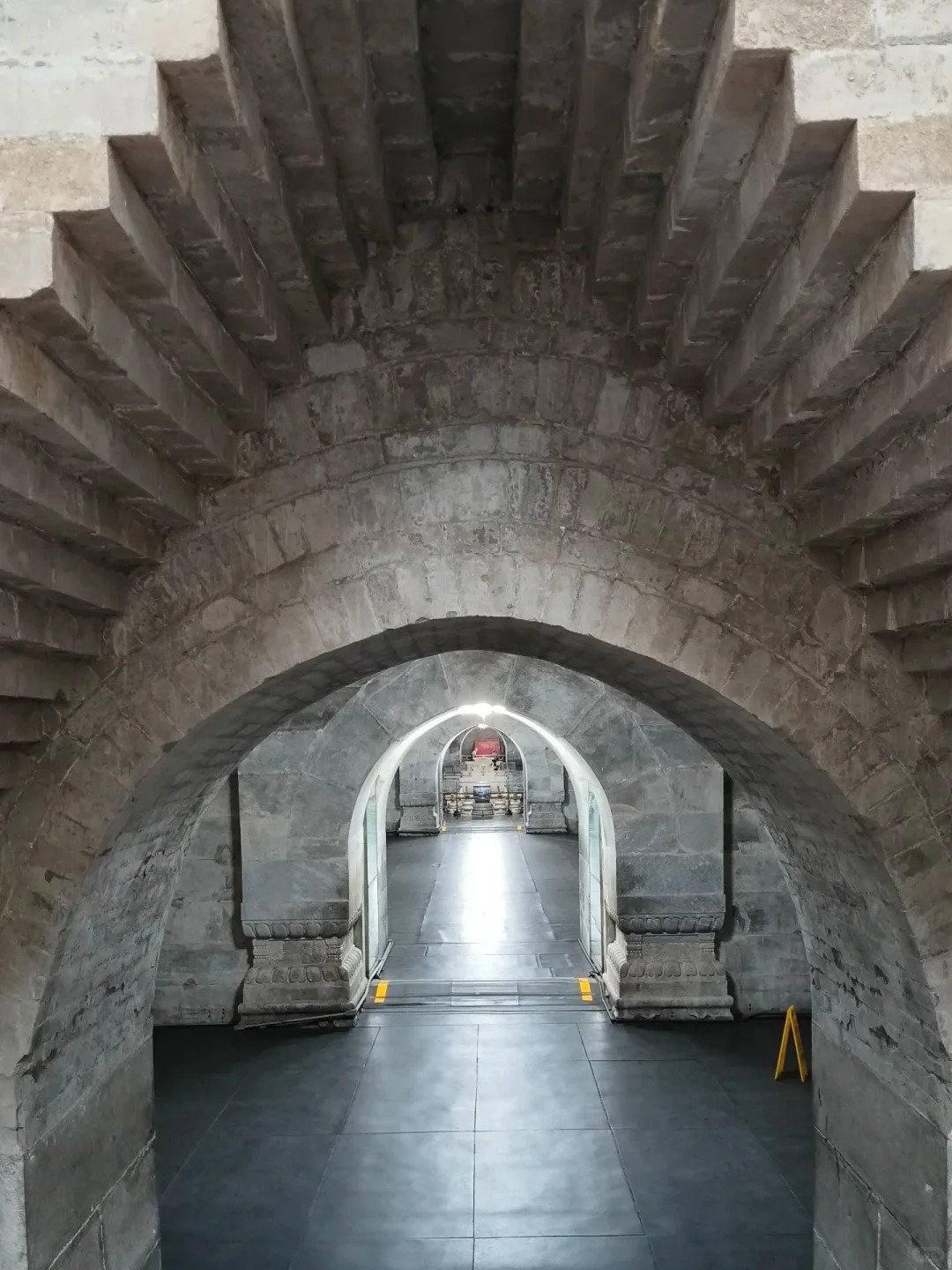
A winding passage then leads downward into the mysterious underground palace. Composed of five spacious vaulted chambers—front, middle, rear, left, and right—all constructed entirely of stone, the palace exudes a profound sense of tranquility and solemnity.

Zhaoling Tomb
The Zhaoling Tomb is situated at the eastern foot of Dayu Mountain and serves as the joint burial place of the 12th emperor of the Ming Dynasty, Emperor Zhu Zaihou and his three empresses. It was the first tomb in the Ming Tombs complex to undergo large-scale restoration and is now one of the officially open tourist sites in the area.
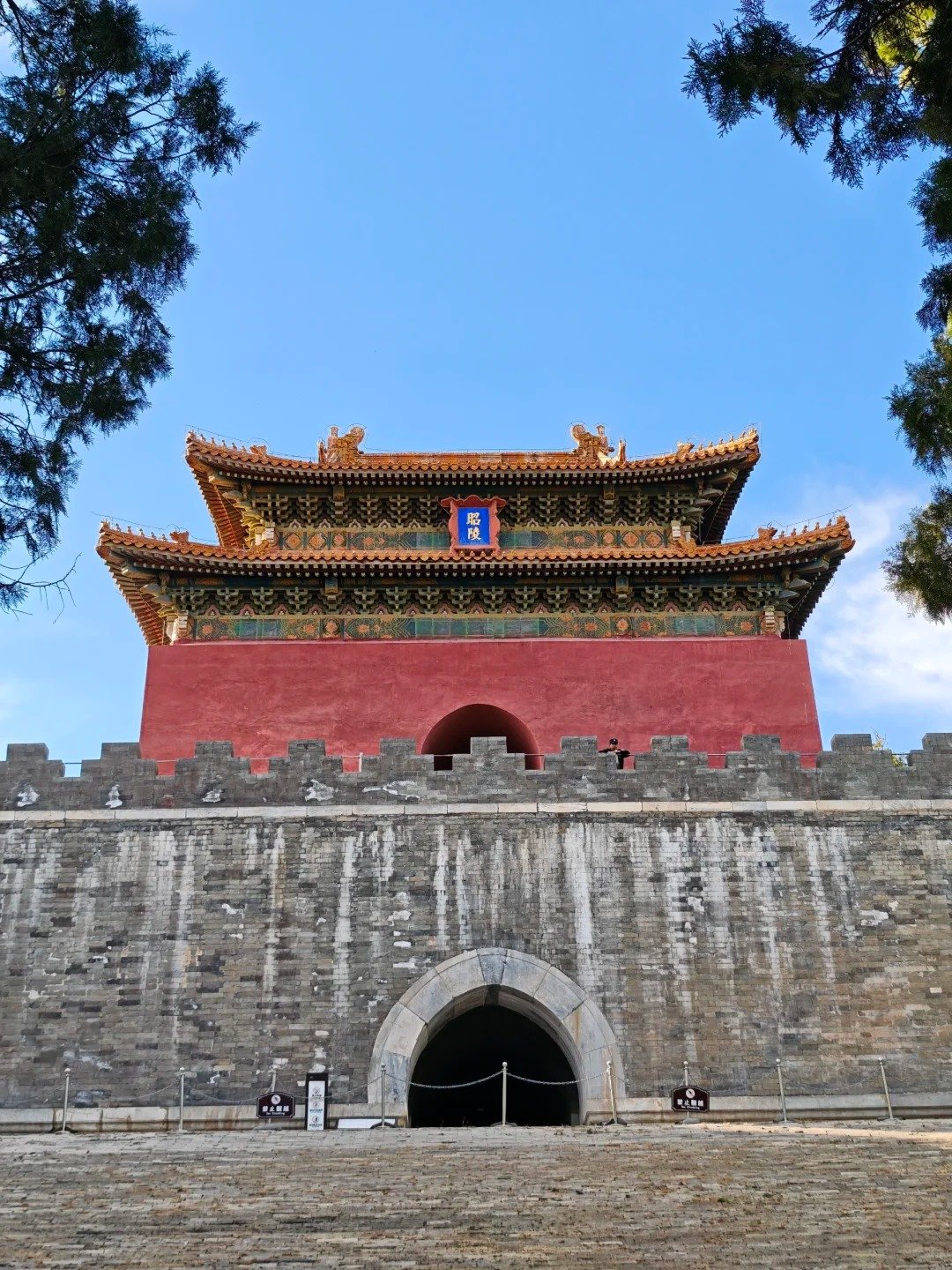
Zhaoling is also known for its distinctive crescent-shaped “Dumb Courtyard” (Yayuan), an enclosed structure used for housing the emperor’s coffin.
Recommended Ming Tombs Tour Routes
Option 1: Great Wall & Ming Tombs (Full Day)
Spend the morning exploring the Badaling Great Wall and the afternoon visiting the Ming Tombs. This classic combination efficiently covers two of Beijing’s most iconic UNESCO World Heritage Sites in one day.
Option 2: Ming Tombs Only (Half Day)
For a focused visit to the imperial mausoleums, follow this sequence: Sacred Way → Changling Tomb → Dingling Tomb → Zhaoling Tomb. Each scenic area can be reached by taking Bus 872 or by taxi. If you are short on time, you may skip the Zhaoling Tomb.
Pro Tip for the Return Journey: Based on a 2025 year-end site check, if you rely on Bus 872 to get back to central Beijing, make sure your final stop is Dingling or Changling. There is no 872 service at Zhaoling Tomb. Ending there might leave you stranded or forced to take an expensive private taxi.
Food is not available for purchase within the Ming Tombs scenic area. Visitors wishing to dine may consider trying local in the nearby villages.
Which Emperors are Buried in the Ming Tombs?
Among the sixteen emperors of the Ming Dynasty, thirteen were buried in the Ming Tombs, with the exceptions of Emperor Taizu (Zhu Yuanzhang), Emperor Jianwen (Zhu Yunwen), and Emperor Daizong (Zhu Qiyu).
| Tomb | Buriers | Open to Public? |
|---|---|---|
| Changling | Emperor Zhu Di (3rd Emperor) and Empress Xu | Yes |
| Dingling | Emperor Zhu Yijun (13th Emperor) and his two Empresses | Yes |
| Zhaoling | Emperor Zhu Zaihou (12th Emperor) and his three Empresses | Yes |
| Yongling | Emperor Zhu Houcong (11th Emperor) and his three Empresses | Not fully open |
| Xianling | Emperor Zhu Gaochi (4th Emperor) and Empress Zhang | Planned to open 2029-2030 |
| Qingling | Emperor Zhu Changluo (14th Emperor) and his three Empresses | Planned to open 2029-2030 |
| Maoling | Emperor Zhu Jianshen (8th Emperor) and his three Empresses | Planned to open 2026-2028 |
| Kangling | Emperor Zhu Houzhao (10th Emperor) and Empress Xia | Planned to open in 2026 |
| Jingling | Emperor Zhu Zhanji (5th Emperor) and Empress Sun | Planned to open 2026-2028 |
| Tailing | Emperor Zhu Youtang (9th Emperor) and Empress Zhang | Planned to open 2026-2028 |
| Deling | Emperor Zhu Youxiao (15th Emperor) and Empress Zhang | Planned to open 2026-2028 |
| Yuling | Emperor Zhu Qizhen (6th Emperor) and his two Empresses | Planned to open 2029-2030 |
| Siling | Emperor Zhu Youjian (16th Emperor), Empress Zhou, and Concubine Tian | Not fully open |
How to get to Ming Tomb From Beijing
By Bus
For visitors going to the Changling Tomb or Dingling Tomb, you may take Bus 872 or 314 directly to the corresponding terminal stops.
For those heading to the Zhaoling Tomb, first take Bus 872 and get off at Nancun Village Station (南新村站) or Dagongmen Station (大宫门站), then transfer to Bus Chang 78 and alight at Zhaoling Station
By Subway
Take Beijing Subway Changping Line (Line 27) and get off at Changping Xishankou Station. Transfer to Bus Chang 78 to reach any scenic area of the Ming Tombs directly.
NOTE: Do not get off at Ming Tombs Subway Station, as it is still 4 kilometers away from the actual scenic area. From that station, only local private transportation is available, and visitors may be overcharged.
2026 Ming Tombs Tickets & Opening Hours
Book Your Tickets Now| Attraction | Off-Season (Nov. 1 – Mar. 31) | Peak Season (Apr. 1 – Oct. 31) |
|---|---|---|
| Combo Ticket (4 sites) | CNY 98 | CNY 98 |
| Sacred Way | CNY 20 | CNY 30 |
| Zhaoling Tomb | CNY 20 | CNY 30 |
| Dingling Tomb | CNY 40 | CNY 60 |
| Changling Tomb | CNY 30 | CNY 45 |
Opening Hours
- Peak Season (Apr. 1 – Oct. 7): 8:30 – 18:00
- Off-Season (Oct. 8 – Mar. 31): 8:30 – 17:00
Bonjour, y a-t-il des tours quotidiens organisés qui permettent de tout voir des tombeaux Miing sans aller à la Grande Muraille
Merci
While the Ming Tombs complex consists of 13 imperial mausoleums, a comprehensive ‘all-tombs’ tour in a single day is impractical as most sites (such as Yongling or Siling) are either closed to the public or require special reservations. However, you can certainly enjoy a deep-dive one-day itinerary focusing on the four officially open highlights: the Sacred Way, Changling, Dingling, and Zhaoling. This ‘One Road, Three Tombs’ route covers the finest Ming architecture and the only excavated underground palace, typically taking 5 to 7 hours to complete—making it a perfect standalone day trip without needing to visit the Great Wall. We recommend purchasing the 98 RMB combo ticket and using a private car or taxi between sites, as local bus intervals (like the Line 78) can be quite long, and having a dedicated vehicle will save you hours of waiting.
Thanks a lot ! I have visited the Great Wall in a previous trip… Of course, it is better to select the 4 highlights on a full day. Are there taxis at the entrance of the site ? Is it necessary to book one or several taxi on the site ? what is the average price ?